
 KOR
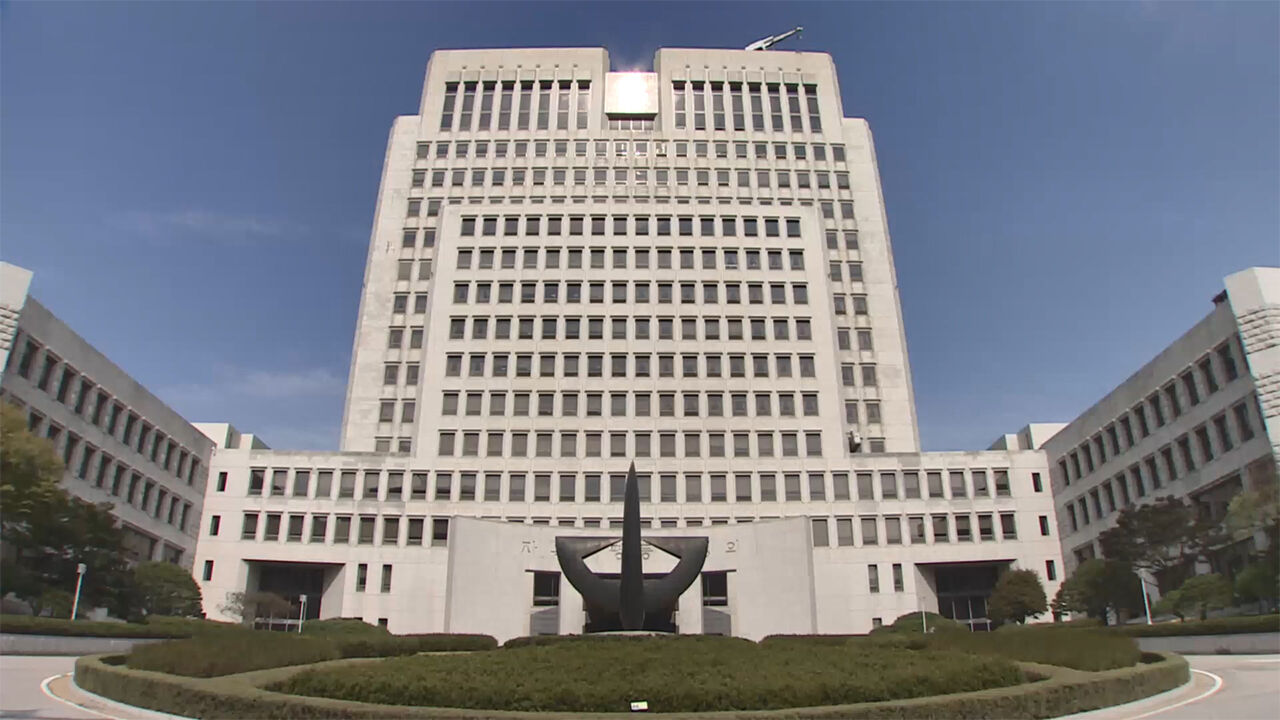
▲ The Supreme Court of Korea
A lower court ruling that separately punished extortion crimes committed around a one-year imprisonment period has been overturned by the Supreme Court.
The Supreme Court ruled that if similar acts were committed even while incarcerated and continued immediately after release, the criminal intent remained unbroken and thus should be punished as a single crime.
The Supreme Court's Second Division (Presiding Justice Park Young-jai) announced last month that it had overturned the appellate ruling, which sentenced defendant A to three years and six months in prison for extortion and six months in prison for violating the Welfare of Persons with Disabilities Act, and sent the case back to the Daejeon District Court.
Defendant A was put on trial for threatening his maternal uncle, a person with severe cerebral palsy, 82 times between November 2021 and June 2025 to extort approximately 40 million won, including disability allowances and basic livelihood support funds.
Investigations showed that he threatened his uncle by saying, "If you do not give me money, I will smash everything in the house and kill you all."
While continuing his extortion, A was imprisoned from January 2023 to January 2024 for separate fraud charges.
The key issue was whether the extortion acts committed before and after this period of imprisonment should be viewed as a comprehensive single crime (where multiple acts constitute a single offense) or as separate crimes.
The first instance court viewed the extortion offenses as a comprehensive single crime and sentenced A to one year and eight months in prison, combining it with the violation of the Welfare of Persons with Disabilities Act.
The appellate court ruled that the singularity and continuity of criminal intent were not maintained across the one-year imprisonment period, dividing the 30 extortion acts before imprisonment and the 52 acts after, sentencing A to one year and two years and six months in prison, respectively.
Combined with a six-month prison sentence for violating the Welfare of Persons with Disabilities Act, A was sentenced to a total of four years in prison.
However, the Supreme Court overturned the appellate ruling with the intent that all 82 acts of extortion should be regarded as a comprehensive single crime.
The Supreme Court cited legal principles stating that the singularity and continuity of criminal intent must be determined by closely examining "the methods and patterns of individual crimes, motives, time intervals between crimes, whether subsequent crimes occurred while a situation utilizing the same opportunity or relationship persisted, and whether there are circumstances indicating that the criminal intent was severed or renewed."
The Supreme Court noted that A showed circumstances of engaging in similar acts during his detention, such as stating during a police investigation that he "called the victim from prison and asked them to transfer money," and continued the crimes in the exact same manner immediately after his parole.
Furthermore, considering his relationship with the victim who is his uncle and the victim's vulnerability to crime, the court explained that "the circumstance of imprisonment alone does not justify concluding that the defendant's criminal intent for extortion was severed or renewed."
(Photo: Provided by Yonhap News TV, Yonhap News)
※ Please note: This article was translated by AI and may contain errors.


 Video News
 Video News
 Video News
 Video News
 Video News