
 KOR
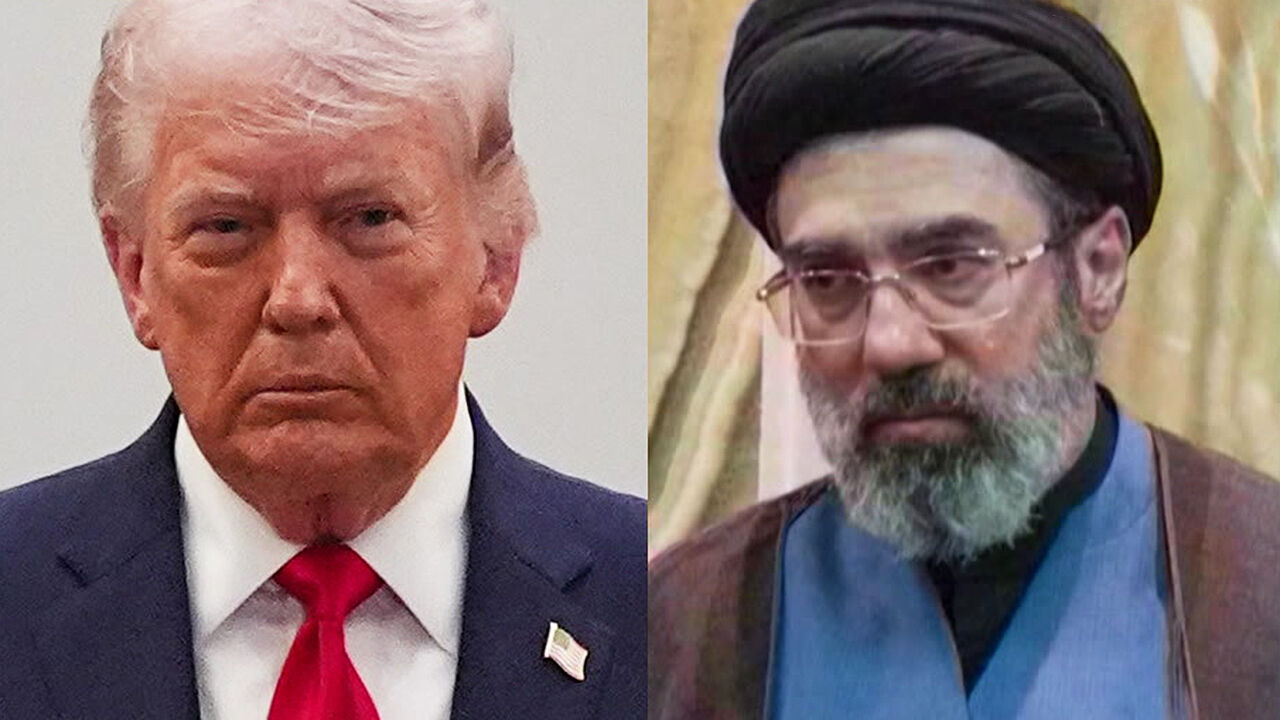
▲ U.S. President Donald Trump and Iranian Supreme Leader Mojtaba Khamenei (Photo: Yonhap News)
Amid speculations that a fresh U.S. airstrike against Iran is imminent, the two sides continued indirect negotiations for a second consecutive day in a dramatic bid to find a diplomatic solution.
However, even as October 31 (local time) approached—just three days ahead of the U.S. midterm elections, which are considered a turning point for the situation in the Middle East—U.S. President Donald Trump heightened threats by stating, "There are targets left that need to be dealt with." Meanwhile, Iranian Supreme Leader Ayatollah Seyed Mojtaba Khamenei broke his usual silence to order an "immediate and unlimited response," refusing to take the military option off the table.
According to Reuters and other outlets, delegations from Iran and Qatar met in Doha on this day to discuss ways to end the war.
This followed more than 12 hours of consultations in Tehran the previous day, during which Qatar frequently coordinated with the U.S. side throughout the process.
Qatar had previously proposed a "seven-day plan" in which both sides would implement mutual trust-building measures, but a senior Iranian official told Reuters that the mediation proposal fell short of their demands, effectively rejecting it.
Iran's demand is that if the U.S. lifts its naval blockade and unfreezes assets, Iran will reopen the Strait of Hormuz.
Foreign Minister Abbas Araghchi stated regarding a revised "seven-day plan," "Qatar proposed shortening the implementation period of our proposal to 5 days, and we reached a consensus on a plan to reduce the implementation period to 2 days."
With the United States also demanding nuclear concessions from Iran as a condition for resuming negotiations, the talks appeared to remain deadlocked.
With the midterm elections—on which the fate of the second Trump administration hinges—imminent, the U.S. administration appeared to be weighing diplomacy against military force.
On October 31, the second day of the Qatar-mediated talks, President Trump stated that the U.S. had neutralized a significant portion of Iran's military power, adding, "There are still one or two places left to deal with, and we could do it in 10 minutes."
He even directly mentioned "Pickaxe Mountain," suspected of housing a nuclear facility within Iran.
The U.S. media outlet MSNow, citing senior Gulf officials, reported that the Trump administration had notified Gulf allies to prepare for a "short and intense" airstrike as early as November 4, the day after the midterm elections.
Even firmer messages emerged from Iran as well.
According to the Supreme Leader's office, Khamenei instructed the military on October 31 to counter any level or type of threat with an "immediate, powerful, and geographically unconstrained response."
AFP reported that this is the first time it has been known that Khamenei met with top military commanders.
Having assumed the position of Supreme Leader after his father, Ali Khamenei, was killed in U.S. and Israeli airstrikes last February, he had not made any public appearances since.
Mohsen Rezaei, the secretary of Iran's Supreme National Security Council and a hardline security chief, stated via Iranian state television that discussions are underway on whether to lift the longstanding policy banning nuclear weapons if attacks resume.
He added that nothing has been decided yet and that there will be no nuclear negotiations unless the U.S. accepts Iran's demands.
Regarding a letter previously sent by U.S. Vice President JD Vance, Secretary Rezaei stated that he had read the letter but had not yet responded.
However, AFP reported that he assessed, "The tone of the United States has completely changed," calling it "a good sign."
Tensions persisted in the region.
The Iranian Islamic Revolutionary Guard Corps stated that another oil tanker was struck by a marine mine in the Strait of Hormuz on this day.
The previous day, three oil tankers halted operations due to mine strikes and other incidents.
Israel also remains a variable.
Prime Minister Benjamin Netanyahu has spoken of a "historic and once-in-a-lifetime opportunity" to topple the Iranian regime.
In Israel's late-October general election, Netanyahu's bloc fell short of a majority, leaving the formation of the next government uncertain.
Surrounding countries have expressed caution against escalation.
Egyptian Foreign Minister Badr Abdelatty emphasized at the IISS Manama Dialogue held in Bahrain on this day that "a second round would be more dangerous, more destructive, and yield no results," stressing the need to learn lessons from the past.
A Pakistani military official mediating the peace talks told Reuters in an interview on October 30 that they are "cautiously optimistic" about the mediation results.
Earlier, on October 26, Pakistani Chief of Army Staff and military commander-in-chief Asim Munir visited Tehran alongside officials from Saudi Arabia and Turkey—members of the "Mecca Joint Defense Agreement"—to meet with Secretary Rezaei and others.
※ Please note: This article was translated by AI and may contain errors.


 Video News
 Video News
 Video News
 Video News
 Video News