
 KOR
According to a 2023 study by the Health Insurance Research Institute under the National Health Insurance Service, South Korea's screening rate is very high. The study showed that the "unscreened rate"—referring to those who have never had a single infant health checkup—stands at a mere 1.3%. This "high screening rate" was also highlighted at the "International Symposium on Strengthening State Support for Early Intervention in Children with Developmental Disabilities and Delays" held at the National Assembly in August. Medical experts who participated in the symposium unanimously assessed that "South Korea's infant and child health checkup system is equipped with a very universal screening framework." In short, it means that Korea's infant health checkup system is well-established compared to overseas checkup systems, and children with issues such as developmental delays are being identified effectively.
The Real Secret Behind the 1.3% Unscreened Rate in Infant Health Checkups
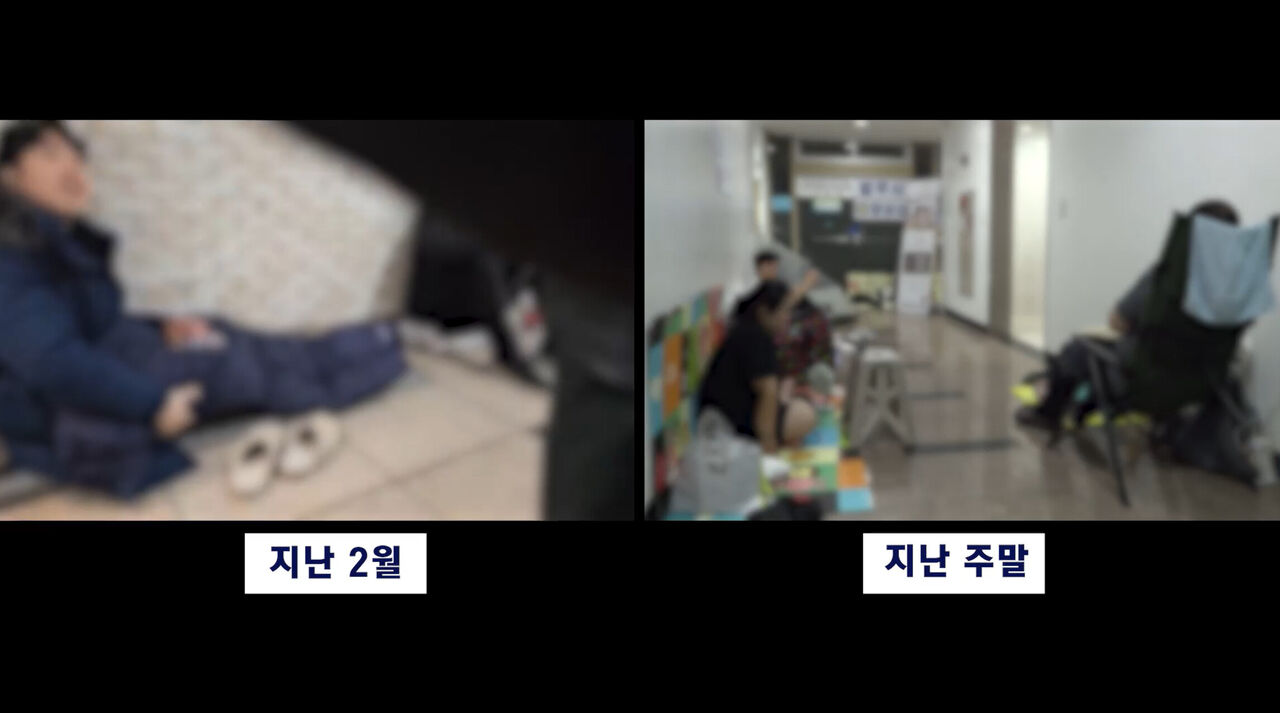
I deeply empathize with these parents. Although it was at a different clinic, I too have had the experience of standing in line all night. Back when I was agonizing and feeling anxious over whether my child had a developmental disability, an acquaintance recommended a pediatric clinic in the capital area that spent more than 40 minutes on thorough infant checkups. In freezing, sub-zero winter temperatures, my husband and I took turns waiting outside overnight to secure a queue ticket. The clinic accepted monthly appointments starting at 9:00 a.m. on Mondays, and because it could only examine two children per day, the cut-off capacity was 30 people. An endless line wrapped around the building's staircases across several floors, and I was the 28th person in line.
Some critics question why parents make such a fuss over infant health checkups. At most pediatric clinics, infant health checkups wrap up very quickly. Back before I could even imagine developmental disabilities in my child, I also went to local pediatric clinics for infant checkups. Realistically, neighborhood pediatric clinics close to home cannot spend 30 to 40 minutes per checkup. The visit usually concludes after rough physical measurements and a brief consultation based on a parental questionnaire.
If parents have no major concerns or issues regarding their child's growth, they may not mind this. But if there is suspicion of developmental delays or disabilities, this type of checkup has clear limits in addressing parental worries. Most parents who wait in line in scorching heat or bitter cold to get a checkup queue ticket at reputable pediatric clinics are dealing with deep, extraordinary concerns about their child's growth and development. While the 1.3% unscreened rate—praised as a 'universal and excellent screening framework'—partly stems from a system that allows infant checkups anywhere, I suspect more than half of that achievement was made possible by the desperate efforts and devotion of parents.
The Reality in South Korea: Where Checkup Results End as Mere 'Results'
This is where state assistance stops. The government does not guide parents on which hospital or department to visit. Whether they should go to rehabilitation medicine, pediatrics, or pediatric psychiatry—at that moment, parents' "planning labor" begins. Even if parents want to receive government support for developmental evaluation costs, they must get examined within a year; however, waiting lists for renowned specialists in this field commonly take at least a year, and often more than five years. The infant health checkup report only contains very brief details and the phrase "further evaluation recommended." It does not include an explanatory opinion letter from the examining physician detailing why they reached such a conclusion. Hospitals only look at the infant checkup report that parents bring in person. (In fact, they barely look at it. However, holding an infant health checkup report allows patients to visit tertiary general hospitals without a referral issued by primary or secondary clinics.) All developmental testing begins completely from scratch.
Is this true only for hospitals? Under the current Act on Welfare Support for Children with Disabilities, the state and local governments are mandated to establish and operate regional support centers for children with disabilities. Starting this year, regional support centers for persons with developmental disabilities and support centers for children with disabilities have been integrated. Regional support centers for persons with developmental disabilities provide services for individuals with intellectual disabilities, autism, and their families, while regional support centers for children with disabilities serve children under 18 with all types of disabilities, those suspected of having developmental delays, and at-risk infants. In short, they are institutions that offer necessary information and connect individuals with disabilities and their families to appropriate services. Although these are all run by the central and local governments, parents must still explain from start to finish why they came to the center and what condition their child has. For parents who are laypersons, explaining medical findings is difficult, and essential information risks being missed in the process.
Offices of education are similar. Regional special education support centers under municipal and provincial offices of education manage the special education eligibility system, which operates to guarantee the educational rights of children with disabilities and developmental delays. Children can apply for special education eligibility starting at age 5, but offices of education lack data indicating whether a child has been diagnosed with a developmental delay or disability. Therefore, parents must once again pull and submit every kind of document, explaining at length why their child should be designated as an eligible recipient of special education.
Japan's 'Connected' System: No Need for Endless Explanations
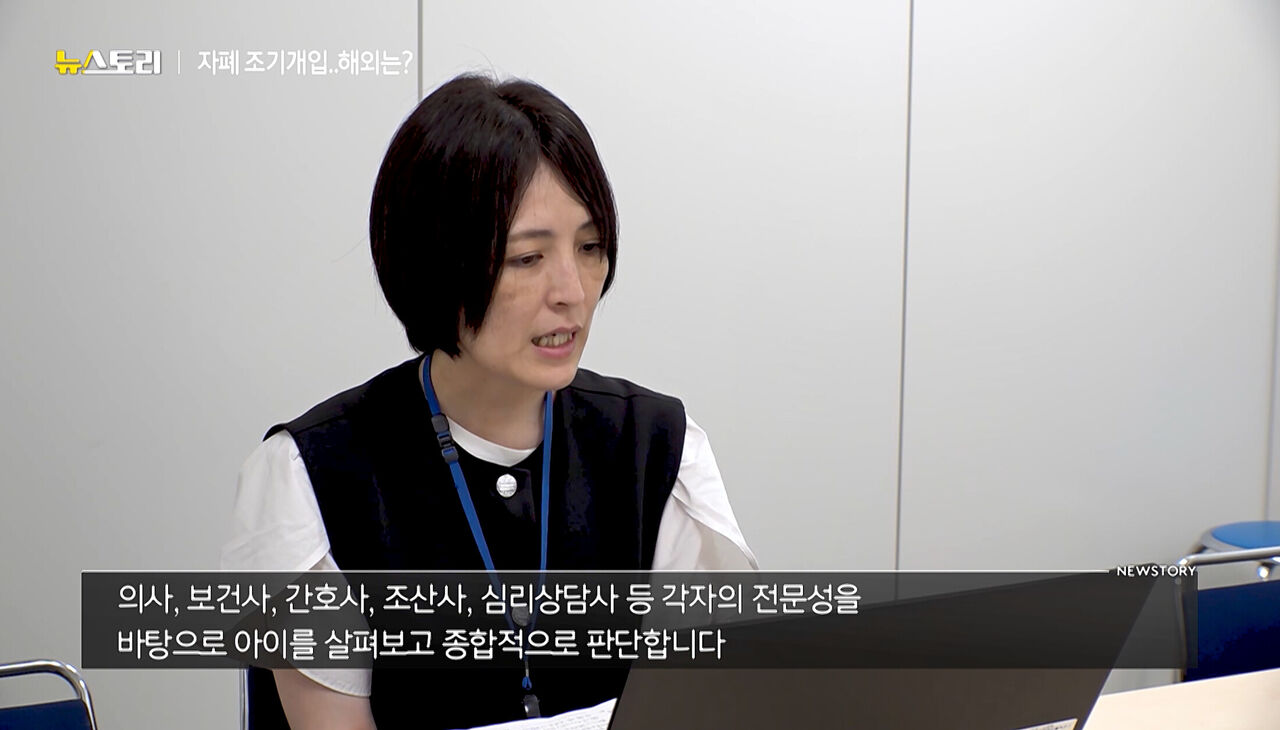
While checkups in South Korea are conducted primarily at private pediatric clinics, Japan conducts them at municipal health centers or pediatric clinics commissioned by those centers. The biggest difference is that in Korea, a single doctor evaluates a child and parents' questionnaire responses to make a judgment, whereas in Japan, evaluations are multidisciplinary. Teams of multiple experts—including doctors, nurses, midwives, clinical psychologists, and public health nurses—conduct joint assessments. If developmental concerns arise during this process, public health nurses (a role combining aspects of social workers and registered nurses) take the lead in connecting the family directly to developmental support centers and local welfare networks. Under Japan's public early intervention system, known as 'Ryoiku,' welfare services led by local municipalities follow immediately from the initial screening. While disparities in program quality between municipalities remain a drawback, parents do not have to wander between multiple agencies repeating the exact same story endlessly as they do in South Korea.
A National Guarantee System for Early Intervention Must Begin with 'Connectivity'
I had hoped these issues would be actively addressed during the recently concluded National Assembly audit, but unfortunately, they were barely mentioned in the relevant standing committees—the Health and Welfare Committee and the Education Committee. A few lawmakers' offices reached out personally after seeing our reports on the reality of private autism education, but these did not lead to formal questioning. Near the very end of the audit during the comprehensive review of the Health and Welfare Committee, Representative Choi Bo-yoon of the People Power Party questioned the president of the Korea Disabled People's Development Institute, stating, "We need a solution to link the National Health Insurance Service's infant health checkup results to regional child support centers," and added, "We need an approach where, with parental consent prior to screening, the service provides checkup findings to regional centers so that regional child support centers can proactively provide early intervention support." That was virtually all that was discussed.
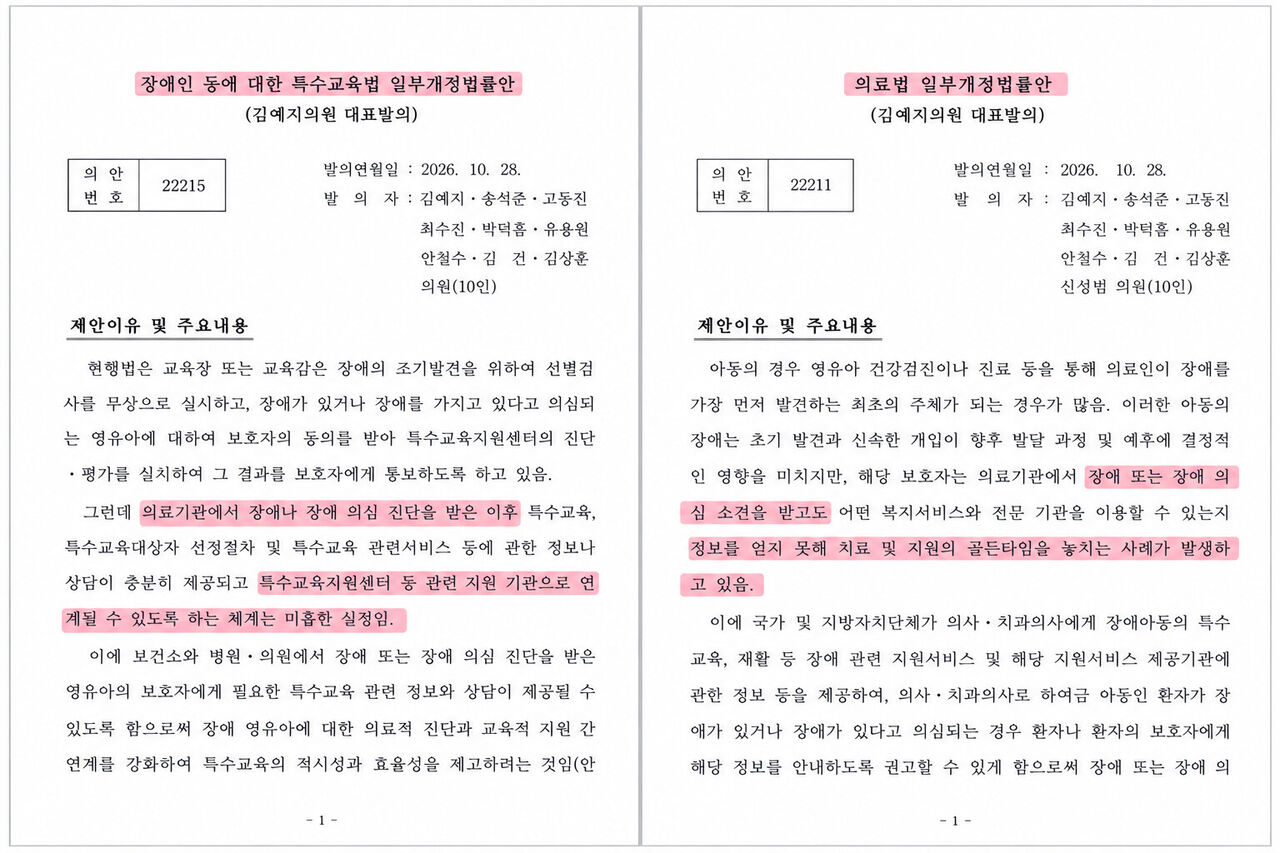
Unexpected legislation emerged not from the welfare or education committees, but from the Public Administration and Security Committee. On October 28, Representative Kim Ye-ji of the People Power Party, a member of the Public Administration and Security Committee, introduced two separate bills as the lead sponsor: a partial amendment to the Act on Special Education for Persons with Disabilities, etc., and a partial amendment to the Medical Service Act. Both aim to strengthen support systems so that children who have disabilities or exhibit symptoms of disabilities can access necessary special education and rehabilitation services in a timely manner following clinical diagnosis.
The proposed amendment to the Act on Special Education for Persons with Disabilities, etc. stipulates that information and counseling regarding special education must be provided to guardians of infants diagnosed with disabilities or disability-related conditions at public health centers and medical clinics. The companion amendment to the Medical Service Act includes provisions allowing the state and local governments to provide physicians with information regarding support services and provider institutions—including special education and rehabilitation for children with disabilities—and recommend that medical professionals share this information with children diagnosed with disabilities or suspected disability-related conditions and their guardians.
Establishing a legal foundation to ensure that information sharing and guidance across local governments, education, and healthcare are seamlessly "connected" represents the greatest significance of these two bills. Whether they will be enacted remains to be seen, but having the word "linkage" embedded in the legislation was personally memorable. If the proposal raised by Representative Choi Bo-yoon during the audit—having the National Health Insurance Service provide checkup results to regional child centers—becomes reality through supplementary legal grounds, it could lead to even more proactive connectivity.
While reporting on the issues of private autism education and special schools, I met a mother of a child with physical disabilities. Among the many conversations we shared, one remark still echoes in my mind—a bitter, bittersweet statement that captures our bittersweet reality:
"It has been six years since I registered my child's disability, and during that time, the community service center staff member in charge of disability affairs changed seven times. Now, whenever the staff member changes, I go in and explain everything to them, and if there's anything they don't know, I teach them."
▶ Related Videos
SBS Newstory Episode 578: 〈The Reality of 'Private Autism Education' in South Korea: A Country Where Therapy Has Become Shadow Education〉 (September 12, 2026)
SBS 8 News: 〈Parents of Babies Pitch Tents and Camp Out at Hospital... 'Reservation War'〉 (July 3, 2025)
※ Please note: This article was translated by AI and may contain errors.


 Video News
 Video News
 Video News
 Video News
 Video News