
 KOR
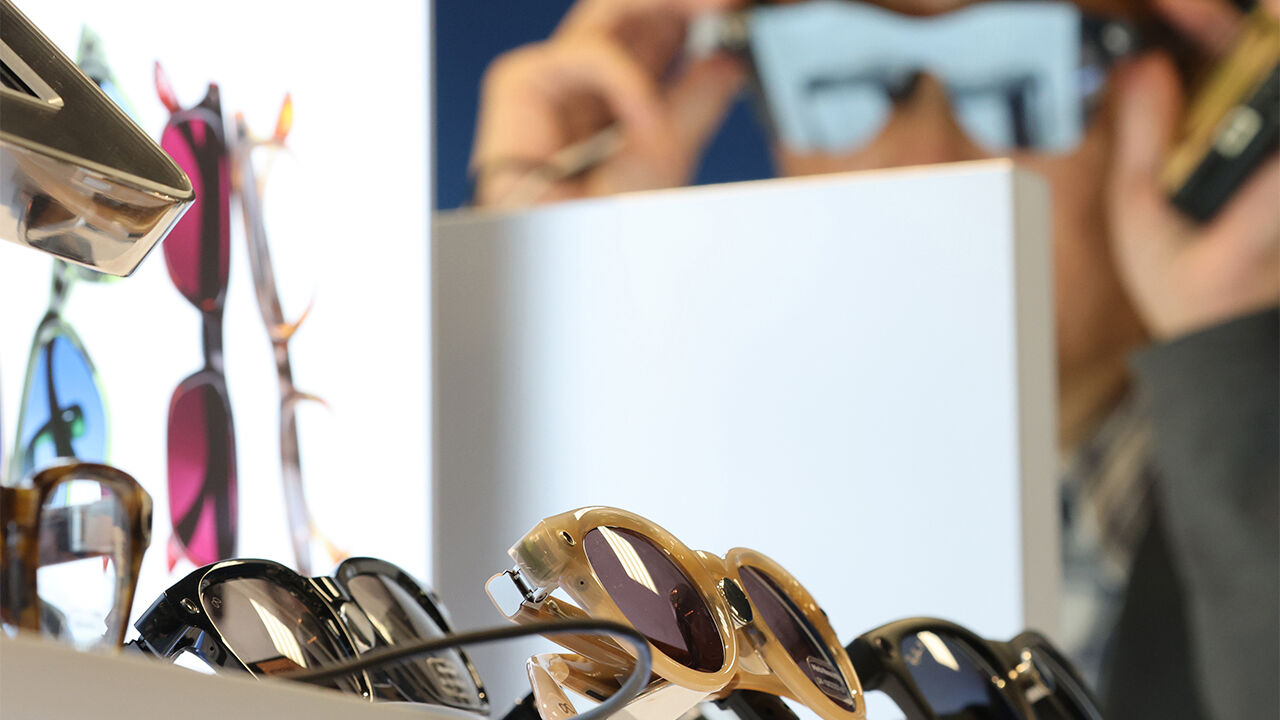
▲ Smart glasses on display at an electronics store in Seoul on October 14
The Ministry of Education announced plans to file criminal complaints or request police investigations for individuals caught cheating using smart glasses during the College Scholastic Ability Test (CSAT), while also pushing to extend the disqualification period for cheaters from the current one year to three years.
The Ministry of Education released its response plan regarding measures against cheating using smart glasses in the CSAT.
First, the ministry decided to strictly respond by considering the use of smart glasses for cheating as an intentional and premeditated act to disrupt the normal administration of a national examination, enabling criminal punishment for obstruction of official duties by fraudulent means and business obstruction.
In the past, prison sentences have been handed down to individuals caught cheating in examinations such as the CSAT.
A representative case occurred in 2005 when answers were systematically transmitted and received using mobile phones, resulting in an eight-month prison sentence suspended for two years.
In addition, to enhance the effectiveness of sanctions against cheating using smart glasses, the ministry plans to extend the CSAT disqualification period for exam cheaters from one year, as currently stipulated in the Higher Education Act, to three years.
The ministry has decided to actively recommend that universities apply these measures not only to this year's CSAT but also to individual university admissions tests.
Previously, education authorities specified smart glasses as prohibited items from being brought into the 2027 CSAT in July to prevent cheating using smart glasses, and provided guidelines on handling cases of smart glasses cheating.
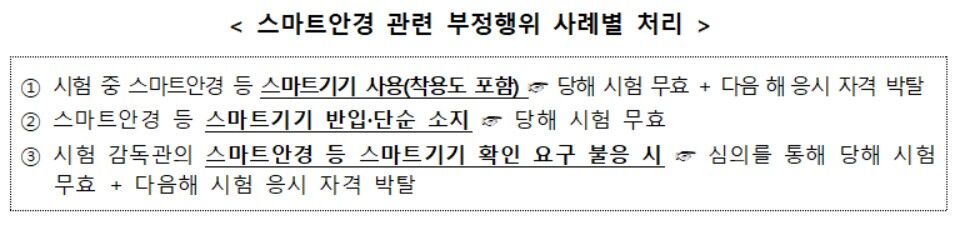
The Ministry of Education also unveiled measures to ensure that teachers who faithfully supervise exams are not held liable or harmed in relation to examination cheating, including cases involving smart glasses.
In particular, starting from this year's CSAT, one dedicated staff member per test center will be designated and deployed to assess the presence of smart glasses, and a rapid response system linked with the situation rooms of the Ministry of Education (Korea Institute for Curriculum and Evaluation) and provincial offices of education will be established.
Given that there are 1,312 nationwide CSAT test centers this year, a total of 1,312 dedicated personnel will be deployed to each center.
Furthermore, to respond to the rapid advancement of digital device technologies such as smart glasses, the introduction of detection technology is also being pursued.
The ministry plans to review the feasibility of utilizing radio wave detectors for test centers currently being developed by related specialized institutions, and consider distributing them to CSAT test centers starting next year.
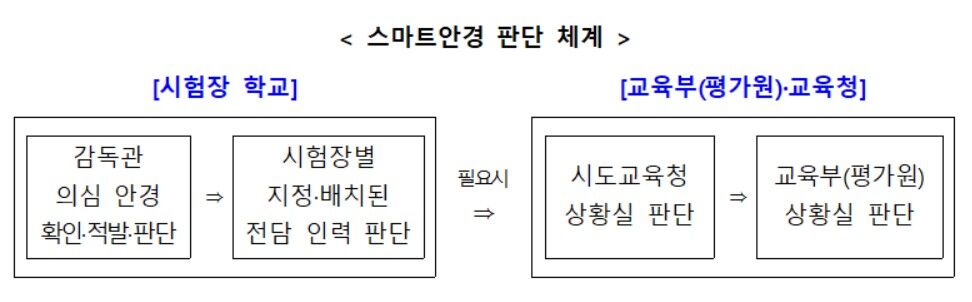
(Photo provided by Ministry of Education, Yonhap News)
※ Please note: This article was translated by AI and may contain errors.


 Video News
 Video News
 Video News
 Video News
 Video News