
 KOR
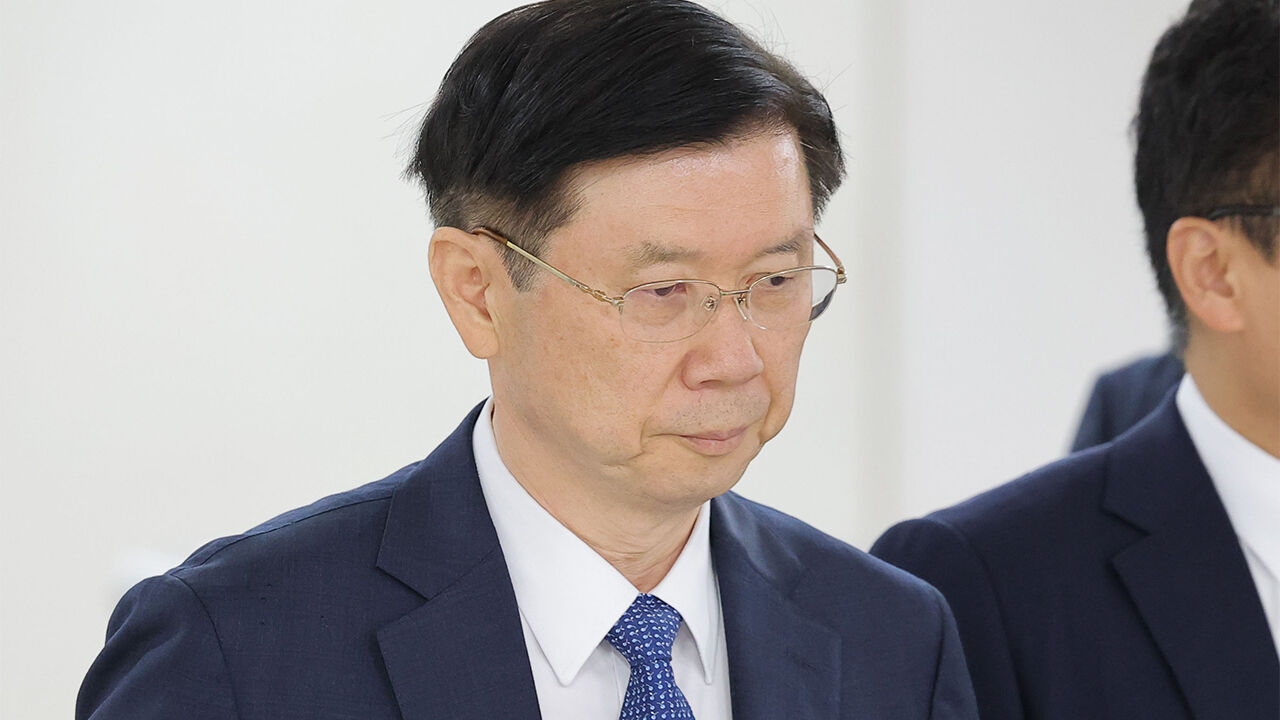
▲ Former Presidential Security Service Chief Park Chong-jun
Former Presidential Security Service Chief Park Chong-jun, who was indicted for obstructing the Corruption Investigation Office for High-ranking Officials (CIO) from executing an arrest warrant for former President Yoon Suk Yeol, has received a reduced sentence in his second trial.
On October 28, Criminal Division 1 of the Seoul High Court (Presiding Judge Yoon Sung-sik) sentenced the former chief, who was put on trial on charges including special obstruction of official duties, to three years in prison.
Previously, the first trial had sentenced Park to four years in prison.
The special counsel team led by Cho Eun-seok for the investigation into insurrection had demanded a seven-year prison sentence.
Kim Sung-hun, the former deputy chief of the Presidential Security Service who was indicted alongside him, received a five-year prison sentence, the same as in the first trial.
Lee Kwang-woo, the former security headquarters director, was sentenced to two years in prison, while Kim Shin, the former family security department director, received a one-year prison sentence suspended for two years.
The appellate court, upholding the first trial's ruling, found Park and the others guilty of obstructing the CIO from entering the official residence and other areas when they attempted to execute the arrest warrant last January while investigating former President Yoon for insurrection.
The court also maintained the first trial's guilty verdict against former Deputy Chief Kim for his involvement in ordering the deletion of secure phone (biwhaphone) data of three military commanders who became targets of the investigation upon former President Yoon's instructions (violation of the Presidential Security Act).
Rebuking Park, the court stated, "He commanded the overall measures of the Security Service at the time and physical clashes actually occurred, meaning he cannot evade responsibility for them." It added, "Considering the defendant's career, he committed the crime while fully aware of the illegality of refusing to execute the arrest warrant."
The court continued, "However, it does not appear that physical clashes with officials in charge of executing the warrant were actively intended, and his resignation on January 7 of last year can be seen as voluntarily acknowledging responsibility as the top official and stepping down from his post," noting that "he belatedly acknowledged responsibility for the extreme social turmoil and conflict caused by the crime and contributed to resolving it."
"Taking all these conditions into consideration, the sentence from the first trial is excessively heavy and unfair," the court stated.
Regarding former Deputy Chief Kim, the court judged that "he played a pivotal role in the Security Service's systematic resistance to the execution of the warrant," and that "even considering various circumstances such as his showing remorse, the sentence from the first trial is neither too heavy nor too light."
(Photo: Yonhap News)
※ Please note: This article was translated by AI and may contain errors.


 Video News
 Video News
 Video News
 Video News
 Video News