
 KOR
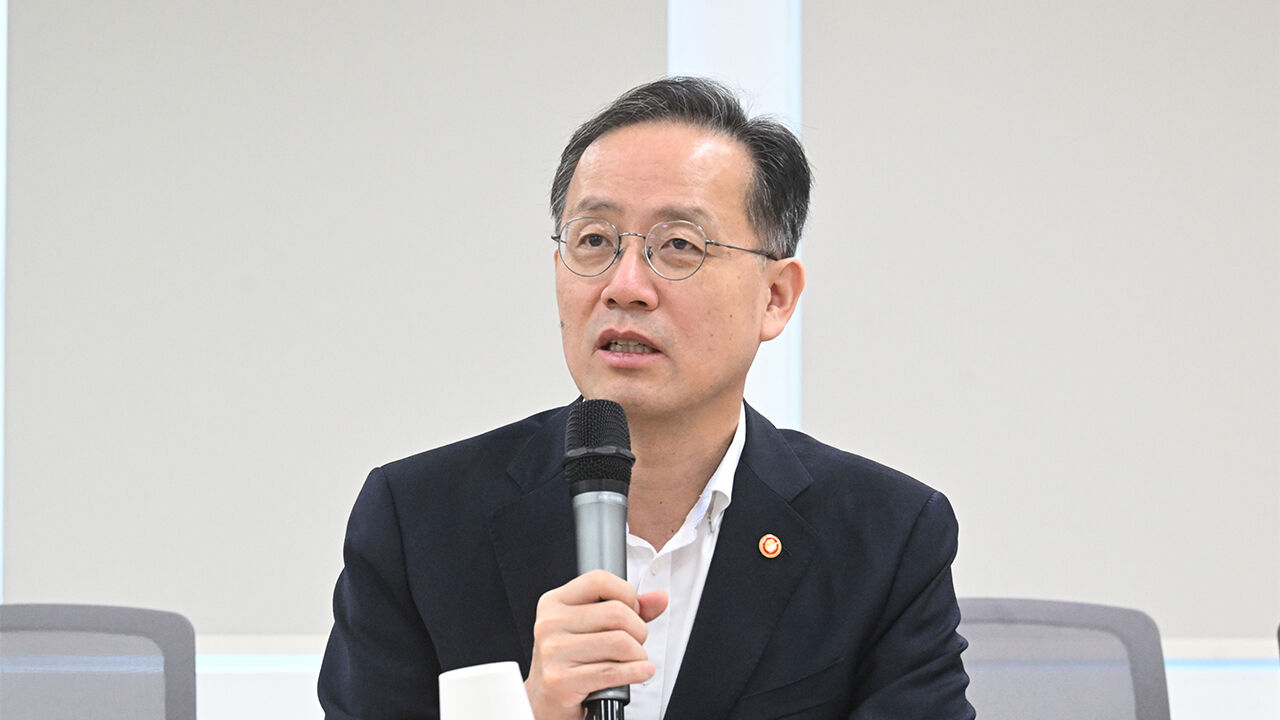
▲ Deputy Prime Minister and Minister of Economy and Finance Lee Hyung-il
Deputy Prime Minister and Minister of Economy and Finance Lee Hyung-il stated today (October 28) that the government will concentrate its capabilities on easing polarization between industries, regions, and generations that occurs during the rapid growth process.
Deputy Prime Minister Lee made the remarks during a joint meeting of the Ministerial Meeting on Economic Affairs and the Ministerial Meeting on Science and Technology, which he co-chaired with Deputy Prime Minister and Minister of Science and Technology Bae Kyung-hoon at the Government Complex-Seoul.
He emphasized, "To drive substantial changes in people's lives and achieve sustainable 'growth for all,' easing polarization must accompany the process."
Noting that the Bank of Korea announced the previous day that the third-quarter real gross domestic product (GDP) growth rate (compared to the previous quarter, advance estimate) came in higher than expected at 1.0%, Deputy Prime Minister Lee expressed expectations, saying, "We have taken a giant step closer to achieving mid-3% growth and a USD 40,000 per capita national income this year."
Today's meeting was the first joint meeting held with the Ministerial Meeting on Economic Affairs since the launch of the Ministerial Meeting on Science and Technology in November of last year, serving as a platform to discuss economic and industrial policies alongside science and technology policies.
Deputy Prime Minister Lee said, "The driving force behind our economy's growth is science and technology innovation," adding, "From source technology research and development to demonstration, commercialization, and fostering new industries, science and technology policy and economic-industrial policy must now move as one body."
To this end, he announced plans to materialize measures for future growth in cooperation with the Deputy Prime Minister for Science and Technology and related ministries.
Deputy Prime Minister Bae expressed his commitment to focusing on securing new technologies that lead the global economy.
He stated, "Recently, South Korea has been included in the top-tier 'AI-leading nation' group alongside the United States and China, and has ranked first in Asia and fourth globally for two consecutive years in the Global Innovation Index, receiving high international recognition for South Korea's artificial intelligence and science and technology competitiveness."
Emphasizing that this evaluation is "a valuable achievement forged together by the government's strategic investment and the private sector's relentless innovation and challenges," Deputy Prime Minister Bae added, "We must accelerate the national AI transition and spur the acquisition of core future technologies through the seven SEED projects so that this leads to an improvement in the quality of life for the people."
He added that taking the joint meeting as an opportunity, they will consolidate the capabilities of science and technology and economic policies to create new growth engines.
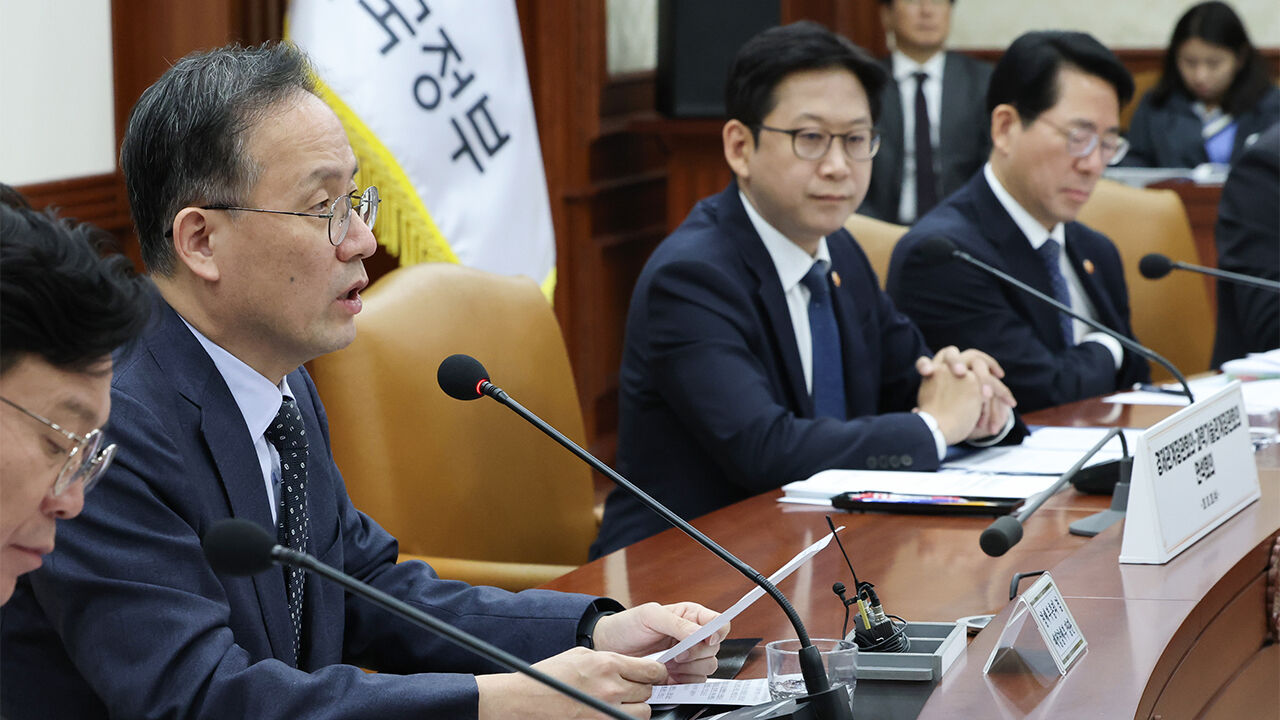
The meeting discussed the promotion plans for three core social policies, measures to strengthen the functions of retirement pensions, the implementation direction of the seven SEEDs and cross-ministerial cooperation plans, the maritime and fisheries AX strategy, plans to build a next-generation local administration common system, rapid promotion plans for the 9th regional revitalization investment fund project, inspection of response situations related to the Middle East war, and the termination of the notice prohibiting hoarding of urea, urea solution, syringes, and injection needles.
The government is currently operating a cross-ministerial task force to materialize the 'three core social policies' of housing, jobs, and livelihood finance, and is expected to announce and promote the policies soon.
The 'measures to strengthen retirement pension functions,' jointly prepared by labor, management, and the government based on the joint labor-management-government declaration in February of this year, were also handled as an agenda item.
According to relevant authorities, the revision is being promoted with the core goal of preventing retirement pay overdue wages by step-by-step mandating the out-of-plan accumulation of retirement benefits starting from workplaces with 100 or more employees in 2028.
Specific system introduction and operation plans for fund-type retirement pensions will also be established.
The plan aims to increase returns through professional asset management while strictly defining fiduciary duties to make efforts to protect workers' entitlement to receive benefits.
In particular, the competent ministry, the Ministry of Employment and Labor, and financial authorities plan to cooperate on licensing, management, and supervision to promote stable operation.
In addition, system improvements to boost returns will be pursued, such as restructuring provider evaluations around pension performance and returns, and moving up the application timing of default options.
Details of the specific retirement pension function-strengthening measures will be announced tomorrow (October 29) following consultations between the ruling party and the government at the Climate, Energy, Environment and Labor Committee.
To achieve the 2030 and 2035 core targets for each of the seven SEEDs, the government has decided to establish an implementation system that strategically links ministerial projects and investments around core missions, moving away from individual project-centric approaches.
A public-private joint platform, the Frontier Board, will be formed to reflect private demand and strengthen inter-ministerial cooperation from technology development to demonstration and industrialization, while jointly resolving key prerequisite tasks such as regulations and approvals.
In addition, the construction of a next-generation local administration common system will be pursued to transition the aging local administration common system to an AI- and cloud-based infrastructure.
(Photo provided by the Ministry of Economy and Finance, Yonhap News)
※ Please note: This article was translated by AI and may contain errors.



 Video News

 Video News
