
 KOR
⚡ Spf Key Takeaways
Speed limits on Ukraine's satellite network and restoration of capability: In mid-October, movement speed restrictions were imposed on Starlink and Starshield used by the Ukrainian military (cutting off connectivity when exceeding 160 km/h), disrupting drone interception and battlefield operations, but service was normalized following international cooperation and U.S. intervention.
Controversy over controlling authority and terms of service violations: Elon Musk claimed the measures were taken over terms-of-service violations such as using Starlink for offensive drone strikes, but the Ukrainian side refuted this, and a dispute over responsibility ensued regarding whether the restriction was directed by the White House or was Musk's independent decision.
Security risks of relying on commercial satellite communications: This incident exposed the critical risks of dependence on private technology and issues of sovereignty, demonstrating that private corporations and external entities can control the switch and terms of use of crucial battlefield communications networks at any time.
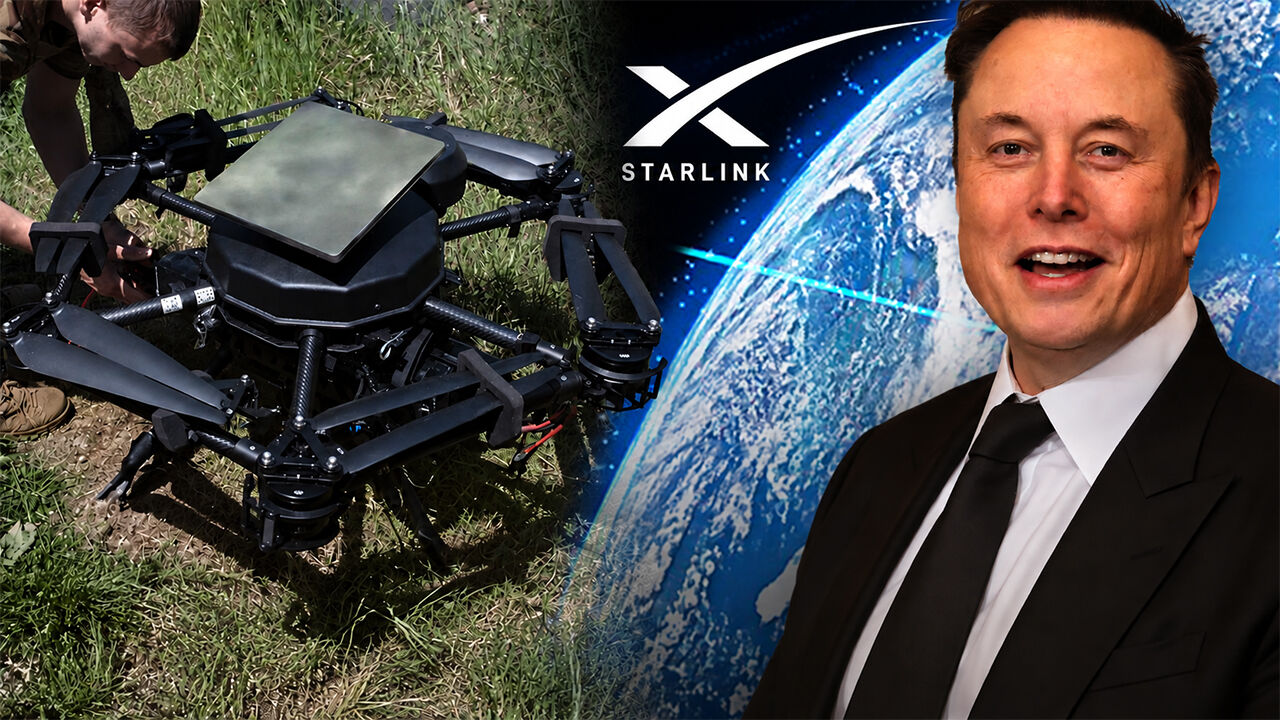
As the Starlink and Starshield satellite communications systems used by the Ukrainian military regained normal speeds, SpaceX CEO Elon Musk partially acknowledged that restrictions had been implemented. What exactly happened to the satellite network that holds sway over the Ukrainian front lines?
01. Starlink and Starshield Restored
Ukraine announced that on the night of October 13, speed restrictions were placed without notice on the satellite internet service "Starlink" and the military communications service "Starshield" used by the Ukrainian military, causing disruptions to battlefield operations. Then, on October 24 local time, President Volodymyr Zelenskyy reported that the Starlink and Starshield satellite systems had been fully restored.
Volodymyr Zelenskyy | President of Ukraine
This is the most important news today (October 24). Starlink and Starshield have completely regained the speeds they had before the various restrictions were put in place. The current speed exactly meets the level we need. Restoration began last night, and by this morning, we had already regained sufficient speed to use the communication services. I thank everyone who helped restore Starlink and Starshield, showed support regarding Ukraine's communications issues, and made it possible to return to normal conditions. This is extremely important because it is essential not only for logistics support on the front lines, but also for defending Ukraine against jet-powered 'Shahed' drones.
This is the most important news today (October 24). Starlink and Starshield have completely regained the speeds they had before the various restrictions were put in place. The current speed exactly meets the level we need. Restoration began last night, and by this morning, we had already regained sufficient speed to use the communication services. I thank everyone who helped restore Starlink and Starshield, showed support regarding Ukraine's communications issues, and made it possible to return to normal conditions. This is extremely important because it is essential not only for logistics support on the front lines, but also for defending Ukraine against jet-powered 'Shahed' drones.
Once the speed restrictions were resolved, he also expressed gratitude to those who helped address the problem, including the U.S. Congress, the media, the State Department, and the President. While the communications disruption that lasted for more than ten days came to an end, questions remained over who restricted it and why.
02. Cut Off Past 160 km/h
Starlink supports frontline communications, while Starshield plays an important role in operating certain drones. They have played a vital part in allowing the Ukrainian military to steer medium-range attack drones in real time.
The issue was not that internet speeds slowed down, but the speed of movement of drones equipped with satellite terminals. The restriction reportedly severed satellite connections when speeds exceeded about 160 km/h. The Ukrainian military stated that operations to intercept Russian attack drones were disrupted and some missions had to be canceled. On October 24, it was confirmed that connectivity was maintained even while traveling at speeds of over 400 km/h.
03. Fuel Prices Rattle the Satellite Network
The timing of when the speed restrictions began is peculiar. Just a few days prior, U.S. President Donald Trump announced an agreement with Russia regarding diesel supplies. He demanded that Ukraine stop attacking Russian oil refineries and even brought up replacing President Zelenskyy. Just days later, restrictions were slapped on the Ukrainian military's critical satellite communications.
Citing sources including U.S. government officials, Reuters reported that the directive to restrict Starshield came from inside the White House. However, The Wall Street Journal published a conflicting report stating that Musk personally ordered the restrictions. Who on earth made the decision?
04. Who Imposed the Speed Limit?
When the restriction order first came to light, Musk initially explained that SpaceX controls the civilian Starlink service, while the U.S. government controls the military Starshield service. He maintained that limits on Starshield's speed or usage were matters for the U.S. military and the President to decide. However, President Trump distanced himself, saying, "(The speed limit) wasn't done by me, and I don't think it was done by Musk either."
But subsequently, Musk stated that the Ukrainian military had violated the terms of service by using Starlink on attack drones, adding that he closed that loophole last week. This amounted to an admission that the use of civilian Starlink had indeed been restricted.
However, who actually ordered the restrictions on Starshield remains contentious. Serhii Beskrestnov, a military technology adviser to Zelenskyy, rebutted Musk's remarks, explaining, "Starlink does not operate on Russian territory, and drones using ordinary Starlink are capped at speeds of 70 to 90 km/h, making it physically impossible to use them for long-range strikes."
05. Are Claims of "Terms of Service Violations" True?
Does Musk's claim of a "terms of service violation" have merit? In fact, Starlink's official terms of service contain clauses prohibiting ① remotely controlling drones without explicit contractual authorization, and ② military activities outside authorized welfare purposes for military personnel.
However, the Ukrainian military also uses Starshield, the military satellite communications service. Starshield is governed by separate government contracts, and the specific terms and scope of authorization have not been disclosed. Therefore, Musk's claims alone cannot be seen as proof that the Ukrainian military violated its contract.
06. Who Holds Control?
What is the greatest lesson left by this incident? No matter how many satellites are in orbit, if the service operator alters the terms of use, specific missions can be halted immediately. A Ukrainian soldier told the BBC, "They must never turn it (Starshield) off completely. If that happens, it would be a true catastrophe."
On modern battlefields, satellite communications are no longer an option, but a core combat capability. Yet those holding the switch to that network may not be the military fighting the war. Who controls the communications network that determines victory or defeat in war, and by what criteria? That is the question left behind by this incident.
Deep Dive Q&A
Q1. What was the nature of the movement speed restrictions imposed on the Ukrainian military's Starlink and Starshield, and what was the extent of the damage on the ground?
A1. Measures were applied where satellite connections were immediately severed if equipment mounted with terminals traveled at speeds exceeding roughly 160 km/h. As a result, operations involving interceptor drones countering Russian 'Shahed' drones flying at hundreds of kilometers per hour and the real-time control of medium-range attack drones became impossible, disrupting the operation of Ukraine's air defense network and causing some frontline missions to be canceled. The restrictions have now been lifted, and high-speed communications are maintained even at speeds exceeding 400 km/h.
Q2. What were the specifics of Elon Musk's claims regarding "Starlink terms of service violations," and what counterarguments did the Ukrainian side present?
A2. Musk claimed that because Starlink is a civilian commercial service, using it for offensive drone strikes to kill people is a terms-of-service violation, and that he lowered the speed cap to close this loophole. In contrast, the military technology adviser to the Ukrainian president completely refuted Musk's claims, pointing out that civilian Starlink in Ukrainian skies had already been capped at speeds of 70 to 90 km/h since February and did not function inside Russian territory, making it physically impossible to use it for attack drones.
※ Please note: This article was translated by AI and may contain errors.


 Video News


 Video News