
 KOR
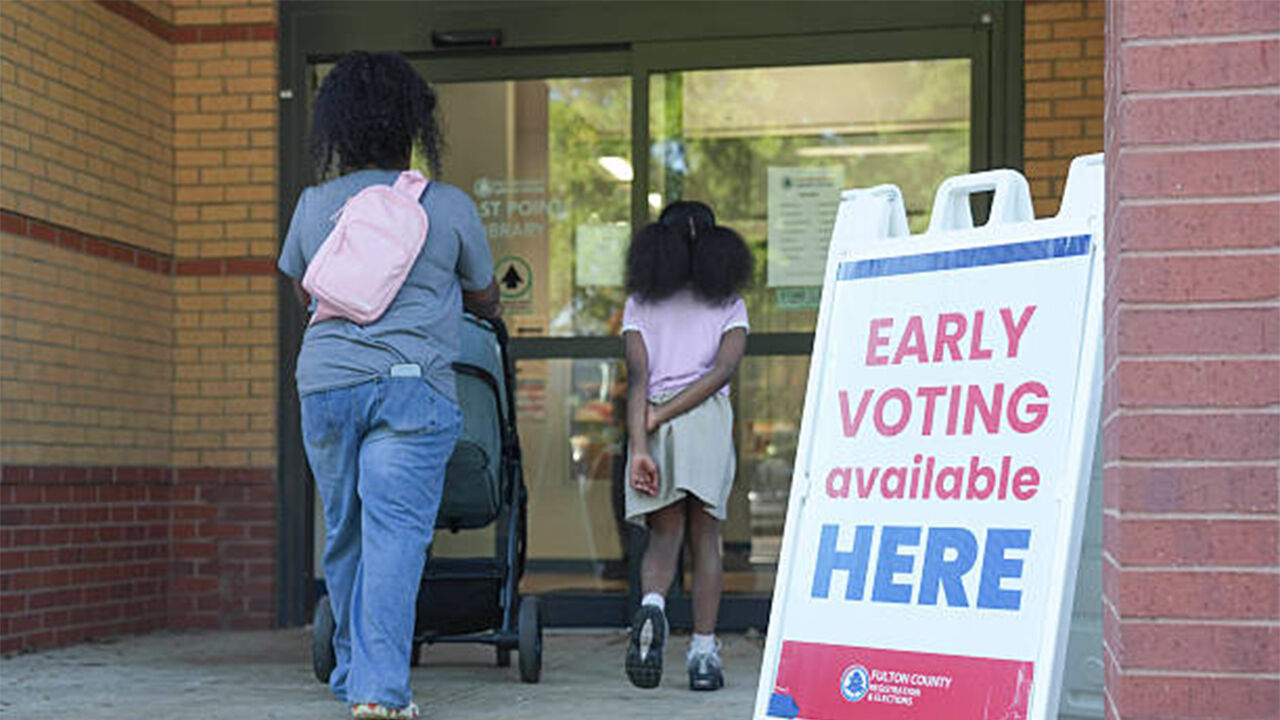
▲ U.S. citizens participating in early voting ahead of the midterm elections
Foreign media outlets and experts are divided over whether the "Shy Trump" phenomenon—referring to the hidden votes of U.S. President Donald Trump's supporters—will become a last-minute variable in the battle for the Senate in this midterm election.
This comes as nearly all polls point to an advantage for the Democrats, raising the possibility that the Democratic Party could even recapture the Senate.
The central question is whether current polls can be fully trusted.
Experts suggest examining whether the polls failed to capture "Shy Trump," or conversely, whether they overestimated the Democratic lead.
With major Republican strongholds turning into battlegrounds according to polls, if hidden votes among President Trump's supporters rally at the last minute and the Republicans manage to defend the Senate, the GOP could focus on the fact that they held the Senate rather than losing the House, launching a major propaganda campaign.
CNN introduced this on the 25th (local time), describing it as "when a defeat feels like a victory," and noting that there have been similar cases in the past.
In the 2022 midterm elections, the Democratic Party lost its House majority but maintained its Senate majority.
At the time, then-President Joe Biden and the Democrats were thrilled.
The day after the election, Biden said, "The press and the experts predicted a giant red wave, but that didn't happen."
During his first term in 2018, President Trump boasted that while the Republicans lost their House majority, maintaining the Senate majority "dramatically defied historical precedent."
Democrats also acknowledge the possibility that the Republicans could retain the Senate majority in this election as well.
Democratic strategist David Axelrod said, "I think Democrats have a sufficient advantage, but I wouldn't be surprised if they don't win the Senate majority."
CNN projected that because expectations for the Democrats are high in this midterm election, if they fail to secure control of both the House and the Senate, significant disappointment could erupt within the Democratic Party, while cheers could break out within the Republican Party.
CNN further noted that post-election analysis of the polling results will likely depend on whether polling organizations accurately reflected the enthusiasm of Democratic voters or overestimated it.
British daily The Independent focused on "Shy Trump."
The Independent reported that polling agencies are facing difficulties reaching President Trump's supporters, warning that the poll results showing Democrats ahead may be exaggerated.
The critique is that low response rates from Republican voters prevent polls from properly reflecting current voter sentiment.
Counterarguments have also been raised.
The New York Times (NYT) reported that while it is entirely possible that polls overestimated Democratic support, they should not be placed on the same footing and compared with the 2016 and 2020 presidential elections.
Looking solely at midterm elections rather than presidential ones, polls did not show a tendency to overestimate Democrats in the 2018 and 2022 elections.
The NYT stated that polling methodologies have changed dramatically since the Trump era in areas such as voter contact and weighting, which includes measures to offset the tendency to underestimate President Trump's approval ratings.
(Photo: Getty Images)
※ Please note: This article was translated by AI and may contain errors.



 Video News


