
 KOR
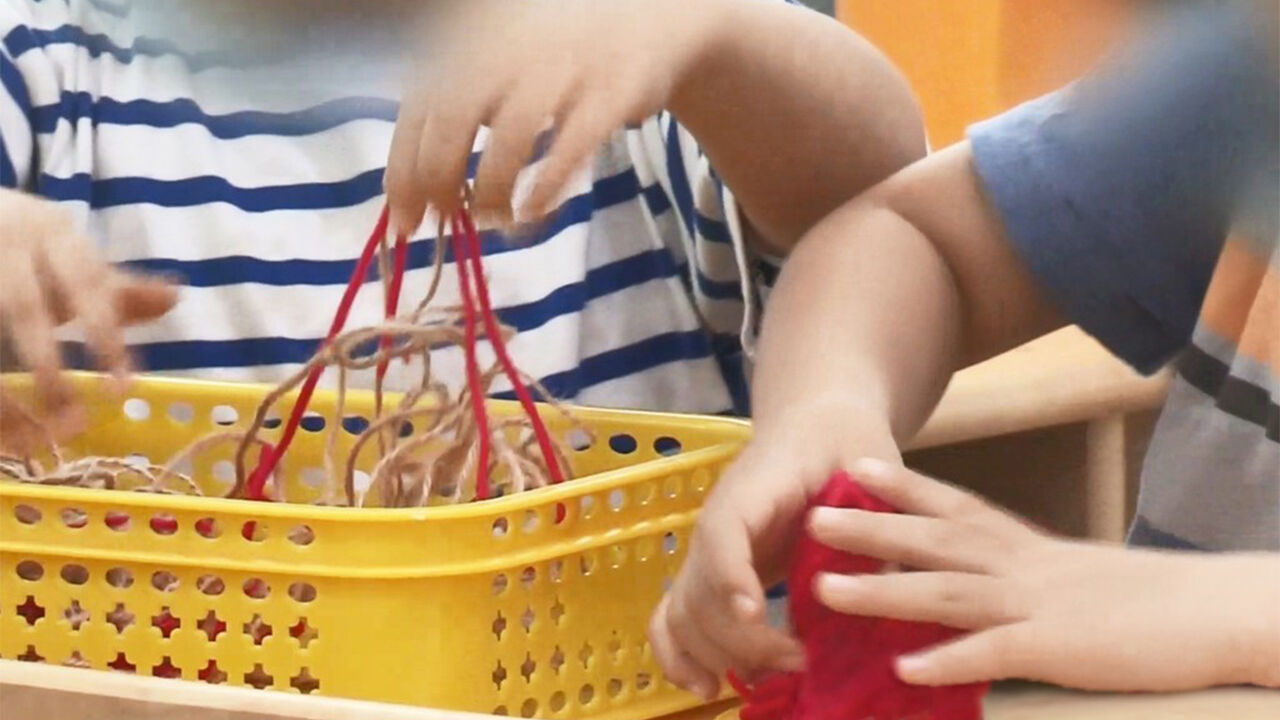
▲ Children playing at a daycare center
Nine out of ten children with disabilities do not use daycare centers or kindergartens, data showed.
According to the "2026 Yearbook of Statistics on Persons with Disabilities" published by the Korea Disabled People's Development Institute, 90.4% of children with disabilities were not enrolled in childcare facilities (daycare centers) as of the end of last year.
The proportion of children with disabilities using childcare facilities stood at a mere 9.6%.
Among the daycare centers attended by children with disabilities, general daycare centers accounted for 4.2%, integrated daycare centers for children with disabilities accounted for 2.4%, and specialized daycare centers for children with disabilities accounted for 3.0%.
Specialized daycare centers for children with disabilities care for 12 or more children with disabilities on a regular basis, while integrated daycare centers care for children with disabilities within 20% of their total capacity or 3 or more children.
The enrollment rate in kindergartens for children with disabilities was even lower than that of daycare centers.
The proportion of children with disabilities not attending kindergarten was 91.9%.
Kindergartens attended by children with disabilities included general kindergartens at 1.6%, special classes within general kindergartens at 5.1%, and kindergarten classes in special-needs schools at 1.4%.
According to the "2024 National Childcare Survey" released by the Ministry of Education at the end of last year, the daycare center enrollment rate for infants and toddlers was 55.3%, and the kindergarten enrollment rate was 26.5%.
As of last year, the population of children with disabilities stood at 92,094, accounting for 1.39% of the total child population (6,644,957).
While the total child population is on a downward trend, the number of children with disabilities has been on the rise since 2017.
Against this backdrop, analyses indicate that a shortage of facilities for children with disabilities, alongside social discrimination, acts as a barrier to their admission into daycare centers and kindergartens.
Specialized daycare centers for children with disabilities increased from 172 in 2023 to 177 in 2025, but decreased by 1 to 176 last year.
The number of children cared for in specialized daycare centers for children with disabilities decreased from 6,321 in 2024—including 5,895 children with disabilities—to 6,138 children—including 5,699 children with disabilities—last year.
Integrated daycare centers for individuals with disabilities increased by 112 from 1,718 in 2024 to 1,830 last year.
However, the number of children with disabilities cared for in integrated daycare centers decreased from 6,857 to 6,736 over the same period.
Special-needs schools increased by one every year, numbering 194 in 2023, 195 in 2024, and 196 last year.
More than 3 out of 10 parents of children with disabilities (32.4%) reported experiencing social discrimination during the kindergarten admission or transfer process.
The response reporting social discrimination during the elementary school admission or transfer process stood at 34.3%.
Experiences of social discrimination during admissions and transfers decreased as students advanced to higher levels of schooling, dropping to 31.6% for middle school and 25.8% for high school.
More than half, or 53.3%, of respondents reported experiencing discrimination from peers during school life.
Those who reported facing discrimination from teachers were tallied at 21.0%.
(Photo: Yonhap News)
※ Please note: This article was translated by AI and may contain errors.


 Video News



 Video News