
 KOR
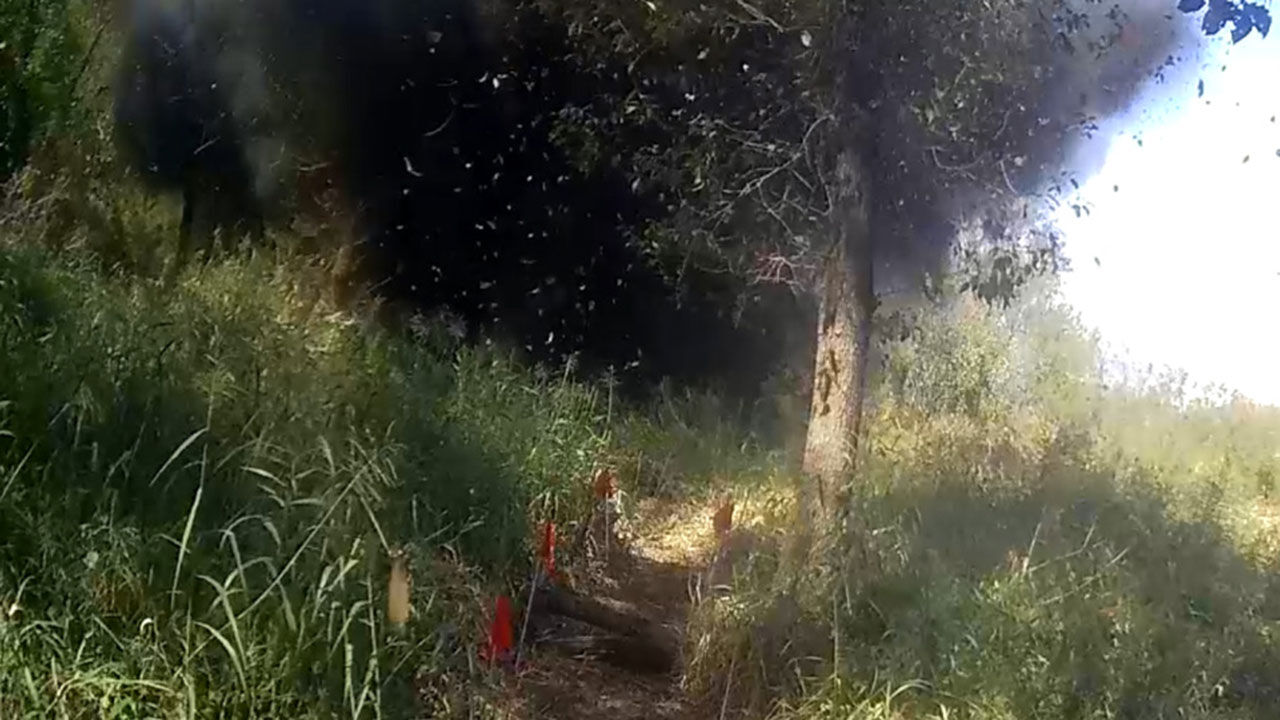
▲ The Joint Chiefs of Staff released a photo on October 5 while announcing the final findings of a joint on-site investigation task force regarding a landmine explosion incident during a 25th Infantry Division operation in the DMZ.
North Korea is understood to have planted nearly 1 million landmines in and around the Demilitarized Zone (DMZ) over the past two years or so.
According to multiple lawmakers' offices on the National Assembly's Intelligence Committee and National Defense Committee today (October 23), military authorities reported to parliament that North Korea is estimated to have laid approximately 960,000 landmines in the DMZ area since 2024.
Experts in related fields estimate the total number of landmines buried in the DMZ—including those laid by South Korean and allied forces—at around 2 million, and Minister of Unification Chung Dong-young also cited a total of 2 million mines while addressing the DMZ landmine issue during a parliamentary audit on October 7.
If the military's report is accurate, it suggests that roughly half of all landmines in the DMZ were planted relatively recently, since 2024.
The large-scale landmine laying appears to be part of North Korea's efforts to "fortify the border" along the Military Demarcation Line (MDL), which gained full momentum in April 2024 after Pyongyang defined inter-Korean relations as "two hostile states."
Alongside the massive deployment of landmines, North Korea is simultaneously clearing wasteland, building anti-tank walls, constructing tactical roads, installing barbed wire fences, and severing road and rail links along the Gyeongui and Donghae lines.
As North Korea carried out work across the border area, serious damage occurred, including an incident on September 21 south of the MDL where a North Korean landmine exploded, severely injuring a South Korean service member.
Military tensions in the area have also been escalating as North Korean troops have repeatedly crossed the MDL in the course of these operations.
While the South Korean military continues response measures such as issuing warning broadcasts and firing warning shots at North Korean troops crossing the MDL, Pyongyang has protested that such actions threaten the safety of its personnel and pushed back by threatening to resume anti-South loudspeaker broadcasts.
(Photo courtesy of the JCS, Yonhap News)
※ Please note: This article was translated by AI and may contain errors.


 Video News
 Video News
 Video News
 Video News
 Video News