
 KOR
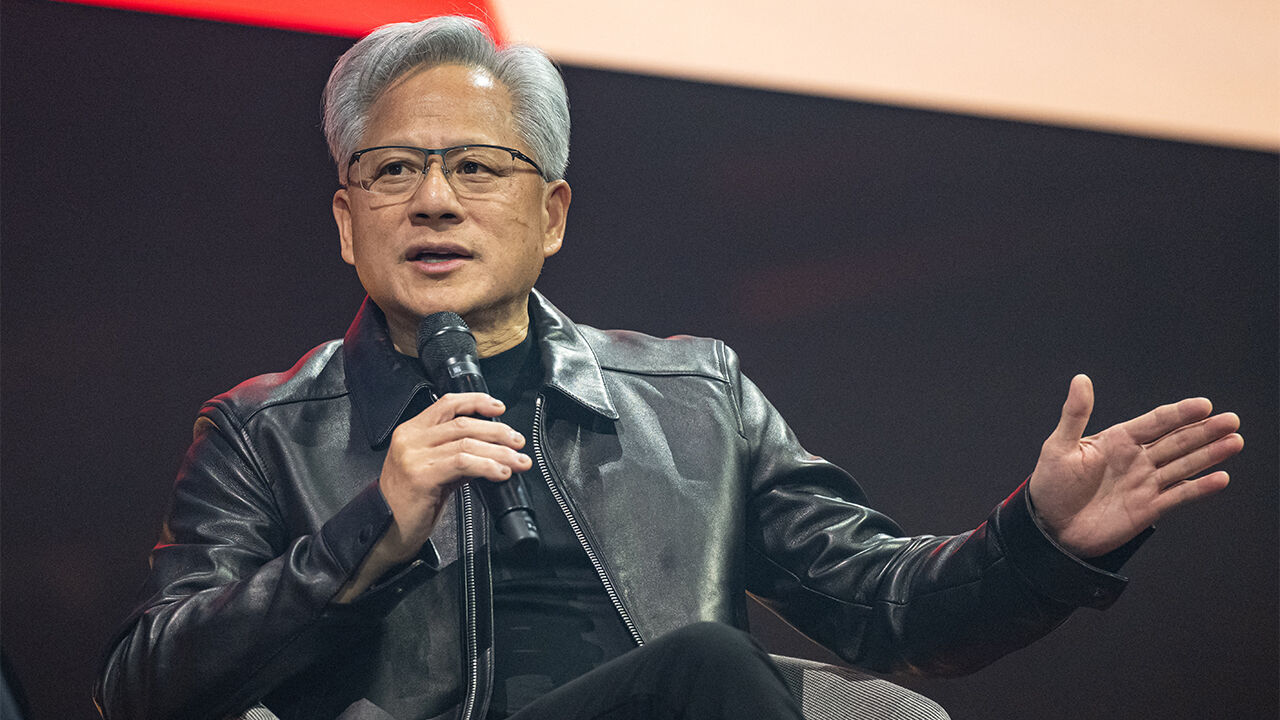
▲ Nvidia CEO Jensen Huang
Nvidia CEO Jensen Huang has dismissed concerns raised by some quarters regarding a potential oversupply of memory chips in 2029.
Asked about the possibility of a memory oversupply during an interview with U.S. business channel CNBC on the sidelines of the company's GTC developer conference held in Berlin, Germany, on the 22nd (local time), Huang replied, "I don't think so."
"The real beauty of memory is that the more you have, the better," he said, predicting that demand for memory will continue to grow increasingly.
This is interpreted as a rebuttal to forecasts emerging from some circles in South Korea that a memory oversupply in 2029 would create a red ocean (saturated market), bringing an end to the so-called super cycle.
Regarding High Bandwidth Memory (HBM), which has established itself as a core component of artificial intelligence (AI) chips, he stated that it "will be used for the coming years," and affirmed plans to continuously use large quantities of LPDDR, a low-power memory.
As the CEO of the world's largest memory-purchasing company has publicly affirmed growing demand for memory, market anxieties stemming from predictions of an oversupply are expected to subside significantly, along with some alleviation of growth concerns for South Korean memory manufacturers such as Samsung Electronics and SK Hynix.
However, when asked whether he would be willing to use products from China's ChangXin Memory Technologies (CXMT), which is chasing South Korean companies, Huang responded, "Of course, we have an open mind."
He praised China's technological prowess, noting that the country possesses remarkable capabilities in basic infrastructure technology.
While mentioning that U.S. regulations against China have paradoxically accelerated China's own semiconductor manufacturing capabilities, he added that U.S. technology companies are strong and ready to compete with anyone.
Meanwhile, he also defended neo-cloud companies such as CoreWeave, Nebius, and Iren, which have recently become a focus of investor concerns, asserting that demand is growing so explosively that it is going off the charts.
He argued that what hinders the growth of neo-cloud companies is working capital rather than demand, adding that "fundamentally, this issue will be resolved given the value these companies provide."
(Photo: AP, Yonhap News)
※ Please note: This article was translated by AI and may contain errors.


 Video News
 Video News
 Video News
 Video News
 Video News