
 KOR
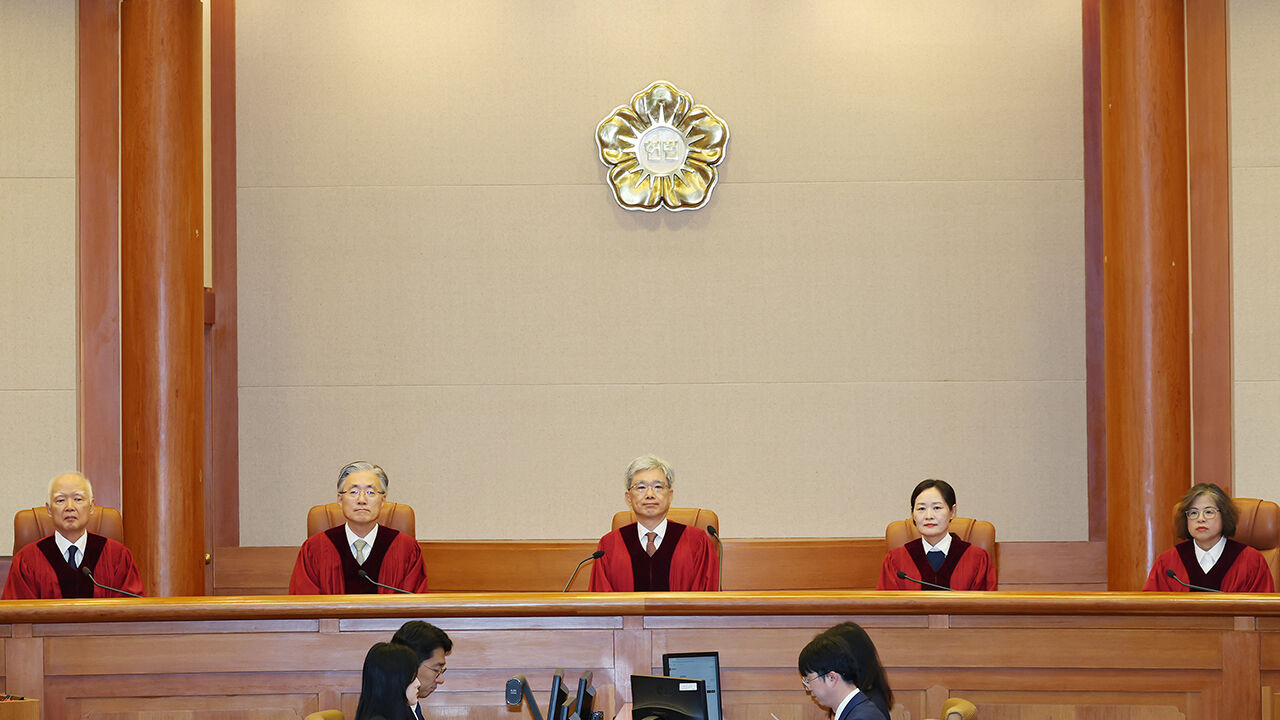
▲ The Constitutional Court
The Constitutional Court will hold its first public oral argument today (October 21) since the implementation of the constitutional complaint system against court rulings.
The Constitutional Court is scheduled to hold a public hearing at 3:00 p.m. in the main courtroom regarding a constitutional complaint filed by lawyer Kim Young-soo of the Daeryun law firm against the Supreme Court. Kim claims that he was not provided with a copy of a search warrant during the investigation into the death of the late Master Sergeant Lee Ye-ram.
The core issue of the case is whether the investigative agency's refusal to provide a copy of the search warrant—on the grounds that the subject of the search and seizure was not a suspect—violates the right to equality.
In July 2022, the independent counsel team led by An Mi-young, which investigated the death of Master Sergeant Lee, conducted a search and seizure on the home and office of lawyer Kim, who was then a witness.
When Kim requested a copy of the search warrant during the search and seizure process and was refused, he filed a quasi-appeal demanding the cancellation of both the search and seizure disposition and the refusal to issue a copy of the warrant.
In 2023, the Seoul Central District Court canceled the search and seizure disposition, but ruled that there was no obligation to provide a copy of the warrant because Kim was a witness rather than a suspect.
This ruling was based on the premise that investigative agencies have no obligation to provide a copy of a search warrant when executing it against a third party who is not a suspect.
Both Kim and the independent counsel appealed, but the Supreme Court upheld the lower court's decision.
Article 118 of the Criminal Procedure Act stipulates that "when the person subject to a search and seizure warrant disposition is a defendant, a copy shall be issued."
Kim argued that this provision "prevents a person subjected to a search and seizure who is not a suspect from receiving a copy of the search and seizure warrant during the warrant execution procedure," and that it "violates the principle of due process and infringes on the right to equality by discriminating without rational reason between those subjected to a search who are suspects and those who are not."
The Ministry of Justice, an interested party, stated through its legal representative, the Government Legal Aid Corporation, that "to whom a copy of a warrant should be issued is a matter for the legislature to decide." It added that there are fundamental differences between suspects and third parties in terms of guaranteeing the right to defense, and that issuing warrant copies to non-suspects risks compromising the confidentiality of investigations.
On the other hand, the Korean Bar Association pointed out in a written statement that "the need to maintain investigative confidentiality significantly decreases the moment a warrant is executed and presented," adding that "human memory has limitations, and a simple presentation of a warrant is insufficient to protect the rights of a search target who is not a suspect."
(Photo: Yonhap News)
※ Please note: This article was translated by AI and may contain errors.


 Video News
 Video News
 Video News

 Video News