
 KOR
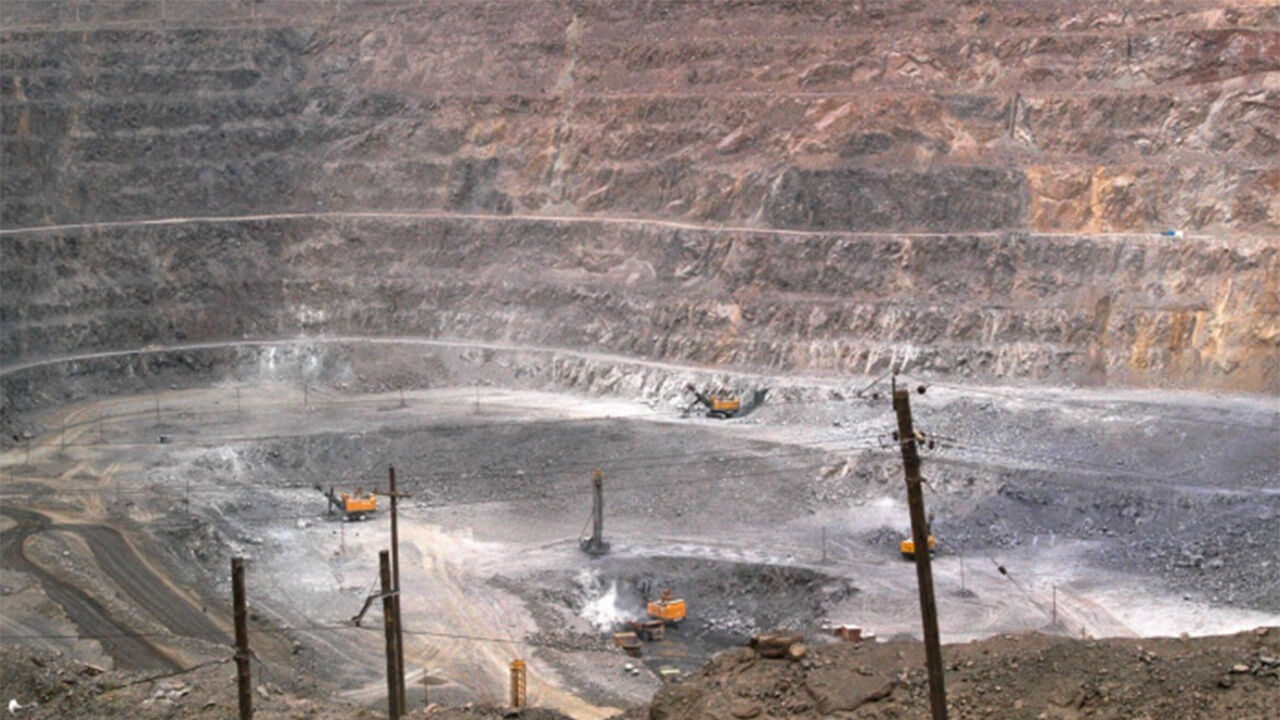
▲ A rare earth mine in China
As China tightens its export controls on rare earth elements, pushing yttrium—a key raw material for jet engines and semiconductor manufacturing—to the brink of depletion, the Japanese government has gone as far as asking the U.S. government to help persuade China.
Citing sources in Washington and Tokyo, the Financial Times reported on the 20th local time that "the Japanese government recently made an urgent request to the U.S. government and major global corporations to resolve the yttrium supply chain issue."
Yttrium is a mineral with exceptional heat resistance, making it essential for jet engines, automotive parts, and semiconductor manufacturing processes.
In recent months, the U.S. government has urged the Chinese government to increase the supply of rare earths, including yttrium, to the United States and its allies.
U.S. defense contractors also rely on Japanese components that contain yttrium.
Japanese government officials and trade executives warned that if China does not change its stance on rare earth export controls or if U.S. allies fail to find alternatives, a severe supply shortage could occur starting at the end of this year.
A Japanese government official told the newspaper, "Inventories are plummeting, and efforts to reduce the use of rare earths are reaching their limits," warning that "with only a few months left rather than years, it will be hard to endure next year, and if we do not find countermeasures right away, it will become a systemic crisis for the global economy."
China is utilizing the rare earth export control card to respond to the trade war with the Trump administration and to protest remarks regarding Taiwan made by Japanese Prime Minister Sanae Takaichi.
According to data from commodity pricing firm Argus, the price of yttrium oxide sits at around 9 dollars per kg in China, but has skyrocketed up to 1,150 dollars per kg outside of China, surging 179-fold compared to two years ago.
The United States has criticized China for failing to fulfill the rare earth export restrictions relaxation promised during the trade war truce agreement in October of last year.
Following the U.S.-China summit in Beijing last May, China reaffirmed its promise to address U.S. concerns regarding the rare earth supply chain.
A senior U.S. official told the Financial Times last month, "China is fulfilling only two-thirds of its rare earth export volume to the United States and is allowing only the bare minimum to Japan."
Citing difficulties in jet engine production caused by the yttrium shortage, the U.S. government even notified China that it would not export jet engines intended for China's first homegrown passenger jet, the Comac C919.
China's promise made at the May summit to purchase 200 Boeing passenger planes is also unfulfilled as it is entangled with issues such as rare earths.
Gracelin Baskaran, director of the critical minerals security program at the U.S. think tank Center for Strategic and International Studies (CSIS), projected that "Japan is likely to experience pain for the time being."
(Photo: AP, Yonhap News)
※ Please note: This article was translated by AI and may contain errors.


 Video News
 Video News
 Video News
 Video News
 Video News