
 KOR

[Kim Byung-ji / CEO of Gangwon FC: Municipal and provincial clubs do not simply stop at staging football matches. I believe they are essential public goods that exist for local residents.]
Later, Kim wrote on his personal social media account that Gangwon FC alone generated 70 billion won worth of public relations value for the local government last year. However, he did not explain how the figure was calculated, and football fans reacted coldly.
SBS asked the Korea Professional Football League (K League) about the origin of the 70 billion won promotional effect. The league replied, "Every year, we commission an outside agency to analyze the sponsorship effect for each club and deliver it to the clubs at the end of the year." According to the explanation, club exposures across television, new media, and print media are converted into advertising costs, with weighted scores applied based on on-screen size, location, and exposure duration. Under this explanation, the 70 billion won figure ultimately stems from the league's calculations.
However, there is no way to examine the details behind that calculation. While the league explained what factors were considered, it did not disclose the weights assigned to each element or the advertising rates credited per unit of exposure time. This remains undisclosed even though outcomes can vary drastically depending on how weights are set. The league stated, "Club reports are for internal review by each club and cannot be shared externally," and Gangwon FC also withheld the material, saying, "We merely receive the data from the league."
64% Reliance Even Excluding New Clubs... Yet Foundings Mushroom
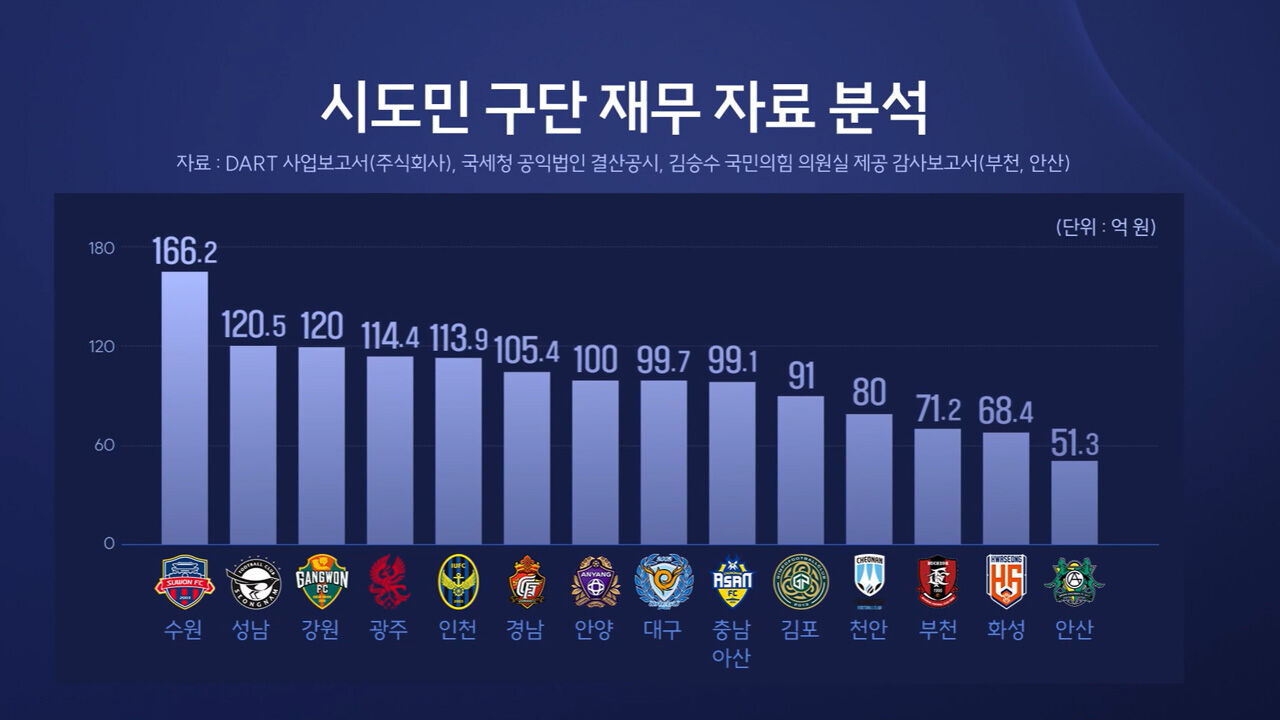
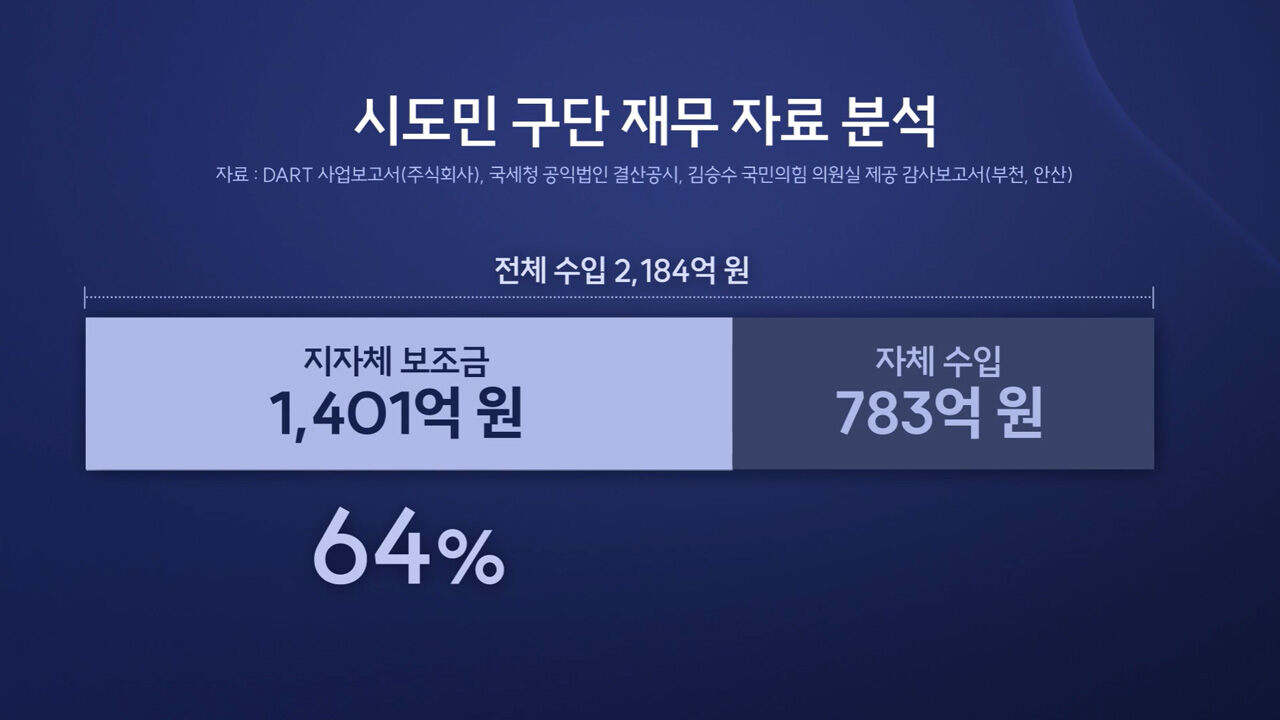
The league also emphasizes the "public good function" of civic clubs. It argues that they enhance city brand value, revitalize local economies, and offer leisure opportunities to citizens. Under a financial soundness system introduced three years ago, player payrolls are capped within 70% of revenue while operating deficits and capital impairment are monitored. The league also noted that it is reviewing the introduction of a salary cap to restrict total team payroll and a roster system to cap squad sizes.
[Cho Yeon-sang / Secretary General of K League: Rather than viewing local government support solely as covering the operating expenses of a professional football club, if we also examine how clubs contribute to local communities, the league believes the misconception that they are 'football clubs run entirely on taxpayer money' can be dispelled.]
Claiming Public Value While Accounting Varies and Data Remains Undisclosed
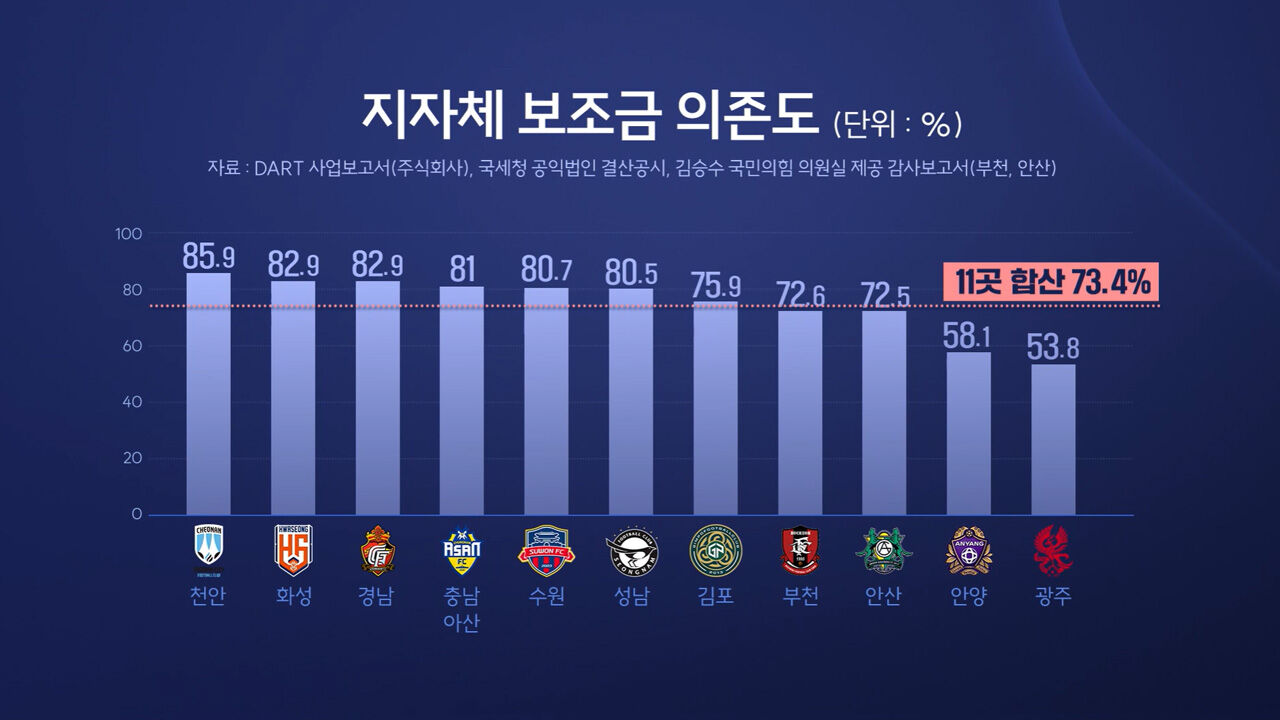
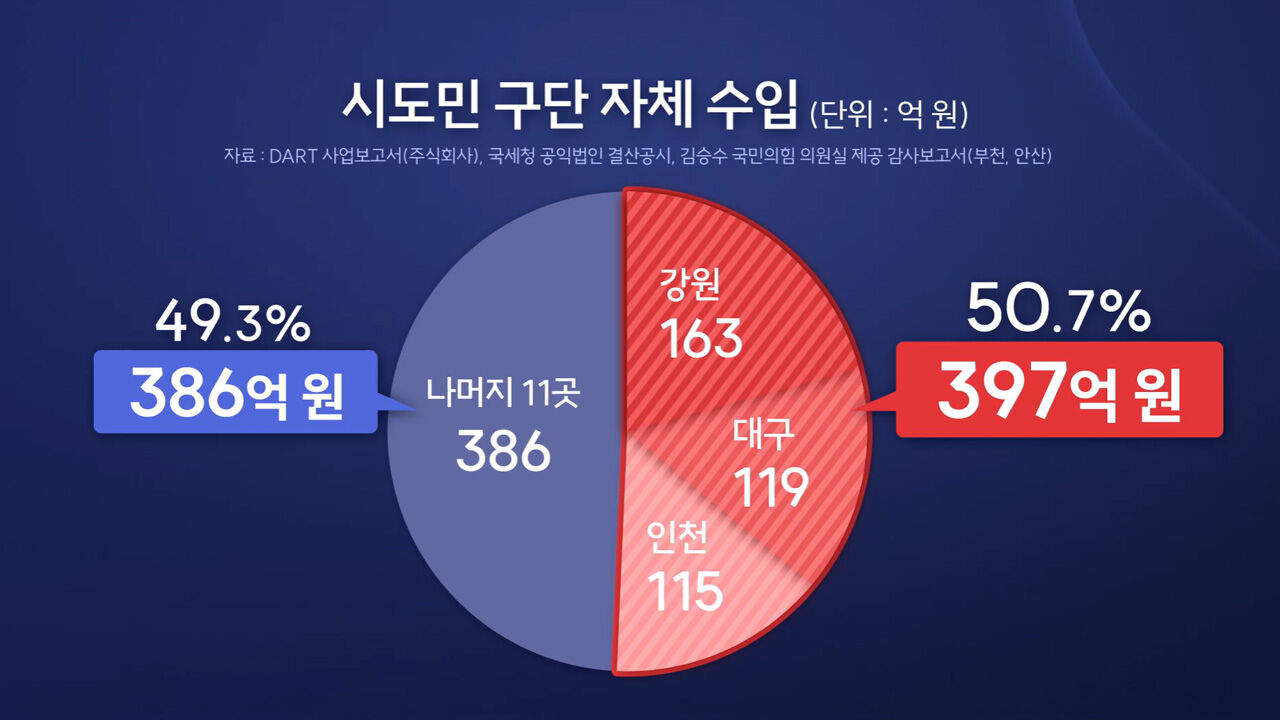
If the annual publicity effect of a professional football club truly amounts to 70 billion won, why are corporations unwilling to step forward to run them? Since the 2002 World Cup, Seoul E-Land FC is virtually the only corporate club to join the K League, and even its founding was 11 years ago. (*Daejeon Hana Citizen was refounded following an acquisition of a citizen club, and Chungbuk Cheongju FC operates as a consortium.) If, as Kim said, civic and provincial clubs are "public goods that exist for local residents," their financial books should also be laid open before those residents. Only when the 70 billion won figure appears not in social media posts, but in detailed records accessible to anyone, will the claim that "football clubs are public goods" truly gain credibility.
※ Please note: This article was translated by AI and may contain errors.


 Video News
 Video News
 Video News
 Video News
 Video News