
 KOR
KOR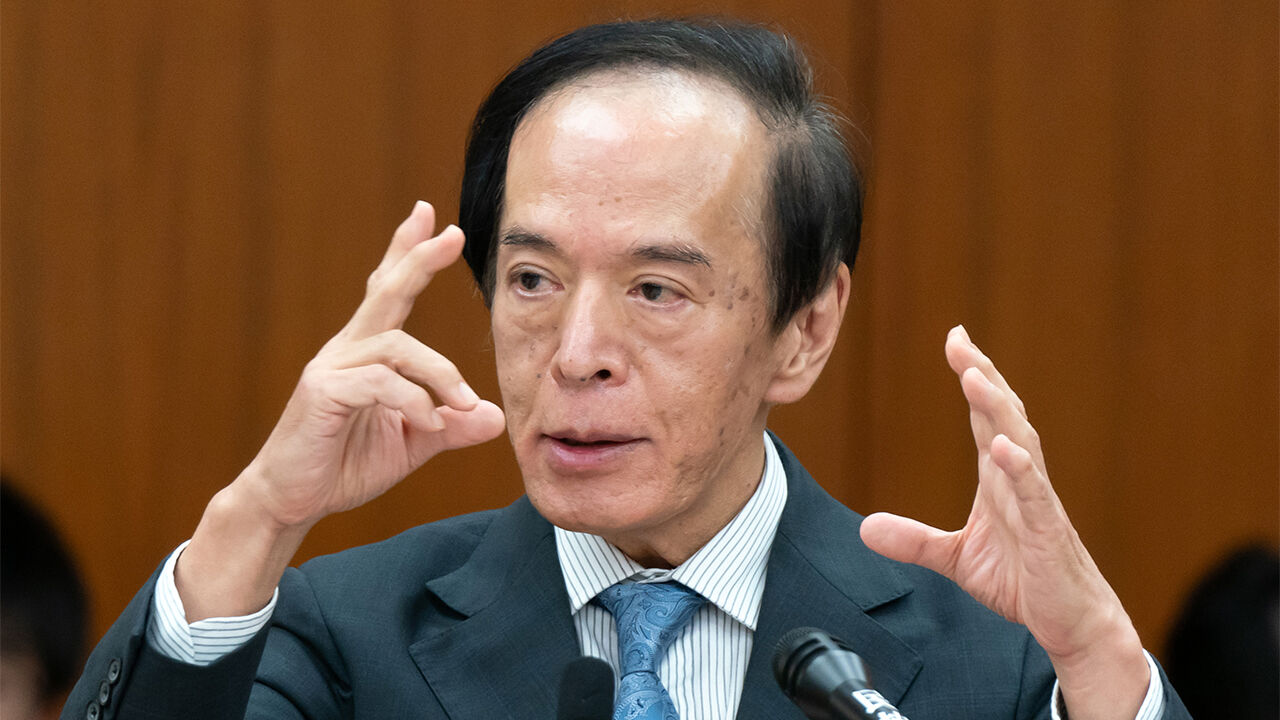
▲ Bank of Japan Governor Kazuo Ueda
Bank of Japan (BOJ) Governor Kazuo Ueda has stated that further inflation is intolerable and signaled that the central bank will continue to raise interest rates.
Speaking at a press conference in Bangkok, Thailand, where the Group of 20 (G20) finance ministers and central bank governors meeting was held on October 16 local time, Governor Ueda said regarding the BOJ's target for underlying inflation, "It is generally close to 2%," adding, "We cannot tolerate any further rise."
Regarding financial conditions, Governor Ueda noted that accommodative conditions have persisted even after last month's rate hike, explaining, "We will continue to adjust the degree of monetary accommodation through policy rate hikes."
Asked about his meeting with U.S. Treasury Secretary Scott Bessent during the G20 finance ministers meeting in Asheville, North Carolina, on August 30, Ueda stated that there has been "no particular communication" since then.
At the time, Secretary Bessent met with Governor Ueda and stated that the Japanese yen was undervalued, expressing support for firm measures by Japan to address it.
In addition, Governor Ueda reiterated his stance that he will closely monitor factors that could accelerate inflation, such as rising crude oil prices, expanding demand related to artificial intelligence (AI), and the weak yen.
Regarding the neutral interest rate—which neither overheats nor dampens the economy—he said, "We have no basis to say with certainty that we are around that level," adding, "I would like to judge while observing whether the cumulative effects of the rate hikes so far are manifesting."
At last month's monetary policy meeting, the Bank of Japan raised its benchmark short-term policy rate from around 1.0% to around 1.25% by 0.25 percentage points.
The next monetary policy meeting is scheduled for October 29–30.
Financial markets widely expect interest rates to be frozen at this month's meeting, with attention focused on whether the central bank will pursue an additional rate hike at the following meeting in December, the Nikkei reported.
Meanwhile, Erin Brown, U.S. Deputy Under Secretary of the Treasury for International Affairs, said in an interview with the Nikkei on the same day that the fiscal sustainability recently emphasized by Prime Minister Takaichi "will bring benefits to Japan."
On October 5, Prime Minister Sanae Takaichi emphasized "responsible proactive fiscal policy" during her policy speech at the extraordinary Diet session, mentioning "fiscal sustainability" multiple times.
In response, Deputy Under Secretary Brown stated, "We hold the Prime Minister in high regard and have strong confidence in the Prime Minister and the Japanese government."
The Nikkei evaluated Brown's remarks as a sign that frictions with U.S. authorities—who had previously expressed concern over Japan's accommodative monetary and fiscal policy stance—are beginning to be resolved.
At last month's G20 finance ministers meeting, Secretary Bessent stated in a press conference that he had "conveyed to the Japanese side that the Japanese government should halt reflationary policies." This followed U.S. President Donald Trump expressing concern over the weak yen to Prime Minister Takaichi at last month's U.S.-Japan summit, as Washington has continuously pressured Japan to end its easing stance.
Brown clarified that Bessent's remarks on reflation "did not direct the Bank of Japan to take any specific monetary policy action," but added, "Japan is the largest holder of U.S. Treasuries, and we are monitoring the stability of the Japanese yen."
Regarding the possibility of joint foreign exchange market intervention if the depreciation of the yen resumes, she replied, "We are reviewing all options and continuing close consultations with Japan."
(Photo: Getty Images)
※ Please note: This article was translated by AI and may contain errors.


 Video News
 Video News


