
 KOR
KOR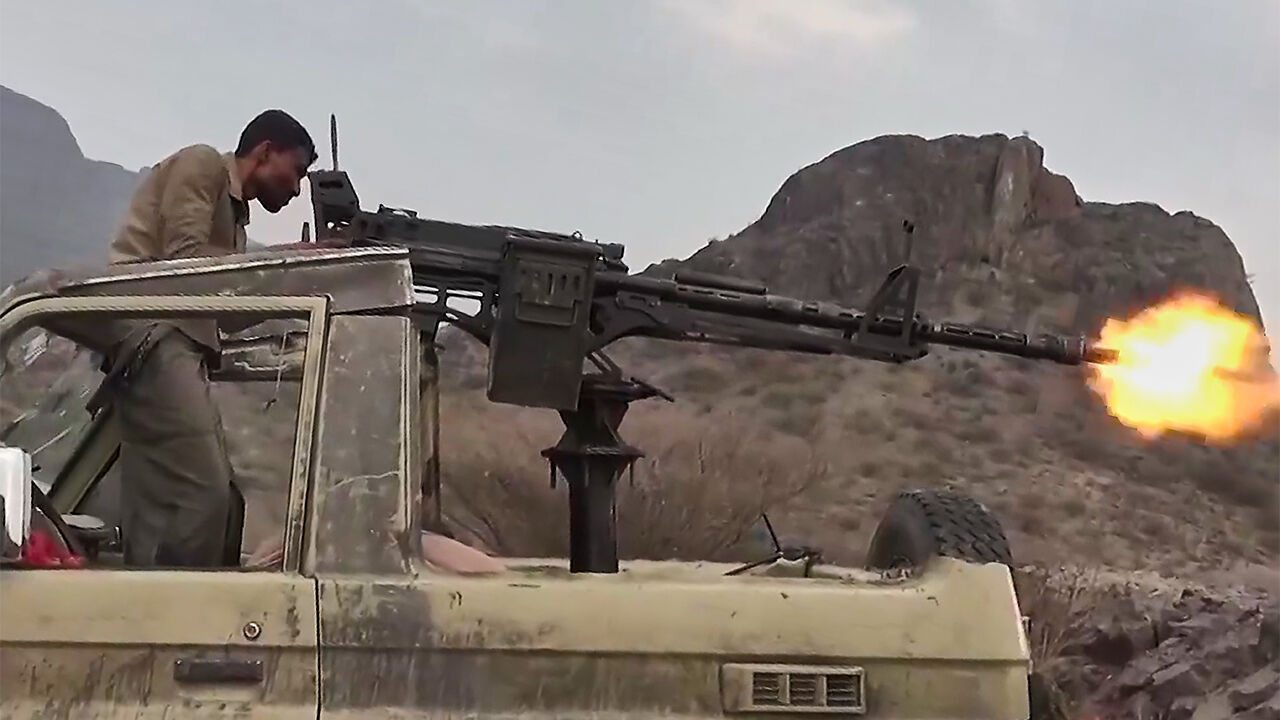
▲ Houthi rebels
As Yemen's Iran-backed Houthi rebels build an arsenal of missiles and drones equipped with diverse and continuous strike capabilities, Saudi Arabia and the Saudi-backed Yemeni government are acutely feeling their impact.
Experts analyze that Saudi Arabia, the wealthiest nation in the Middle East armed with state-of-the-art weapons imported from countries like the United States, is struggling and having a hard time against the Houthis' cheap asymmetric warfare capabilities.
The Houthi rebels have continuously struck major oil facilities and airports across Saudi Arabia since early last month, with Riyadh Airport targeted intensively around 20 times.
According to Saudi officials, Houthi missiles and drones have flown not only to the Saudi capital of Riyadh, located about 800 kilometers in a straight line from the northern border of Yemen, but also to Medina, the second-holiest site, located about 1,000 kilometers away.
Of course, the Houthis strongly deny claims that they attacked holy sites such as Mecca and Medina.
Because of this, attention is focused on the Houthi weapons systems that can freely strike all parts of Saudi Arabia.
Experts analyze that the Houthi rebels are using a mix of weapons seized when they took control of the Yemeni capital, Sanaa, in 2014 and systems locally assembled inside Yemen using parts smuggled in through the Arabian Sea.
According to analyses from the International Institute for Strategic Studies (IISS) in the UK and the Wilson Center in the US, their main weapons are largely divided into ballistic missiles, cruise missiles, and suicide drones.
First, the Houthi rebels possess a number of solid-fuel medium-range ballistic missiles, including the Khaybar Shekan, which is an upgraded version of an Iranian model.
These missiles have a range of about 1,450 kilometers and can carry 550 kilograms of high explosives. In particular, they are equipped with maneuvering capabilities to change trajectory in the terminal phase to evade air defense networks.
In addition, short-range anti-ship missiles such as the Asef, built based on Iran's Khalij Fars class of missiles, boast a range of 500 kilometers and a warhead weight of 380 kilograms.
Along with these, cruise missiles from Iran's Quds missile family, which fly by changing altitude and path along geographical features, are also threatening.
The fourth version among these is estimated to have a range of as much as 2,000 kilometers.
Their unmanned aerial vehicle forces are also substantial.
Representative examples are the Waeid-1 and Waeid-2, which are local replicas of Iran's Shahed-131 and Shahed-136 suicide drones.
The Waeid-1 is known to have a range of 900 kilometers and carry a warhead of 10 to 20 kilograms, while the Waeid-2 can fly 2,500 kilometers and directly strike targets with a high-explosive warhead weighing 40 to 50 kilograms.
Saudi Arabia has poured a massive defense budget of 83 billion dollars (approx. 112 trillion won) annually into building world-class cutting-edge interception networks, including U.S.-made Patriot and Terminal High Altitude Area Defense (THAAD) systems.
However, the Houthi rebels' weapon systems are extremely asymmetric compared to these state-of-the-art weapons.
The price per suicide drone launched by the Houthi rebels is only 15,000 to 25,000 dollars (approx. 20 million to 33 million won).
On the other hand, the Patriot missiles that Saudi Arabia fires to defend against them reach 3 million to 4 million dollars (approx. 4 billion to 5.4 billion won) per piece.
Considering that two interceptor missiles are consumed for a single target, it is a structure where budget bleeding of hundreds of times or more occurs just to shoot down a single drone.
Technical limitations as well as costs are being pointed out.
Middle East military expert Kenneth Pollack told AFP, "Saudi Arabia's advanced interception networks and radars are primarily tailored to ballistic missile threats flying in arcs at high altitudes," pointing out that "it is extremely tricky to pre-detect low-cost drones and cruise missiles that approach closely hugging the ground, using Saudi Arabia's rugged mountainous terrain as a shield."
The Middle East Institute (MEI), a U.S. think tank, analyzed that these Houthi weapon components are designed and manufactured in Iran and then continuously smuggled in via small boats or the Oman border.
While the Quds Force under Iran's Islamic Revolutionary Guard Corps provides tactical advice, the consensus is that final operational decision-making rests with the Houthi rebels, who claim to be partners rather than Iranian proxies.
Longley-Alley, a researcher at the Washington Institute, forecasted, "The Houthi rebels are a battle-hardened group that has weathered massive past airstrikes by Saudi Arabia, the U.S., and Israel," adding, "Having already grown accustomed to absorbing external airstrike impacts, they will calculate that they can endure longer in a war of attrition with Saudi Arabia."
(Photo: AP, Yonhap News)
※ Please note: This article was translated by AI and may contain errors.


 Video News


 Video News
