
 KOR
KOR
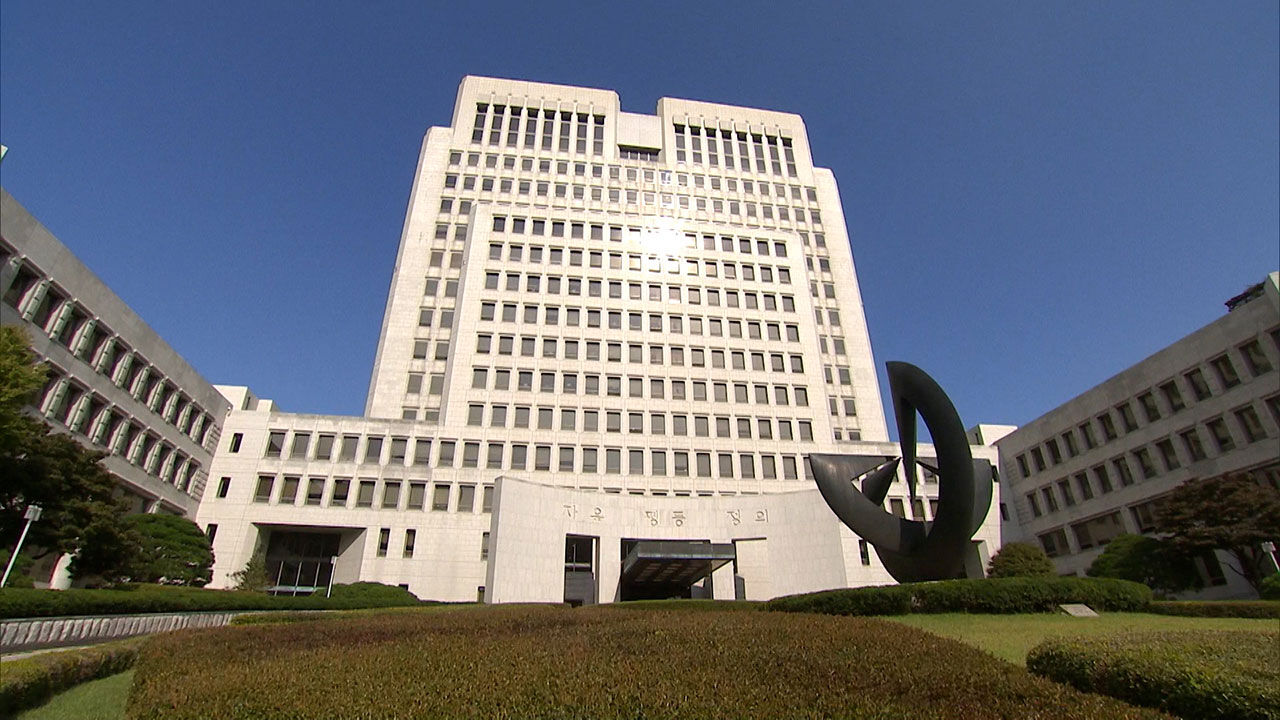
The Supreme Court is set to review its long-standing precedent that strictly interprets the level of violence or intimidation required to establish the crime of rape through a full bench deliberation.
Attention is focused on whether the "narrowest interpretation theory," which dictates that the level of violence or intimidation must make it remarkably difficult for the victim to resist, will be changed after 47 years.
According to the legal community, the Supreme Court recently referred the case of an individual identified as A, who was indicted on rape charges, to a full bench and will hold its first hearing on the 22nd.
The first instance court sentenced the defendant to guilty, but the appellate court acquitted the defendant, stating, "It is difficult to conclude that the defendant, with the intent to commit rape, assaulted or threatened the victim to the extent of making the victim's resistance impossible or remarkably difficult to commit the act."
This ruling applied the narrowest interpretation theory, which requires that the violence or intimidation constituting the crime of rape must be "to the extent of making the victim's resistance impossible or remarkably difficult."
The Supreme Court has maintained this precedent of the narrowest interpretation theory since a ruling in 1979.
While the Supreme Court has ruled that judgments must be made comprehensively by considering the relationship with the victim and the circumstances before and after the crime, it has maintained the basic framework that resistance must be rendered remarkably difficult.
The Supreme Court, which is reviewing the case following the prosecution's appeal, will discuss in the full bench whether to modify this standard.
This standard has been criticized by women's groups because it is difficult to punish non-consensual sexual intercourse as rape unless the degree of violence or intimidation is deemed sufficient.
Previously, in a full bench ruling in September 2023, the Supreme Court discarded the narrowest interpretation theory for the crime of forcible indecent act after 40 years.
At that time, the Supreme Court explained, "A forcible indecent act is established when an unlawful show of force is exercised against the other party's body or when the other party is subjected to indecent acts by notifying them of an evil that can cause fear."
Judgments applying the narrowest interpretation theory to the crime of quasi-rape are also currently under review by the Constitutional Court.
The Constitutional Court referred a constitutional complaint filed by a victim of "non-consensual sexual violence" asking for the cancellation of the defendant's acquittal to the full bench last June, and is currently deliberating on the matter.
※ Please note: This article was translated by AI and may contain errors.
Supreme Court Reconsiders 47-Year-Old Standard Defining Rape as Requiring Incapacity to Resist

Copyright Ⓒ SBS & SBSi. All rights reserved.
Copying, redistribution, and unauthorized use in AI training are strictly prohibited.
Copying, redistribution, and unauthorized use in AI training are strictly prohibited.

Trending Now
-
 Video News
Defying Gravity and Soaring Up... "Tesla Has Gone Mad," the World is in Shock
-
"Magnitude 9.9 Earthquake" Causes Panic... Canceled After 8 Minutes
-
Woman in 30s Fined for Threatening and Insulting Actor Han Ji-min
-
Video News
Fitness Trainer Yang Chi-seung Loses Lawsuit Over Gym Eviction... Ordered to Pay Tens of Millions of Won
-
Teenager Kills Three Children and Teacher at Oregon Elementary School, Shot Dead by Citizen
 Video News


 Video News
