
 KOR
KOR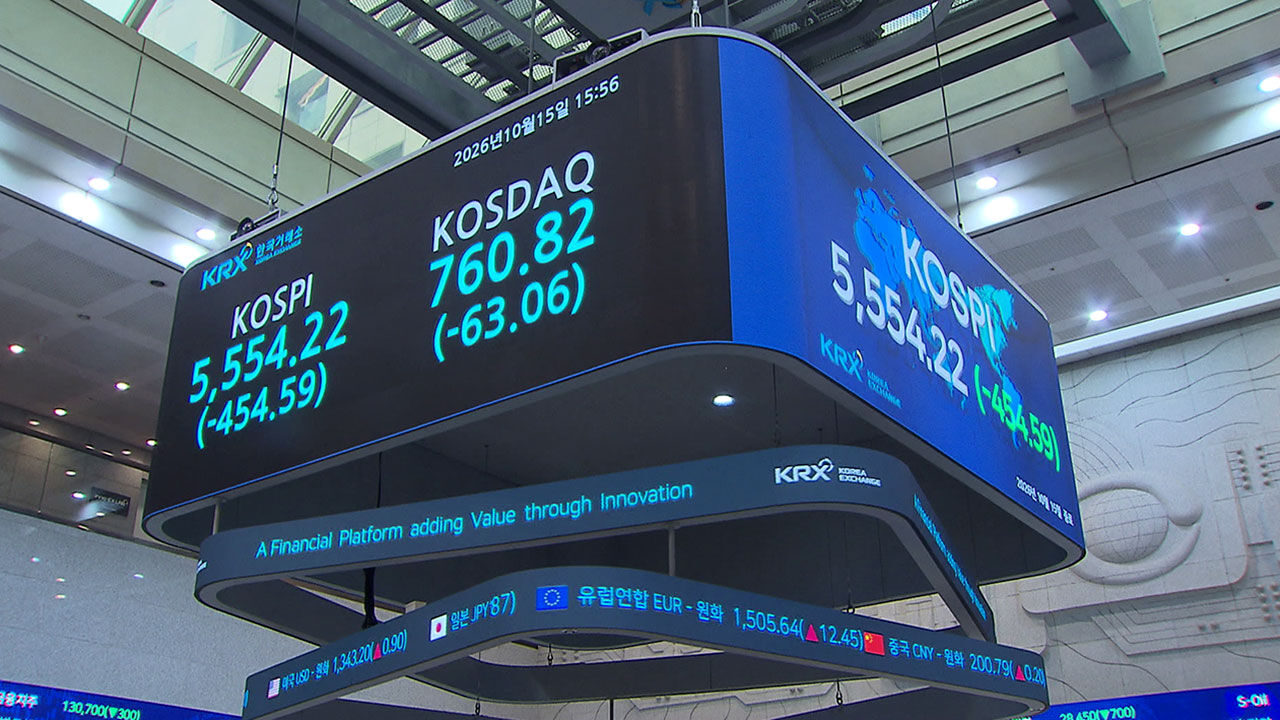
Overlapping Major Headwinds
① U.S. Inflation Rebound and Pressure from Delayed Rate Cuts
Higher-than-expected U.S. Consumer Price Index figures have reignited fears over prolonged high interest rates. An extended high-rate environment constricts global liquidity and stimulates risk-aversion sentiment toward assets such as emerging market equities.
② Resurfacing Doubts Over AI Profitability
Anxiety is mounting over investments in AI infrastructure, which had been driving valuations across global big tech and semiconductor sectors. Market doubts have flared up once again over whether real profit generation from AI infrastructure investments will materialize as swiftly as expected. As the possibility of big tech firms pacing their capital expenditures resurfaced, a share price correction was triggered across the entire global tech value chain.
③ Threat of Mid-to-Low-End Semiconductor Supply from China's CXMT and Others
Concerns have also emerged that the production yields and process migration speeds of Chinese memory makers, led by ChangXin Memory Technologies (CXMT), are advancing faster than anticipated. In particular, CXMT's announcement that it aims to commercialize next-generation DRAM technology within this year dealt a direct blow. This heightened worries that an oversupply in the general-purpose DRAM market would sharply erode profit margins for South Korean chipmakers.
Why South Korea's Market Plunged More Steeply
① Qualitative Differences in Memory Semiconductor Risk Exposure
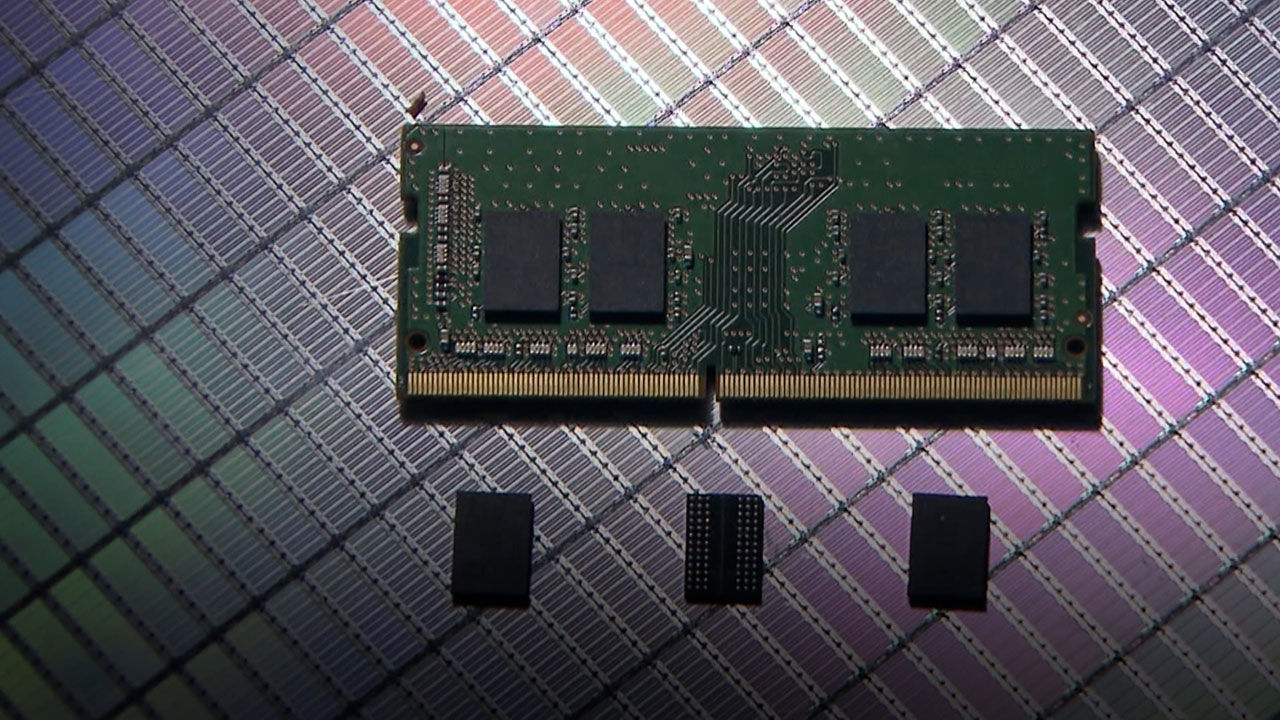
The semiconductor sector accounts for half of the KOSPI index. Furthermore, compared to Taiwan, where TSMC holds a dominant foundry monopoly, or the United States, which centers on logic chips such as Intel and Qualcomm, South Korean chipmakers like Samsung Electronics and SK Hynix hold an overwhelming proportion in memory and commodity DRAM. Consequently, they are directly exposed to the threat of rapid catch-up by Chinese chipmakers like CXMT.
② Disproportionate Selling by Foreign Passive Funds
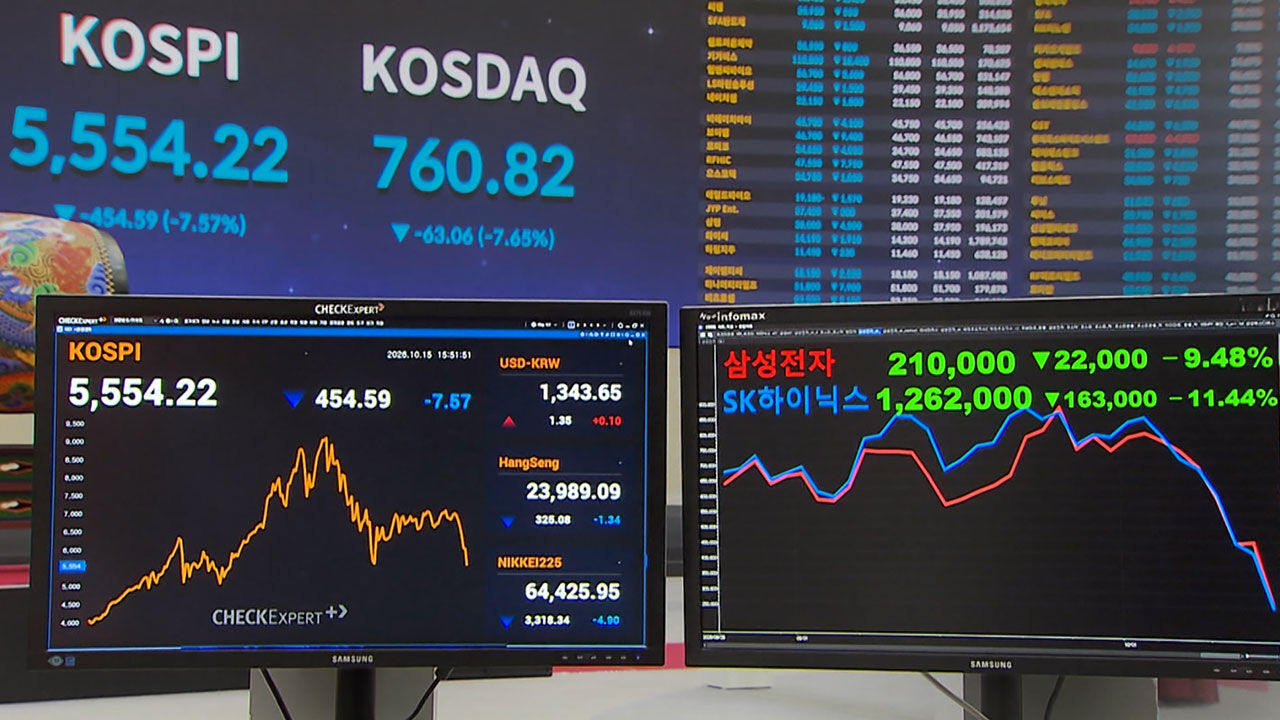
Whenever global funds scale back their risk asset portfolios, South Korean stocks bear the brunt first. Because rebalancing is straightforward and trading liquidity is abundant, aggressive selling is executed heavily across both spot and futures markets. In the first half of this month alone, net selling by foreign investors exceeded 18 trillion won. In contrast, the buying capacity of domestic institutional and retail investors to absorb this volume has been exhausted. As a result, price support lines collapsed helplessly.
③ Surging Exchange Rates and a Vicious Cycle of Margin Calls
The rising won-dollar exchange rate further incentivized foreign investors to sell to avert currency losses. On top of that, forced margin call liquidations from leveraged retail accounts flooded the market amid the steep drop. A technical downward spiral ensued, where declines triggered further declines.
The Resurgent Korea Discount: "Split-Off IPOs Again?"
① Concerns Over Entrenching Multi-Tiered Duplicate Listings
One of the unique structural afflictions of the South Korean market is the pyramidal governance structure connecting the holding company (SK Inc.), the intermediate holding company (SK Square), and the operating company (SK Hynix). Critics point out that separately listing Solidigm, a core subsidiary, would effectively create a four- to five-tier duplicate listing structure. Analysts warn that this could pile an extreme "holding company discount" onto the equity values of the parent company and upper-tier holding firms.
② Carve-Out of Core Growth Drivers and Equity Dilution
Solidigm initially posted substantial operating losses. However, fueled by surging demand for high-capacity enterprise solid-state drives (eSSDs) for AI data centers, it has recently emerged as a lucrative core asset for SK Hynix. Investors cannot help but feel betrayed, arguing that parent company shareholders bore the financial burden throughout the loss-making phase, only to have the rewards carved out via an external listing just as the company entered a period of massive profit recovery.
③ Conflicts of Interest Between Parent and Subsidiary
If listed on the U.S. Nasdaq, Solidigm's board of directors would be legally bound under U.S. law to prioritize the interests of Solidigm shareholders. Structural conflicts of interest would inevitably arise when negotiating wafer supply pricing, patent royalties, and next-generation technology licensing with the parent company. Critics argue this will become a factor undermining the shareholder value of the parent, SK Hynix. In response, SK Hynix maintains that "Solidigm is an independent overseas corporation acquired and cultivated from Intel's NAND division in 2020, rather than a physical spin-off of a domestic business division." It emphasizes that "this is a rational business decision aimed at raising massive AI investment capital in local U.S. markets without burdening domestic shareholders through rights offerings or taking on additional debt." However, SK Hynix shareholders have reacted with indignation, voicing criticism that this is "a classic chaebol-style financial maneuver in which controlling shareholders with low equity stakes dilute the economic interests of minority shareholders to attract outside capital while maintaining control over the parent company."
Limitations of Government Capital Market Reforms and International Distrust
Net selling by foreign investors reaching trillions to tens of trillions of won is not driven merely by concerns over an economic slowdown. To a large extent, foreign active funds that entered temporarily on policy momentum are withdrawing capital after concluding that South Korean conglomerates have not changed their ingrained tendency to neglect minority shareholders. In bull markets or liquidity-driven rallies, corporate governance flaws and duplicate listing risks were overshadowed by steep earnings growth. Confronted with a triple burden of a global economic slowdown, an AI bubble debate, and intensifying semiconductor competition, however, investors are fleeing first from a market that fails to protect shareholders in times of crisis while looking out solely for the interests of controlling shareholder families. The controversy surrounding Solidigm's listing and the steep plunge in domestic stocks, led by SK Hynix, stand as clear proof.
※ Please note: This article was translated by AI and may contain errors.


 Video News


 Video News
