
 KOR
KOR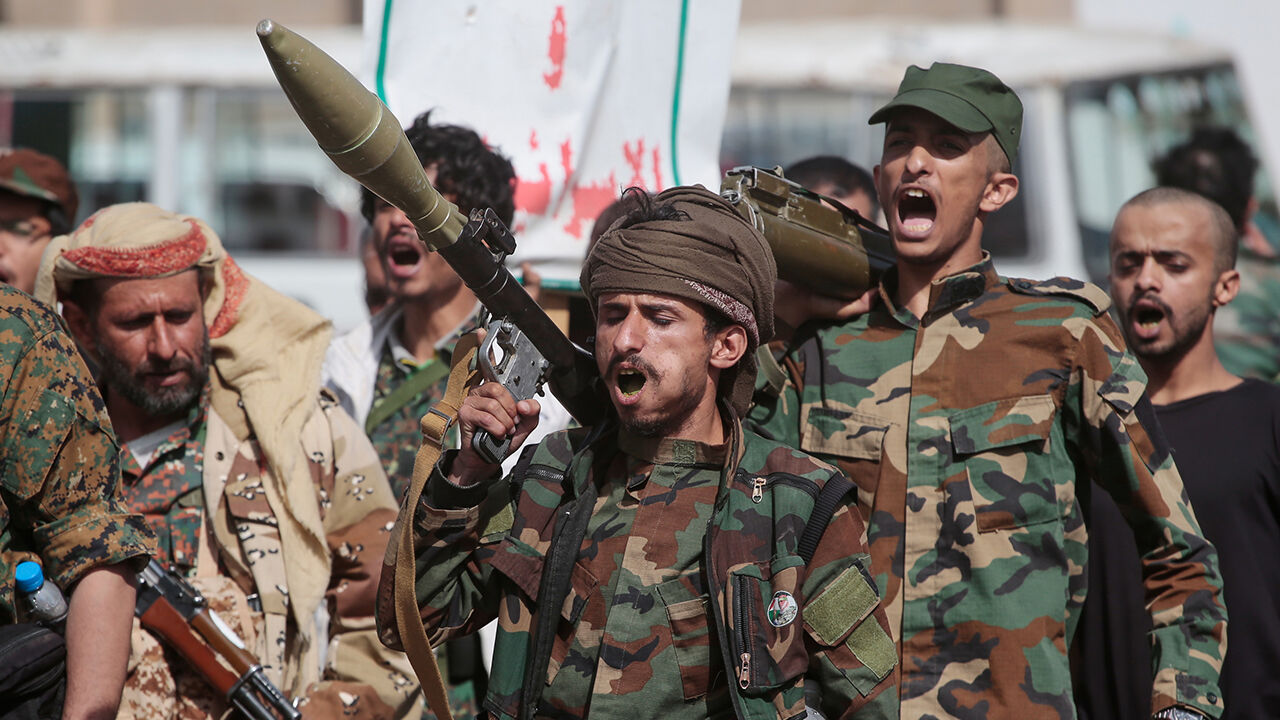
▲ Yemen's Houthi rebels
Amid escalating armed clashes between Saudi Arabia and Yemen's Iran-backed Houthi rebels, Saudi Arabia's announcement that it intercepted a cruise missile near Medina, Islam's second-holiest site, has drawn intense interest regarding the circumstances.
Turki al-Maliki, spokesperson for the Saudi-led coalition and the Saudi Ministry of Defense, stated on social media X on the 15th (local time) that "the coalition intercepted and destroyed a cruise missile in the Medina region."
While specific details such as the launching entity or the exact target have not been disclosed, al-Maliki's announcement implies that the Medina area was either a potential target or at least lay along the missile's flight path.
With Houthi missile and drone attacks having sharply intensified recently against key facilities in Saudi Arabia, including airports and the headquarters of state-owned oil giant Aramco, the missile is suspected to have been launched by the Houthi forces.
However, the Houthi rebels immediately denied the Saudi announcement.
In a statement, the Houthis refuted the claim, saying, "We did not carry out any strike operations targeting Saudi territory today," and claimed that "the hostile Saudi allegations of an attack on Medina are a massive lie and fabrication."
Medina, located in the Hejaz region of western Saudi Arabia, is Islam's second-holiest site following Mecca.
It is the place where the Prophet Muhammad, the founder of Islam, migrated in 622 AD to escape persecution in Mecca (the Hijra) and established the first Islamic community (Ummah), and the Prophet's Mosque (Al-Masjid an-Nabawi) in the city center houses the tomb of Muhammad.
It is a symbolic city visited by millions of Muslim pilgrims from around the world every year around the Hajj pilgrimage season.
Consequently, observers note that if the region housing the Islamic holy site was indeed the target of an armed attack, it could escalate beyond military tension into a major controversy stirring religious outrage across the entire Islamic world.
In fact, when Saudi air defenses shot down a Houthi drone near Mecca, Islam's holiest site, last month, it sparked strong backlash across the Islamic world.
At that time, Saudi Arabia and other Arab nations, along with the Organisation of Islamic Cooperation (OIC) and the Muslim World League (MWL), unanimously strongly condemned the act of flying weapons near the holy site as a "serious provocation that insults the religious sentiments of Muslims worldwide and threatens the safety of the holy site."
In response, the Houthis broke a sweat, holding rallies to pledge the protection of the holy site.
Even if the Houthis advanced defensive arguments that they were targeting military and economic facilities rather than the holy site, the backlash was severe enough for non-Arab Muslim nations to join the chorus of criticism simply due to the airspace near the holy site becoming a combat zone.
(Photo: AP, Yonhap News)
※ Please note: This article was translated by AI and may contain errors.


 Video News
 Video News
 Video News
 Video News
 Video News