
 KOR
KOR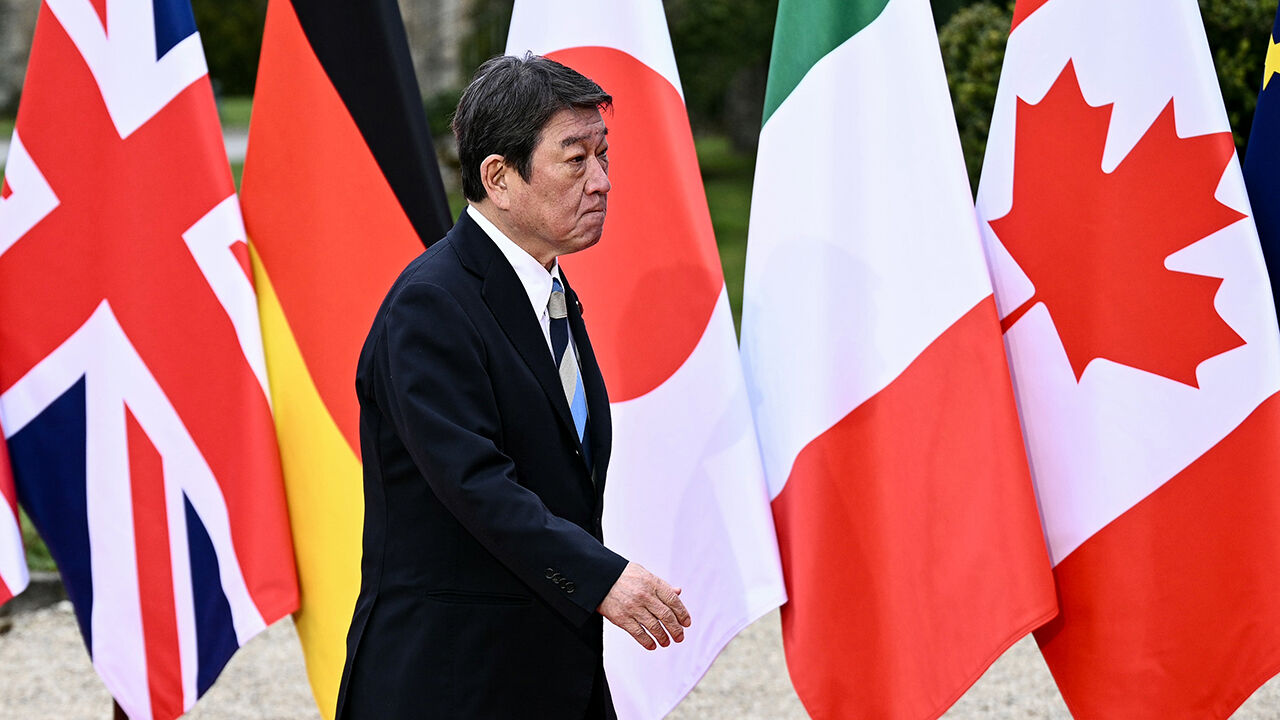
▲ Japanese Foreign Minister Toshimitsu Motegi
Japan has expressed strong opposition, stating that it "cannot accept" the visit of Chinese businesspeople to the Kuril Islands, a territory disputed between Russia and Japan.
According to NHK on the 14th, Japanese Foreign Minister Toshimitsu Motegi attended the House of Representatives Budget Committee that day and argued, "The Northern Territories are our inherent territory, both historically and under international law." He added, "It is entirely unacceptable for third-country governments or corporate representatives to enter and conduct activities there as if the Northern Territories were Russian territory."
He stated, "Yesterday, through diplomatic channels, we conveyed Japan's position to Russia and China, strongly requesting appropriate measures," and added, "We will continue to monitor the situation and respond accordingly."
A delegation consisting of officials from the Heilongjiang provincial government of China and business leaders visited Iturup Island, one of the four Kuril Islands (known in Japan as the Northern Territories), the previous day.
According to Russian Sakhalin regional authorities, the Chinese delegation showed interest in sectors such as the fishery industry—including sea urchin and sea cucumber farming—and hotel development.
Russia has effectively controlled the four Kuril Islands since occupying them at the end of World War II in 1945 during the Soviet era.
Since 2016 during former Prime Minister Shinzo Abe's administration, Japan pursued economic cooperation in the region to seek their return, but related talks have stalled as relations with Russia deteriorated following the outbreak of the war in Ukraine.
Tensions have deepened recently, particularly after Russian President Vladimir Putin visited Iturup Island in August, prompting strong protests from the Japanese government.
Last month, Japan conducted joint drills with the United States and Australia in Hokkaido, which is adjacent to the four Kuril Islands, and on the 2nd, imposed additional sanctions banning navigation, repairs, and insurance services for 35 Russian vessels.
(Photo: AP, Yonhap News)
※ Please note: This article was translated by AI and may contain errors.



 Video News
 Video News

 Video News