Hard to Reach the Moon with Nuri? Tasks Remaining After the 5th Successful Launch [News File]
Seo DonggyunSeoul
Published2026.10.14 12:50ViewView Count
Nuri's 5th Launch Successful, Where Does the Space Industry Stand?
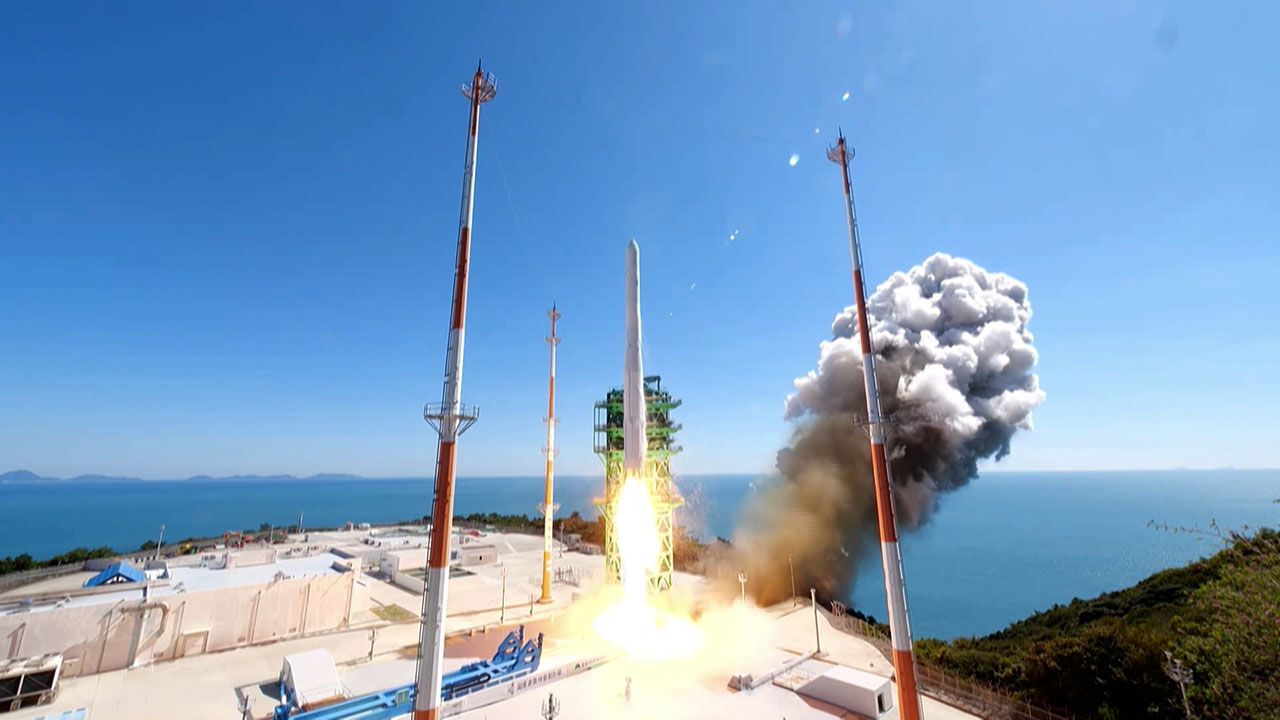
The fifth launch of the Nuri space rocket has also concluded successfully.
[Lee Soon-duk / Gyeongju, Gyeongsangbuk-do: I loved it so much. It was so touching. I feel like crying.]
All five cluster satellites, which were the main payloads, established smooth communications. Aside from one CubeSat that failed to deploy, the remaining nine were also sent into space for their space missions. Except for the first launch, which fell slightly short of power just before reaching the target orbit, launches from the second onward have been successful four consecutive times. Can we say that our space industry has entered a normal orbit to some extent? While Nuri is clearly a remarkable achievement, many experts evaluate that with Nuri's success, we have now only taken our first step into the space industry.
Let us look at the most famous rocket. SpaceX's Falcon 9 boasts overwhelming indicators of over 600 launches and a 99% mission success rate. Russia's Soyuz rocket has hundreds of launches, and the European Space Agency's Ariane rocket has over 100 launches, both maintaining mission success rates of over 90%. Nuri is still short of making a comparable name for itself.
Hard to Reach the Moon with Nuri? Why?
Then what are Nuri's future plans? With an additional phase added to the Nuri advanced project, Nuri will be launched two more times until 2028. Naturally, this is not the end. Through subsequent continuous projects, the goal is to launch once a year until 2032. A lunar orbit communication satellite and other missions are planned for 2029, though the project has not been finalized yet.
The problem is that it is difficult to send satellites to the moon using Nuri alone. There are various orbits in space to get to the moon, which you can think of as a kind of highway. To enter this highway, a craft flying at 7.7 to 7.8 kilometers per second in a 300-kilometer low Earth orbit needs to accelerate its speed to 10.8 to 10.9 kilometers per second. The problem is that acceleration itself is impossible because Nuri's third stage cannot be reignited. Furthermore, with Nuri's current thrust, the payload capacity that can be put into a lunar transfer orbit is a mere 100 kilograms, making it impossible to send a satellite capable of performing missions. Therefore, an orbital transfer vehicle is under development with a total budget of about 40 billion won. This orbital transfer vehicle is loaded inside Nuri's fairing along with the satellite, acting like a fourth-stage rocket to help the satellite reach the moon.
Why Until 2032 for Nuri?
Then why is the period for Nuri's continuous project set until 2032? It is because that is around the time when the next-generation launch vehicle, preparing for the post-Nuri era, will be ready. As a successor project to Nuri, the next-generation launch vehicle boasts a 700-ton class thrust, more than double Nuri's 300-ton class thrust. While Nuri can carry 3.3 tons into low Earth orbit as a two-stage rocket advantageous for reusability, the next-generation launch vehicle is expected to carry over 10 tons. According to current plans, a test launch is scheduled for 2031, followed by two launches in 2032. The 2032 launches plan to carry a lunar orbiter and a lunar lander into space, respectively, to deliver the payloads to the moon. The important point is that the baton must be handed over smoothly from Nuri to the next-generation launch vehicle. This is because the European Space Agency previously experienced an unexpected space gap when its predecessor, Ariane 5, was retired before the launch of its successor, Ariane 6, while the development and launch of Ariane 6 were delayed.
Cost to Be Reduced to One-Tenth of Nuri?
Securing economic feasibility is also very important. The next-generation launch vehicle was originally intended to be developed as a rocket using the same kerosene as Nuri, but the project was changed to a methane-fueled rocket, which is advantageous for reusability. This is because methane, which has fewer carbons in its molecules and produces less soot during combustion than kerosene, is more advantageous. The Korea AeroSpace Administration projected that if the next-generation launch vehicle is successfully developed as a reusable launch vehicle, it could lower launch costs down to one-tenth of current Nuri launch costs. Launch vehicle costs depend heavily on how much the passenger satellite pays per kilogram; while Nuri currently costs about 24,000 dollars per kilogram, the next-generation launch vehicle can lower it to about 2,500 dollars. Not only can it carry more passengers per launch, but economic feasibility is also secured by recovering and reusing the first-stage rocket, which was previously discarded. In this way, even if they charge passengers the same amount, higher profits can be maintained. Although it is an estimate, industry experts estimate that SpaceX's Falcon 9 also has a payload cost of around 2,500 dollars per kilogram, while actually charging about 5,000 dollars.
Everything explained so far is still only a plan. What I have felt while covering Nuri more than five times is that due to its scale and scientific limitations, it is truly not easy for the space industry to execute things according to plan. This fifth launch of Nuri was the first time it was launched without delaying the scheduled time by even a minute. We hope that our remaining space industry plans, much like Nuri's fifth launch, will proceed smoothly.
※ Please note: This article was translated by AI and may contain errors.

 KOR
KOR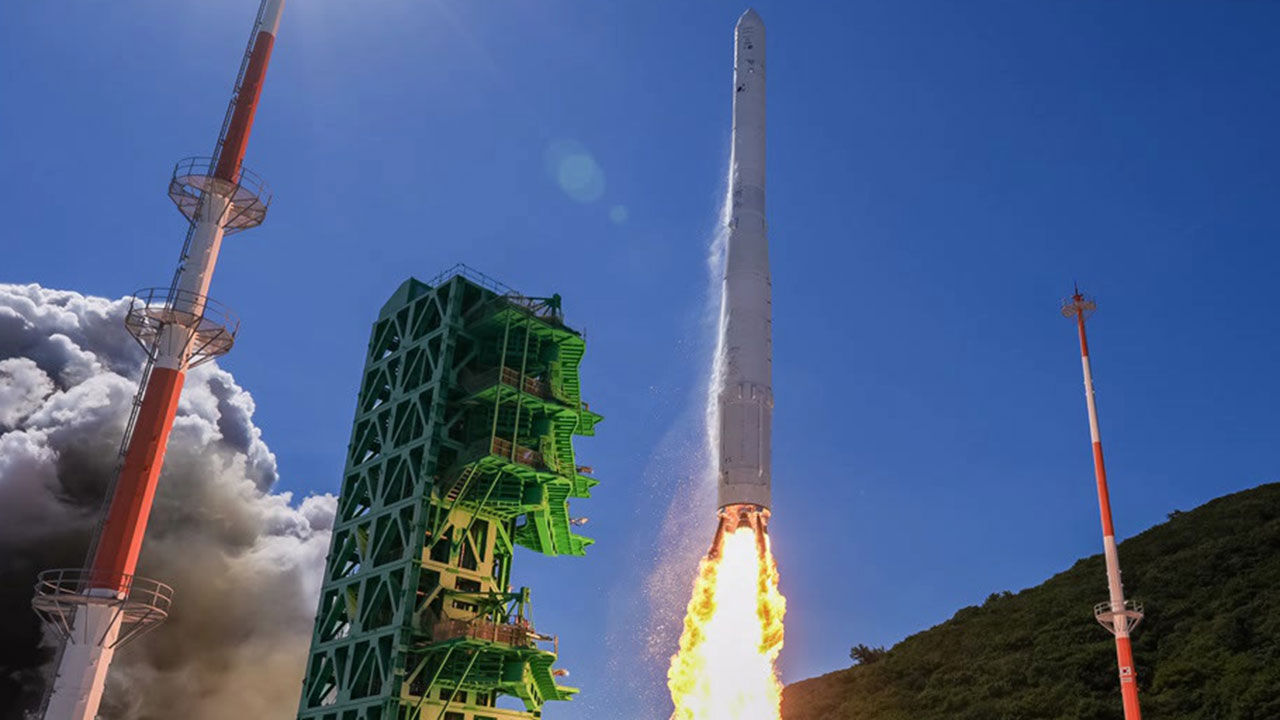




 Video News
 Video News
 Video News