
 KOR
KORLectures begin at 9:00 AM, and after finishing training at 9:00 PM, they start studying again. This place where people receive training while room and board are provided is not a boarding school or an academy for repeat college entrance exam students, but a live-in employment "boot camp" where job seekers stay. With the youth unemployment crisis being severe, live-in job preparation facilities have even emerged. Just how severe is the youth employment problem, which is always described as serious?
Youth Employment for Those in Their 20s Faces Worst Crisis Since Foreign Exchange Crisis
A Day in the Life of Job Seekers
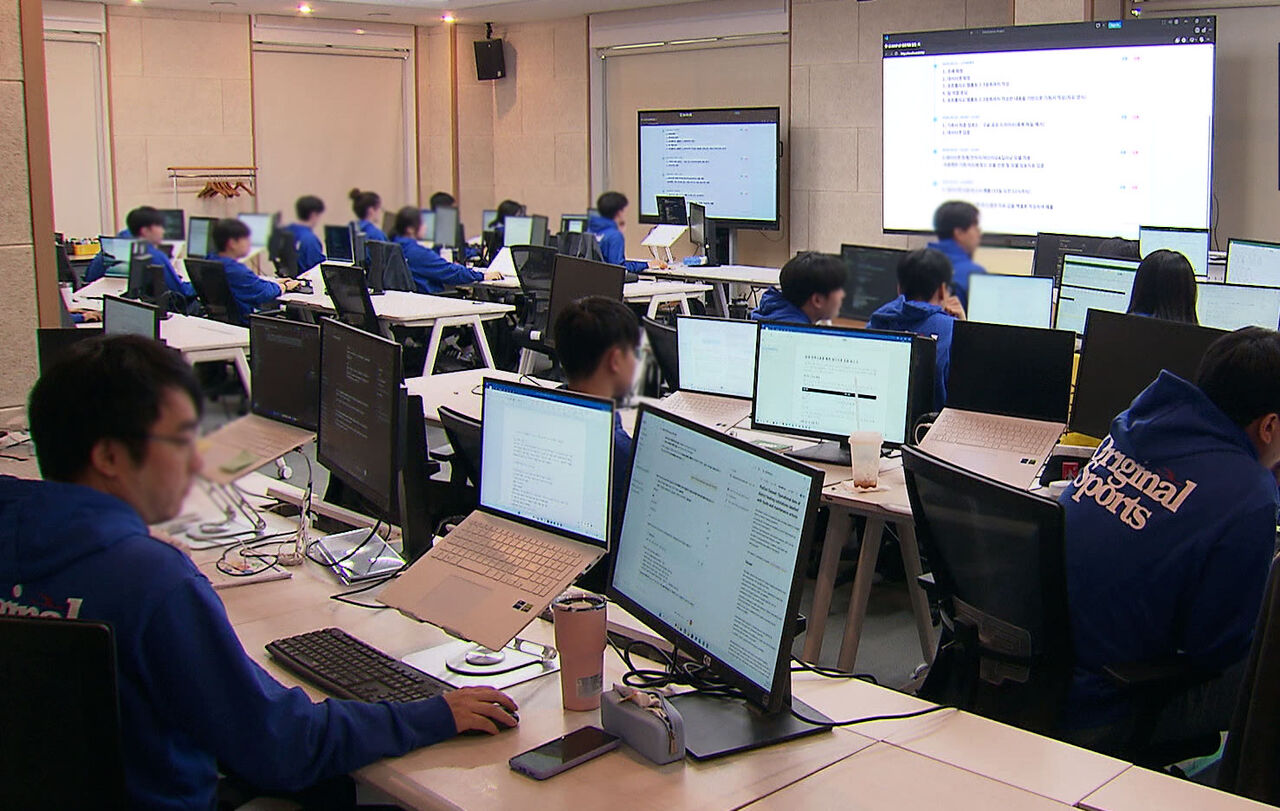
[Kim Yu-bin (27) / Suwon, Gyeonggi Province: (It has been about a month since you entered the live-in program, do you feel things have gotten easier compared to the beginning?) Yes, when it came to handling data, at first I could only handle it at just about the Excel level, but now I think I am at a level where I can completely break down data and extract what I want from within that data.]
From the perspective of companies, because they can design the training programs directly, there is the advantage of being able to foster talent equipped with customized job competencies.
[Lee Woo-seop / Head of HRD Planning Team, LS Future Institute: We are operating programs so that competencies recently demanded by companies, such as AI utilization skills, can be enhanced through this program. From the company's perspective, I think it is meaningful in that we can preemptively secure prepared talent.]
Even after classes end, they continue their own studies in study rooms—such as language study, certificate preparation, and project discussions—so days here often wrap up only after midnight. Kim Young-sik, who came from Wonju, Gangwon Province, said he is approaching this program with a desperate mindset.
[Kim Young-sik (32) / Wonju, Gangwon Province: I should say I am a bit more desperate. Because, well, there is age. Three months is even shorter than military service, and going all out for 3 months feels like it will prevent any regrets later.]
Cha Seil, from Nam-gu, Busan, already has 6 years of work experience in a manufacturing human resources team. However, thinking that AI competency is essential in a rapidly changing industry, he voluntarily entered the boot camp as a job recruit once again. The job market he returned to has changed a lot.
[Cha Seil (31) / Nam-gu, Busan: You can tell even from job postings, as they ask about AI competencies, such as what you have achieved by utilizing AI. I am approaching this with a heavy heart, thinking of it as my final challenge. Our ultimate goal for all of us is successful employment, and it is everyone's wish to achieve that ultimate purpose after equipping ourselves with all work competencies.]
A 'Recruit Training Center' for the Employment War
[Lee Joo-hee / Professor of Sociology, Ewha Womans University: It means that (boot camps) require entering like the military and learning all day long. It feels like the employment competition has turned into an employment war.]
This is interpreted to mean that "live-in job preparation" is no different from the process of becoming a soldier who can survive in an employment battlefield. The young people who visited the boot camp were pondering and preparing for their futures more fiercely than anyone else. However, on the other hand, while looking at those sacrificing their youth to prepare for jobs and the statistics on the freezing labor market, I thought that what is most needed above all is a job market where such an extreme form of live-in job preparation is not needed in the first place.
※ Please note: This article was translated by AI and may contain errors.



 Video News
 Video News

 Video News