
 KOR
KOR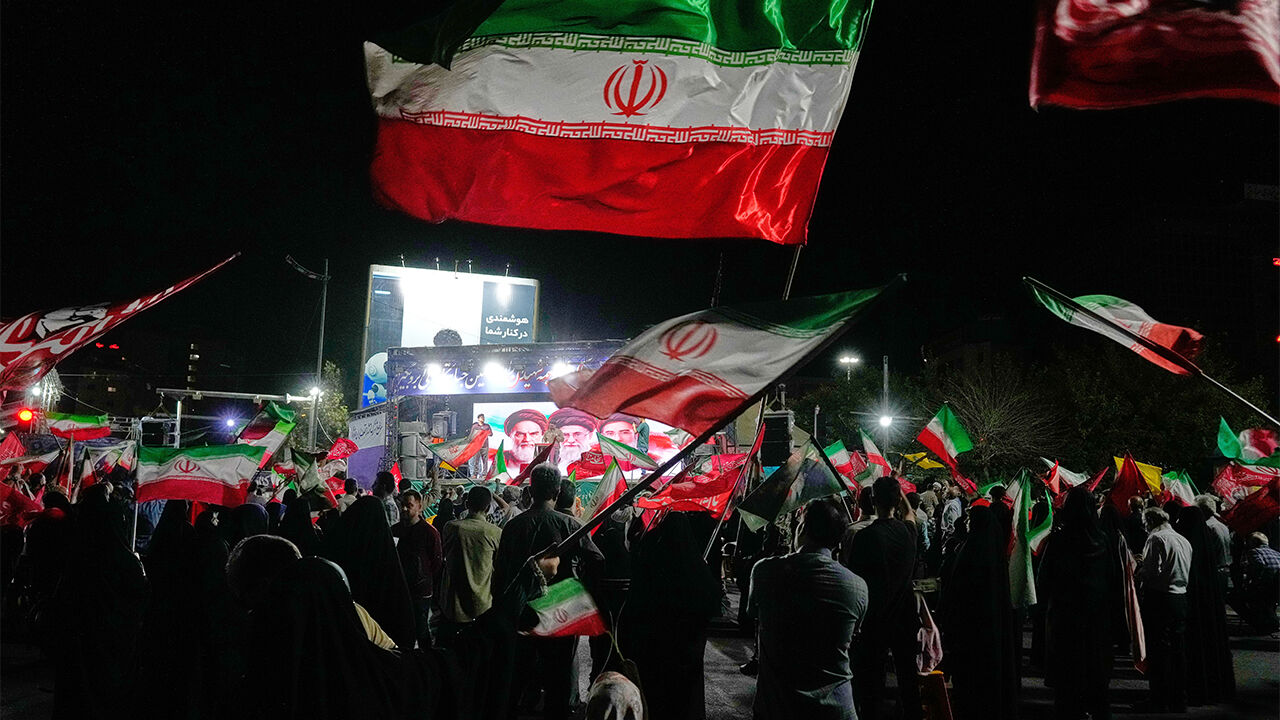
▲ Participants wave Iranian flags during a pro-government rally in downtown Tehran on the 8th.
Iran is stepping up defense of its nuclear facilities and hinting at deploying ground forces to neighboring countries as it prepares for the possibility of a resumed war following the U.S. midterm elections in November, the U.S. daily The Wall Street Journal (WSJ) reported on the 12th (local time).
According to the report, Iranian officials have publicly warned that if the United States launches new attacks, they will significantly escalate their military response across the Middle East, and have conveyed this stance to regional officials in private talks as well.
The Iranian government is also encouraging citizens to prepare for the resumption of war by promoting training in the use of portable anti-aircraft missiles and holding pro-government rallies.
Satellite images have also captured signs that Iran is reinforcing defensive structures at sensitive locations such as nuclear facilities and border areas to enhance its defense capabilities against attacks.
An analysis of satellite imagery from satellite imaging company Vantor by the think tank Institute for Science and International Security (ISIS) showed that last month, Iran took defensive measures against ground incursions, such as building temporary earthen berms around the Kuh-e Gholhak and Natanz nuclear facilities.
Some Iranian officials have also hinted at the possibility of the Iranian military deploying ground forces to neighboring countries to deter further U.S. attacks, according to sources familiar with Iran's warnings.
Separately, the sources added, Iran has warned Arab officials that if hostilities resume, it could attack regional targets, including oil facilities in Saudi Arabia.
Mohsen Rezaei, secretary-general of Iran's Supreme National Security Council (SNSC) and an Iranian security chief, also stated in an interview with Iran's state-run Press TV that the United Arab Emirates (UAE), regional data centers, and internet cables could be targeted.
Analysts suggest that because Iran has limited capability to defend against attacks by U.S. advanced fighter jets and cruise missiles, it has a strong incentive to deter U.S. attacks through threats.
Behnam Ben Taleblu, an Iran expert at the think tank Foundation for Defense of Democracies (FDD), pointed out, "Iran is actively preparing for the next war in both word and deed," adding, "In this sense, the regime's actions serve a dual purpose of securing deterrence and formulating war plans."
The United States is also preparing for the possibility of resumed hostilities.
Previously, the WSJ reported on the 1st that additional aircraft carriers and 10,000 troops are moving toward the Middle East region, where two aircraft carriers are already deployed.
U.S. President Donald Trump recently stated that he would not attack Iran before the midterm elections, but has previously raised the possibility of striking Iran's Kuh-e Gholhak nuclear facility.
U.S. officials cited by the WSJ stated that the U.S. military is preparing various options for a new attack.
The WSJ analyzed that these buildup moves by both sides show that, more than seven months into the outbreak of the war, neither the United States nor Iran is trying to end the deadlocked conflict, but are instead seeking breakthroughs in directions favorable to themselves.
(Photo: AP, Yonhap News)
※ Please note: This article was translated by AI and may contain errors.


 Video News
 Video News
 Video News
 Video News
 Video News