
 KOR
KOR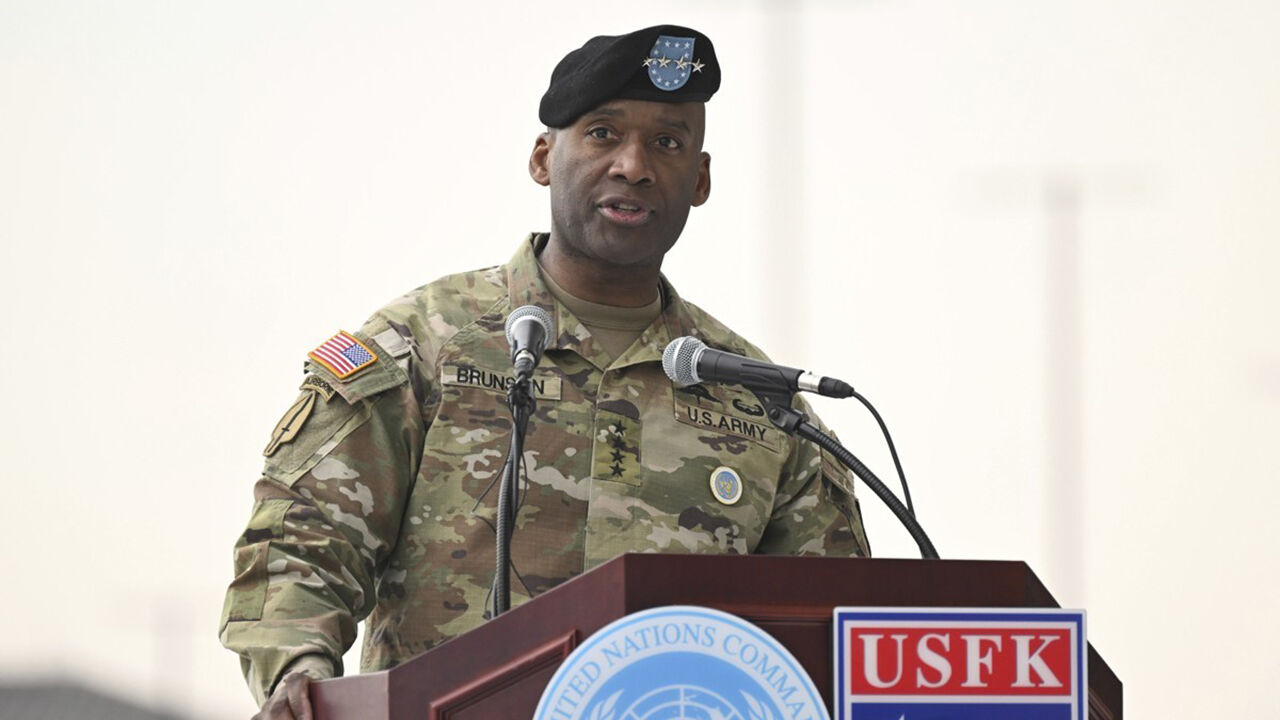
▲ Gen. Xavier Brunson, Commander of United States Forces Korea
Gen. Xavier Brunson, Commander of United States Forces Korea (USFK), has stated that joint military exercises between South Korea and the United States need to evolve away from their traditional format of large-scale command post exercises.
His remarks are interpreted as suggesting that allied forces must conduct operations in a dispersed manner across the Korean Peninsula to avoid becoming easy targets, especially as North Korea gains real-world combat experience by deploying troops to Ukraine.
General Brunson attended the Association of the United States Army (AUSA) annual meeting in Washington, D.C., on October 12, local time.
Speaking at the event, he noted that South Korea-U.S. joint exercises are conducted twice a year in the form of large-scale command post exercises, saying, "We've got to move away from that".
He particularly stressed the need to acknowledge that circumstances have changed, given that North Korea is accumulating practical combat experience through its troop deployments in the war in Ukraine.
He explained, "We are discussing with Kim Sungmin, Deputy Commander of the ROK-U.S. Combined Forces Command, ways to conduct operations in a distributed manner".
General Brunson asked, "What would it look like if we were to train from Jeju all the way up to Gyeonggi Province?"
He continued, "Just imagine if we trained across the entirety of the peninsula and were able to say [to North Korea], 'The things you learned in Ukraine won't apply to us'".
He also emphasized, "We will learn the same lessons and disperse ourselves in a way that prevents us from becoming targets. It's about not being moored in one place".
General Brunson also mentioned the possibility of conducting additional training between the two major South Korea-U.S. joint exercises held each year.
He shared that forces recently carried out a "strategic exercise without troops," traveling by helicopter to simulate contingency scenarios.
His remarks are seen as underscoring the need for change by adding dispersed training to existing command post exercises, and that discussions on this matter are underway with South Korea.
U.S. President Donald Trump previously ordered a reduction in South Korea-U.S. combined drills in August while expressing a willingness to resume dialogue with North Korea.
Against this backdrop, attention is focusing on whether actual changes will take place in the format of South Korea-U.S. combined exercises.
South Korea and the United States conduct two major command post exercises each year: "Freedom Shield" (FS) in the first half of the year and "Ulchi Freedom Shield" (UFS) in the second half.
Regarding General Brunson's remarks, a military source stated, "We understand the intent is not to alter the existing large-scale command post exercises, but that additional dispersed training is needed."
The source explained that existing large-scale combined command post exercises alone may be insufficient and could allow North Korea to anticipate drills, including identifying potential targets.
Accordingly, the source noted the understanding that additional dispersed training methods should be implemented.
In fact, South Korea and the U.S. reportedly established and operated backup command posts in Daegu and Jinhae during this year's Ulchi Freedom Shield exercise as well.
Plans for next year's command post exercises are also reportedly being coordinated normally.
Meanwhile, General Brunson also explained the "Regional Sustainment Hub" initiative that USFK has been pursuing.
He highlighted that South Korea possesses a world-class defense industrial base and production capabilities.
General Brunson said, "In the future, and particularly in Pacific fighting, sustainment capacity is going to matter, whether it's the ability to protect things deployed forward or the ability to sustain from South Korea inside the first island chain".
He continued, "The regional sustainment hub concept means bringing those means of production into the theater".
He added, "It's about taking the best advantage of what partners do well and applying it to our equipment."
While he did not directly mention China, the remarks could be interpreted as hinting at a plan to leverage South Korea's defense industrial base to secure sustained combat capabilities in the event of a Taiwan contingency.
(Photo: AP, Yonhap News)
※ Please note: This article was translated by AI and may contain errors.


 Video News

 Video News
 Video News
 Video News