
 KOR
KORJust a month and a half after the announcement of the largest defense corruption scandal in history involving LIG D&A and DAPA, another defense graft case has broken out. Although the KF-16 fighter jet case is smaller in scale compared to the LIG D&A scandal, the crimes spanned well over a decade, and the illicit proceeds are substantial considering the small size of the firms. This is deeply concerning. At a time when K-defense has been experiencing a clear downward trend since its 2022 windfall in Poland, defense corruption scandals—which act like poison to the industry—are emerging one after another.
DAPA's role is critical. Defense corruption is a national security crime committed through the medium of defense spending. A precedent must be set showing that "getting caught leads to certain ruin" in order to prevent recurrences. The moment leniency is shown, situations like the KDDX program—which delayed deployment by years and shattered trust in the defense industry—are prone to happen again.
"Supplying Counterfeit Parts to KF-16s for 11 Years"
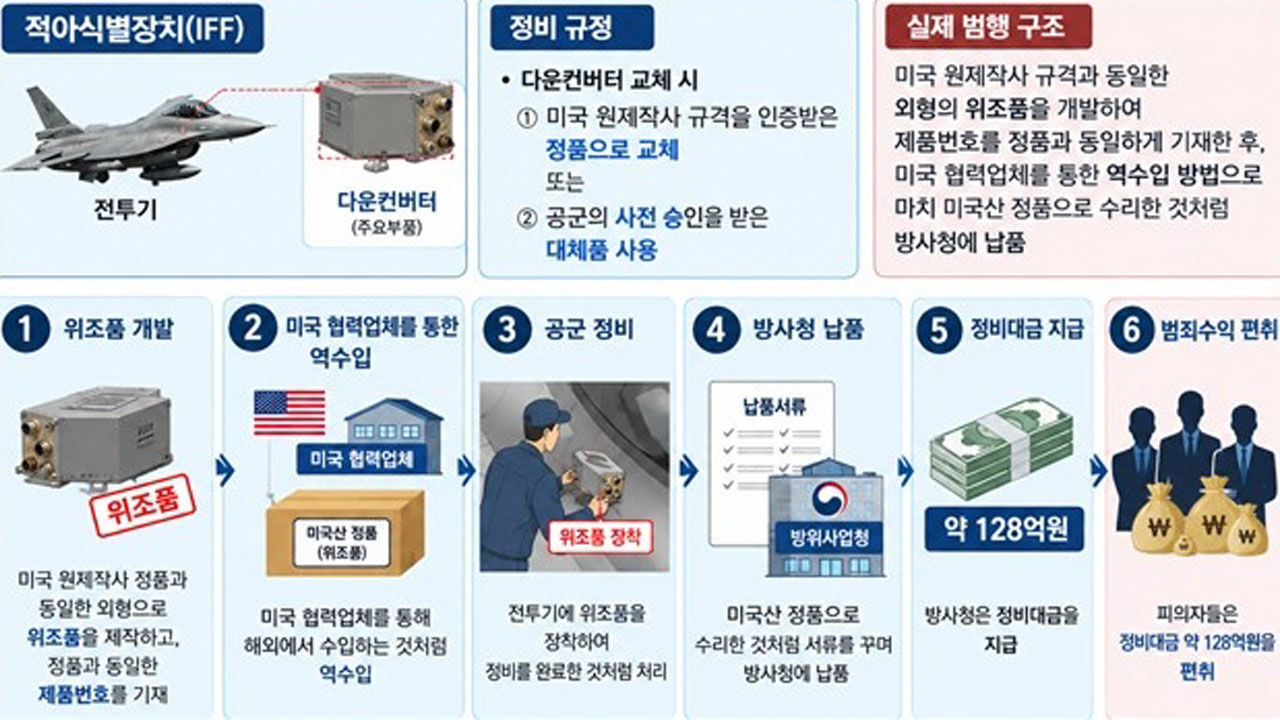
The Nonsan Branch of the Daejeon District Public Prosecution Office announced on October 8 that it had indicted and detained Mr. A, the head of a fighter jet parts manufacturer and distributor, Mr. B, a technician from an outsourced firm, and Mr. C, the head of an outsourced maintenance company, on charges of violating the Act on Special Measures Concerning Crimes Involving Military Property. Two others, including a quality assurance inspector and another maintenance technician from the maintenance firm, were indicted without detention.
Mr. A and his accomplices are accused of pocketing 12.8 billion won between August 2014 and February of last year by exporting locally manufactured counterfeit downconverters—a fighter jet component—to the United States and re-importing them, deceiving DAPA into believing they were genuine American products. They are also accused of taking 850 million won through an illegal parts-swapping scheme, arbitrarily removing components from KF-16 transceivers deemed beyond repair and installing them in other KF-16 aircraft.
The prosecution defined the case as "a grave matter that fundamentally undermined national defense, security, and the reliability and safety of the Air Force's operational readiness." Astonishingly, Mr. A is reported to have purchased luxury yachts and private aircraft with the proceeds of the crime. Even the defense corruption scandals that shook the nation during the Park Geun-hye and Moon Jae-in administrations were not quite like this.
LIG D&A Pledged to 'Strengthen Compliance,' but Where Is the 'Self-Reflection'?
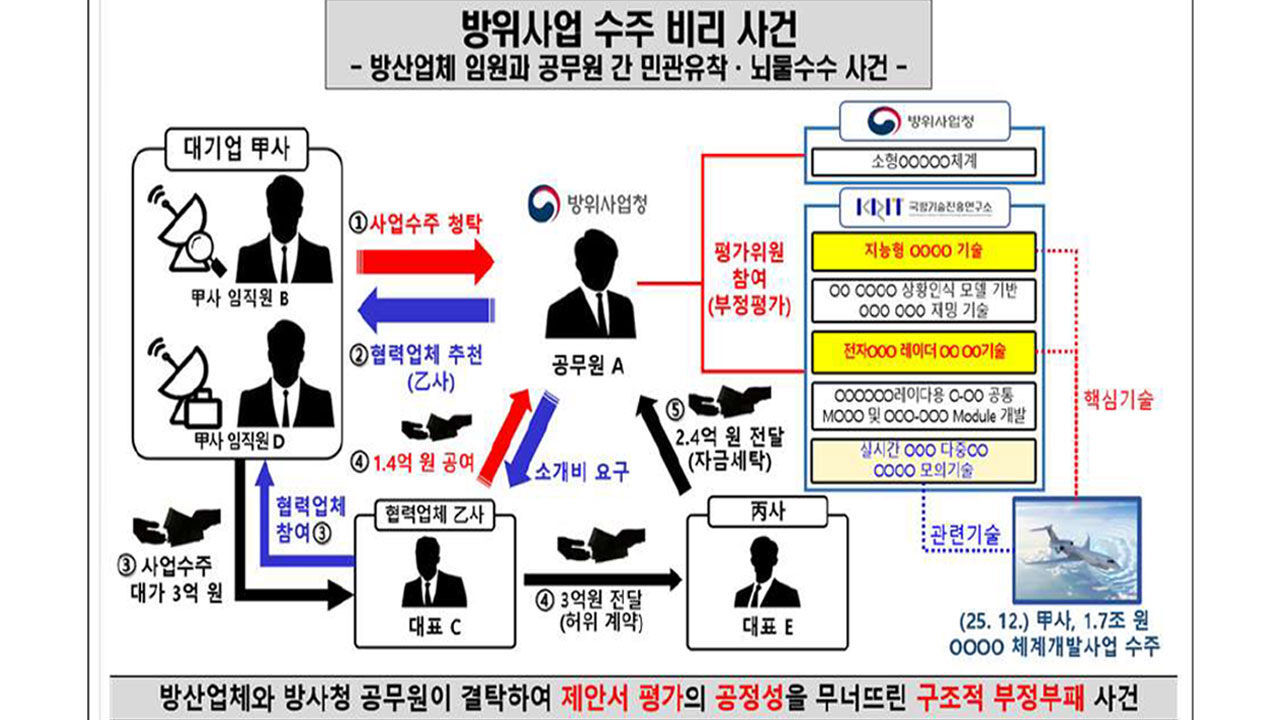
The LIG D&A-DAPA case is being called the largest defense corruption scandal in history because the amount of bribes accepted by a DAPA official, the size of the implicated corporation, and the rank of the individuals involved are unprecedentedly large and senior. A Level 5 DAPA official is accused of taking 460 million won in bribes, and the vice president and executive director (as of this year) of major corporation LIG D&A are implicated in the case. The entertainment and hospitality detailed in the indictment are shameless and embarrassing.
LIG D&A appears to have illicitly won six defense contracts. Consequently, the Suwon District Prosecutors' Office termed it a "grave anti-state crime." The prosecution notably emphasized that "by illicitly securing three projects, including intelligent signal detection technology, the company gained an unfair advantage in the competition for the electronic warfare aircraft system development program."
On August 21, the day after the Suwon District Prosecutors' Office announced its investigation findings, LIG D&A issued a statement. Out of 17 sentences, including the title and greeting, only a single sentence expressed regret. It dismissed the prosecution's findings regarding the electronic warfare aircraft system development program as "groundless claims." The company concluded its statement by stating that it would "strive to establish a compliance system," a framework designed to manage corporate legal and ethical compliance.
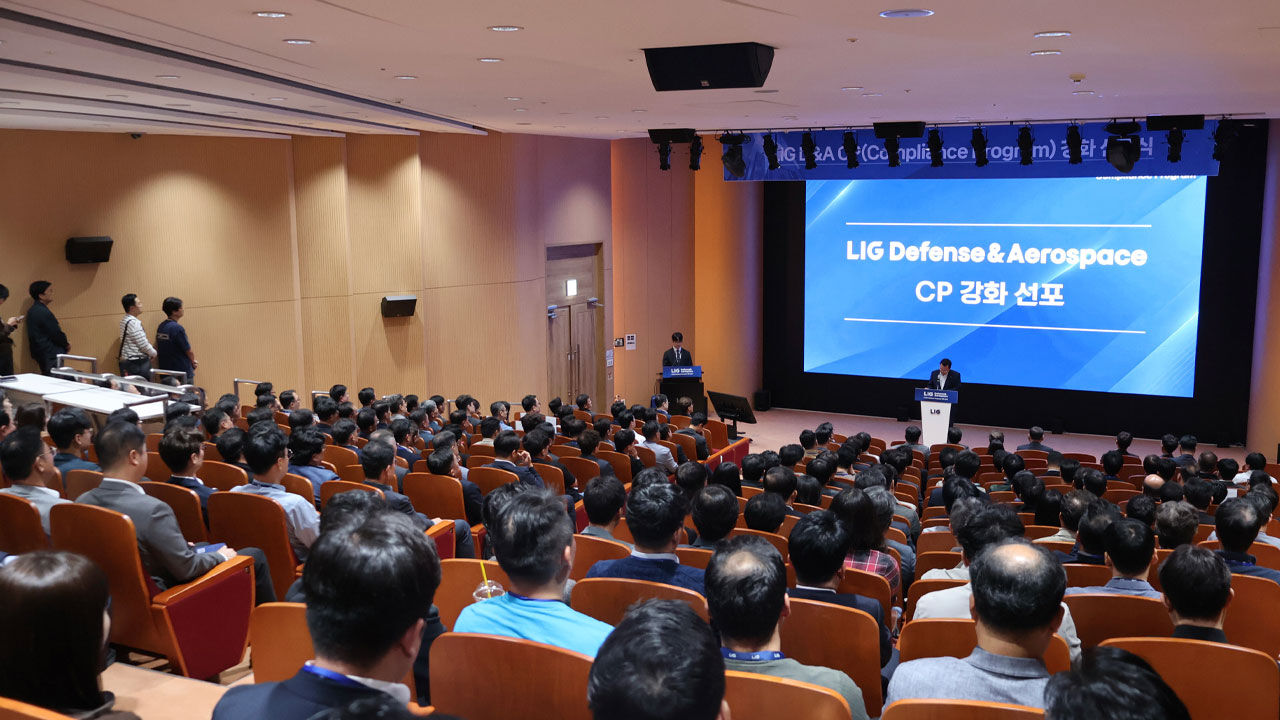
On October 6, LIG D&A held a declaration ceremony to strengthen its compliance program. In a press release, LIG D&A pledged to "reinforce continuous monitoring to improve transparency, enhance compliance training programs for executives and employees, and overhaul the compliance framework." Shin Ik-hyun, CEO of LIG D&A, urged observers to "watch our renewal efforts to build trust that meets global standards."
Although the event was undoubtedly triggered by the defense corruption scandal, LIG D&A's press release on strengthening compliance did not mention the corruption case at all. Critics say the company's awareness of defense corruption has regressed even further compared to its previous statement. An executive from another defense contractor asked the reporter, "There is no public apology or news of disciplinary action against the indicted executives; isn't the sight of LIG D&A holding a compliance ceremony as if nothing happened surreal?" A senior DAPA official remarked, "I hear LIG D&A's government relations team has been courting the National Assembly lately to draw sympathetic remarks during DAPA's parliamentary audit, which is quite uncomfortable to watch."
No Distinctions Between 'Big Thieves' and 'Small Thieves'
DAPA must take the scandals involving LIG D&A and the KF-16 parts and maintenance firms seriously. In the LIG D&A case, defense funds were allegedly used for bribes, while in the KF-16 case, defense funds were allegedly spent on purchasing yachts and light aircraft. In particular, one key pillar of the LIG D&A case is a DAPA official. Moreover, LIG D&A has long been one of the major defense contractors favored by DAPA, which may explain why voices of self-reflection are hard to hear from them. DAPA must remember that the sword of sanctions must be equally sharp whether the implicated company is large or small.
If DAPA continues to stagger and act indecisively out of concern for external pressures, as it did during the KDDX classified leak case, defense corruption will break out again. DAPA's lenient handling of the KDDX scandal may have eroded contractor discipline, giving rise to today's scandals. At a time when exports are already sluggish, if defense scandals continue to proliferate, K-defense could instantly lose the hard-won support of the public. If DAPA is to overcome this crisis of defense corruption strictly and set K-defense on the right path, it must get its act together.
※ Please note: This article was translated by AI and may contain errors.




 Video News
 Video News