
 KOR
KOR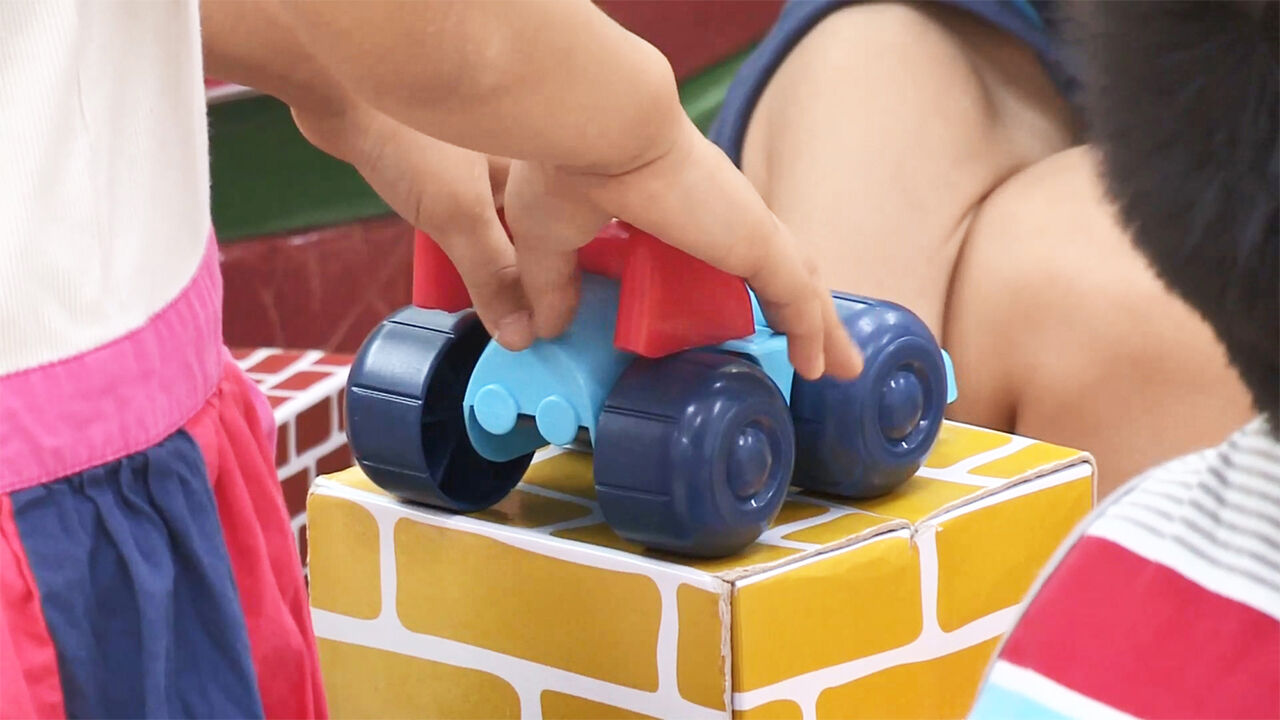
▲ Children playing at a daycare center
The number of daycare centers in South Korea has decreased for 12 consecutive years up to last year due to the declining birth rate.
According to the Ministry of Health and Welfare, there were 26,064 daycare centers nationwide last year, down 4.8% from 27,387 a year earlier.
This means 1,323 centers closed down within a single year.
While the number of domestic daycare centers stood at around 1,000 in the 1990s, it surpassed 40,000 by 2012.
However, after peaking at 43,770 in 2013 and registering an increase compared to the previous year, the number has declined every year. Comparing 2013 to last year (2025), daycare centers decreased by 40.5%, or 17,706 facilities, over the 12-year period.
The decline in daycare centers indicates that closures outnumbered the establishment of new facilities.
This trend is attributed to operational difficulties caused by a shrinking number of children stemming from low birth rates.
Among the seven types of daycare centers, "family daycare centers" (home-based centers), which account for the largest share, dropped below 10,000 to 9,586 in 2024, and further decreased by 9.6% over the year to 8,664 last year.
Unlike other categories, all of which saw declines, only government- and publicly-funded daycare centers increased by 3.4%, rising from 6,521 in 2024 to 6,745 last year.
The number of children enrolled in daycare centers fell below 1 million to 941,303 in 2024, and dropped further below the 900,000 mark to 887,764 last year.
The number of daycare teaching staff and personnel also fell below the 300,000 mark to 297,067 in 2024, before declining another 1.9% over the year to 291,507 last year.
Kindergartens, which serve slightly older children than daycare centers, faced a similar situation.
After peaking at 9,029 in 2017 following an increase from 8,987 in 2016, kindergartens have been on a downward trend for eight consecutive years, dropping to 8,140 last year.
Amid a severe low birth rate crisis, the government is pushing for the integration of early childhood education and childcare—known as "ubotonghap"—to strengthen national responsibility for infant and toddler education and care.
The government plans to complete the integration of early childhood education and childcare by 2030 through revisions to the law.
The Korea Institute of Child Care and Education pointed out, "Current childcare policies are facing complex structural changes and challenges, such as the pursuit of integrated early childhood education and childcare and deepening low birth rates." They added, "In particular, the integration of early childhood education and childcare, which has been discussed for about 35 years, established a legal foundation through the revision of the Government Organization Act in 2023 by transferring childcare duties to the Ministry of Education, but integration at the local government level still remains an institutional vacuum."
They further emphasized, "Related laws and regulations must be promptly reorganized to unify the policy, financial, and administrative systems between the central and local governments," stressing that "above all, policy consensus and execution that prioritize the guarantee of infants' and toddlers' rights and developmental support must be underpinned."
(Photo: Provided by Yonhap News TV, Yonhap News)
※ Please note: This article was translated by AI and may contain errors.



 Video News
 Video News
 Video News
 Video News