
 KOR
KOR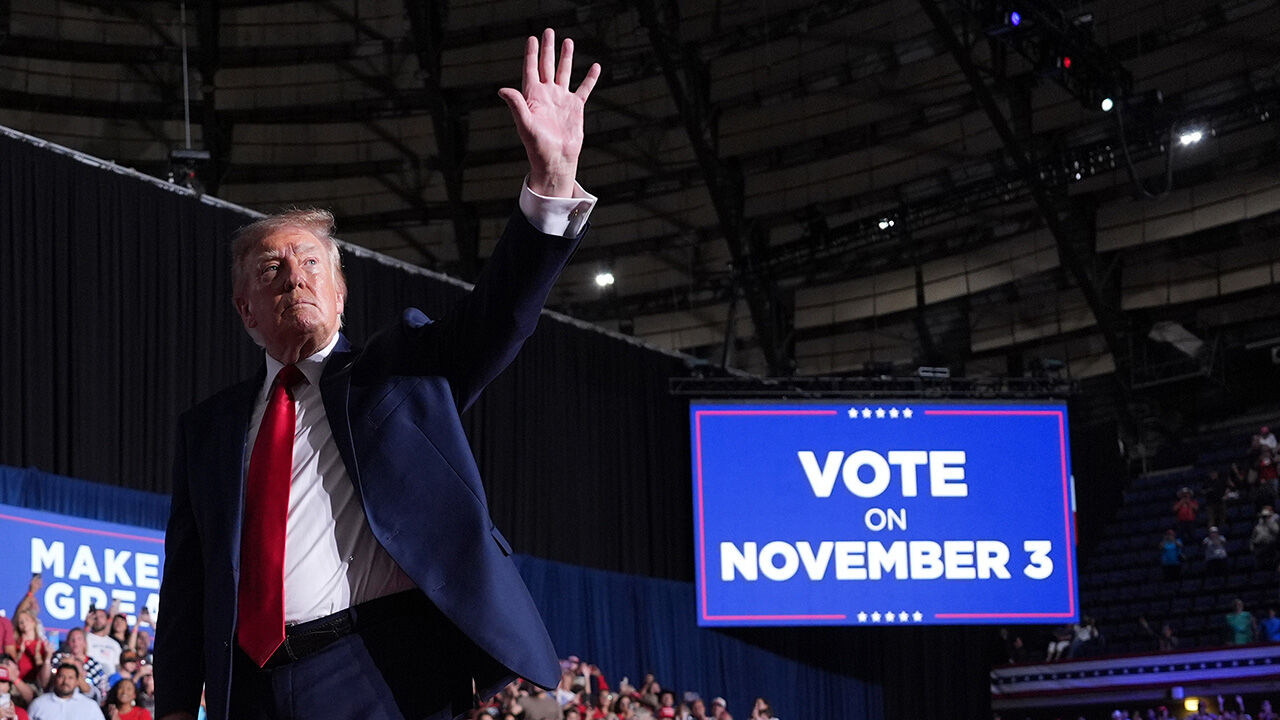
▲ U.S. President Trump waves during a midterm campaign rally in San Antonio, Texas
Ahead of the U.S. midterm elections in November, both the Republican and Democratic parties are reportedly featuring the economy as the central theme of their campaign advertisements.
However, while Democrats have intensively highlighted the spending burden caused by rising inflation, Republicans have focused on boosting incomes through tax cuts, using different approaches to win over voters.
The Washington Post (WP) reported on the 8th that this was the finding after analyzing some 8,000 political advertisements posted on TV, social media, and online regarding federal Senate, House, and gubernatorial races in battleground regions.
Based on data from ad tracking firm AdImpact, the total scale of ad spending analyzed by WP amounted to 1.6 billion dollars (approx. 2.15 trillion won). Republicans outspent Democrats by shelling out about 1 billion dollars compared to the Democrats' 661 million dollars.
In particular, Republicans spent the most on ads in Ohio, pumping 138 million dollars into advertisements supporting Republican Senator Jon Husted in the Ohio Senate race.
The analysis showed that economic issues were mentioned in about 3 out of 5 campaign ads in battleground regions.
The total scale of ad spending dealing with economic issues such as wages, housing costs, and inflation reached 920 million dollars.
The amounts spent by both parties were nearly identical.
Democratic ads mentioned grocery prices 3 times more often and gasoline prices 2 times more often than Republican ads.
This can be seen as an election strategy to stimulate voter dissatisfaction with high inflation—such as rising oil prices stemming from the war with Iran—and to pin the blame on the Trump administration and the Republican Party.
Trip Yang, a Democratic strategic consultant, noted that most Americans, regardless of party affiliation, do not want high prices, adding, "Overall, Democrats are tying Republican candidates to Trump's economic policies, which have proven to be deeply unpopular."
Conversely, Republicans mentioned wages and tips 8 times more often and Social Security 7 times more often than Democrats.
Republicans specifically emphasized U.S. President Trump's signature tax cut policies, such as tax exemptions on tip income, and attacked Democratic candidates who voted against related legislation.
Mike Madrid, a Republican strategic consultant, stated that given how Republicans feel they bear responsibility for economic issues, they have no choice but to highlight policies they support, such as tax-free tips or tax cuts related to Social Security pensions, noting, "That alone won't win elections, but it's all they have."
Following the economy, the issue area with the second-highest ad spending was corruption and government ethics reform.
Democrats spent more than 306 million dollars on ads addressing this issue—nearly double that of Republicans.
For example, Democratic candidate James Talarico, running in the Texas Senate race, brought up corruption issues such as bribery allegations against his Republican opponent, Texas Attorney General Ken Paxton, in about three-quarters of his ads.
Republicans also used corruption-focused ads primarily to attack opponents' congressional voting records or ethical issues.
Healthcare was the third largest issue, with related ad spending reaching about 400 million dollars.
While Democrats emphasized expanding health coverage and maintaining existing benefits, Republicans aired ads promising to protect healthcare while criticizing the expansion of government intervention in medicine.
In particular, Democrats spent 85 million dollars on ads mentioning cuts to public health support such as Medicare (healthcare for the elderly) and Medicaid (healthcare for low-income individuals), whereas Republicans spent only 4 million dollars on ads mentioning these programs.
The WP assessed that Republicans more actively highlighted immigration and social issues than Democrats while rarely mentioning U.S. President Trump directly.
This appears to stem from a calculation that, amid falling approval ratings for President Trump due to the war with Iran and high inflation, emphasizing the link between candidates and President Trump could prove disadvantageous to their campaigns.
(Photo: AP, Yonhap News) (Photo: Getty Images Korea)
※ Please note: This article was translated by AI and may contain errors.


 Video News
 Video News
 Video News
 Video News
 Video News