
 KOR
KOR
The South Korean government has decided to recall its ambassador to Ukraine amid escalating diplomatic friction over the repatriation of captured North Korean soldiers to South Korea.
Recalling an ambassador to one's home country is a diplomatic measure that signals strong protest to a counterpart nation, serving as a tool to convey that serious problems exist in bilateral relations without formally severing diplomatic ties.
In a statement issued this afternoon, on October 8, the government stated, "The government has decided to recall the Ambassador to Ukraine to the home country."
It added, "The government hopes that pending issues between the two countries will be resolved amicably, and to this end, will continue consultations with the Ukrainian side."
This marks an additional diplomatic step by the South Korean government, which previously summoned Ukraine's chargé d'affaires to Seoul last month to lodge a protest, following up now by bringing its own ambassador home.
The decision comes amid a diplomatic dispute that erupted after Ukraine disclosed the repatriation of two North Korean prisoners of war (POWs) to South Korea.
Earlier, on September 23 (local time), Ukrainian President Volodymyr Zelenskyy disclosed in a speech at the United Nations General Assembly in New York that two captured North Korean soldiers who had fought for Russia were recently sent to South Korea.
In response, President Lee Jae-myung expressed regret via social media the following day, stating that the Ukrainian side had revealed the repatriation in violation of a confidential bilateral agreement.
The South Korean government's position is that while it received prior notification from Ukraine regarding the matter at the time, the repatriation was disclosed without sufficient explanation or specific consultation.
Friction deepened further after an official from the Office of the President of Ukraine subsequently claimed to the effect that no such confidential agreement existed between the two nations.
While the South Korean government maintains that both countries agreed not to disclose the repatriation of the North Korean POWs to South Korea, Ukraine has pushed back, denying the very existence of such a confidential agreement.
On September 27, the presidential office took issue with Ukraine's denial of the confidential agreement and demanded an official explanation and apology.
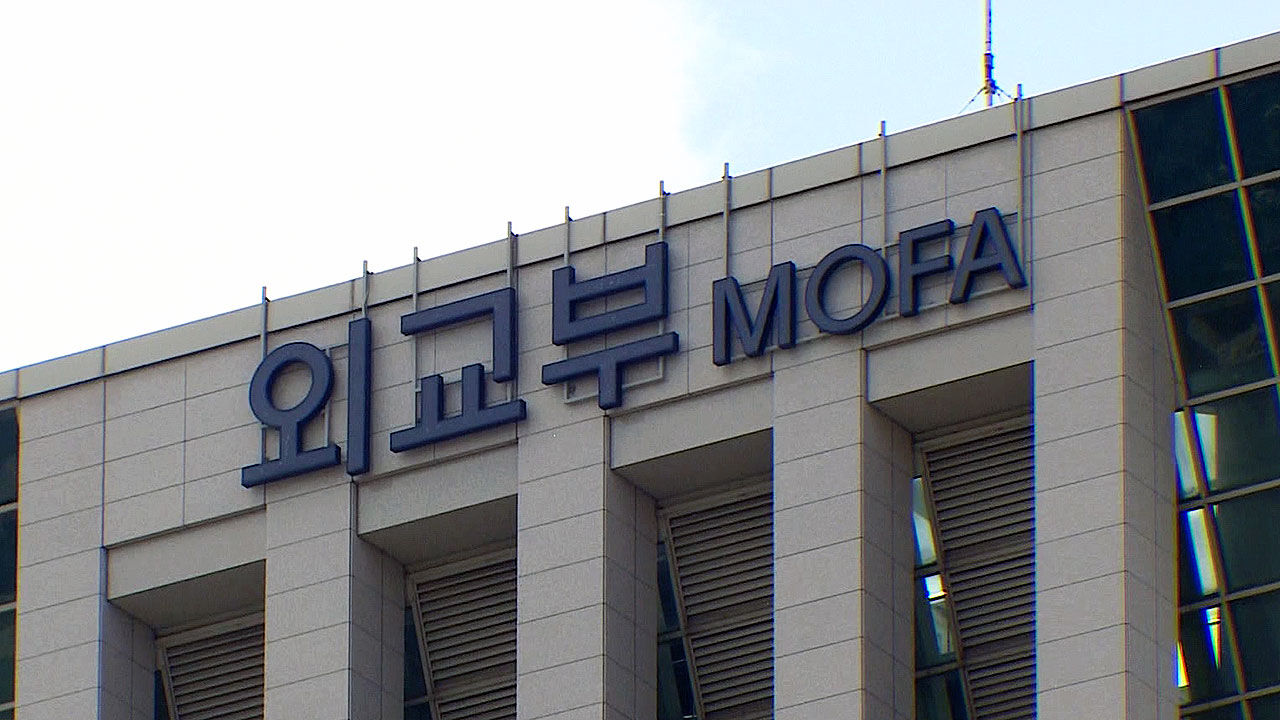
Then, on September 28, First Vice Foreign Minister Park Yoon-joo summoned Andrii Beshkin, Ukraine's chargé d'affaires to South Korea, to the Ministry of Foreign Affairs to lodge a protest.
At the time, Vice Minister Park expressed strong regret over Ukraine's unilateral disclosure of the repatriation despite the confidential bilateral agreement, and pointed out that the Ukrainian presidential office's announcement had undermined mutual trust.
Park also demanded an official explanation, an apology, and measures to prevent a recurrence.
Subsequent consultations took place between the foreign ministers of both nations, but differences regarding the extent and level of Ukraine's apology remained unbridged.
Foreign Minister Cho Hyun stated the day before yesterday, on October 6, during a parliamentary audit by the National Assembly's Foreign Affairs and Unification Committee, that he has been continuously exchanging messages with Ukraine's foreign minister and had also received a message containing an apology.
However, Cho noted, "Because there is some gap with the level we envisioned, we intend to take resolute measures."
Regarding the suggestion by Representative Lee Ki-heon of the Democratic Party of Korea that South Korean Ambassador to Ukraine Park Ki-chang should be recalled, Cho responded at the time, "We are reviewing that option among others."
On the same day, the presidential office also stated that it was seriously considering countermeasures, including recalling the South Korean ambassador to Ukraine.
With the government officially deciding to recall the ambassador just two days later, it is seen as escalating the level of its diplomatic response toward Ukraine.
Nevertheless, by expressing hope for an amicable resolution of bilateral issues and stating that it will maintain consultations with Ukraine, the government has left room for dialogue to manage the diplomatic standoff.
Specific details regarding Ambassador Park Ki-chang's return date and the duration of the recall have not yet been disclosed.
※ Please note: This article was translated by AI and may contain errors.
South Korea Recalls Ambassador to Ukraine Amid Deepening Feud Over Repatriation of North Korean POWs

Copyright Ⓒ SBS & SBSi. All rights reserved.
Copying, redistribution, and unauthorized use in AI training are strictly prohibited.
Copying, redistribution, and unauthorized use in AI training are strictly prohibited.

Trending Now
-
 Video News
President Lee Personally Observes: "Hypersonic Missile Test-Launch Successful"
-
Video News
"Clues to Hacker's Identity Traced"... What Happened When We Called the Personal Info Number (Full Video)
-
Video News
"Save Me," Note Flung From Iron Bars... Four Patients Die Consecutively
-
Lee Eun-hae, Convicted in 'Valley Murder' Case, Penalized for Gambling with Stamps in Custody
-
JYP's New Godeok-dong Headquarters Project Ultimately Scrapped Despite KRW 75.5 Billion Land Acquisition
 Video News
 Video News
 Video News

