
 KOR
KOR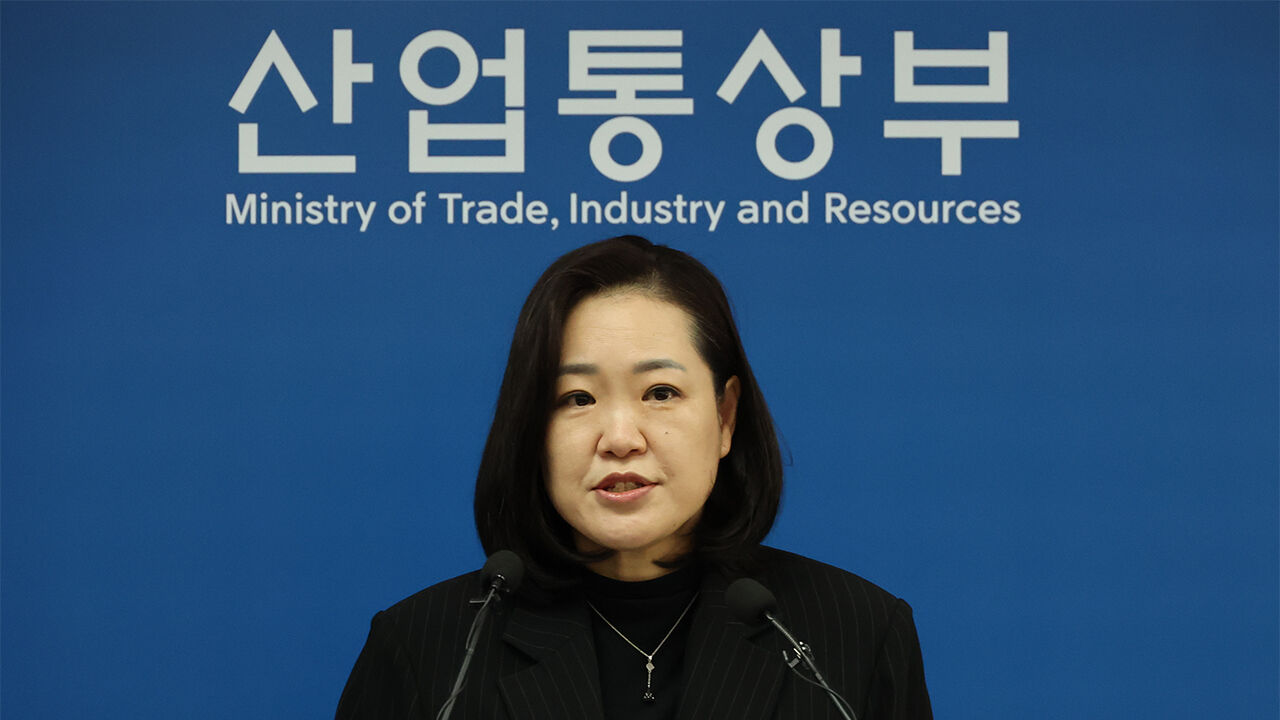
▲ Kim Jung-ye, Director of the Investment Promotion Division at the Ministry of Trade, Industry and Energy, gives a briefing on foreign direct investment trends for the third quarter of 2026 at the Government Complex-Sejong in Sejong City on the 7th.
Foreign direct investment (FDI) actually flowing into South Korea in the first three quarters of this year neared $15 billion, setting a record high.
Based on confidence in South Korea's economic fundamentals, the government assesses that investments in high-tech industries such as semiconductors and artificial intelligence (AI) data centers are continuing, and plans to further strengthen its investment promotion momentum.
According to the "Q3 2026 FDI Trends" released by the Ministry of Trade, Industry and Energy today (the 7th), FDI arrivals for the January-September period increased by 30.6% from the same period last year to reach $14.87 billion, achieving the highest performance on record.
Cumulative investment notifications through the third quarter also rose by 10.8% to $22.9 billion, marking the third-highest on record.
In particular, the growth trend in arrivals, which signifies actual capital inflows, was pronounced.
FDI arrivals in the manufacturing sector surged 110.6% year-on-year to $6.25 billion.
Growth continued in chemicals (up 256.6%) and non-metallic mineral products (up 242.5%), while performance in the medical and pharmaceutical sector also improved significantly (up 129.0%) with the inflow of bio and pharmaceutical-related investments.
FDI arrivals in the services sector increased by 5.6% to $8.37 billion.
By investment type, an increase in M&A-type investments, such as corporate equity acquisitions and mergers, drove the expansion of total arrivals.
M&A-type arrivals surged 126.0% to $6.98 billion.
On the other hand, greenfield investments, which involve building or expanding new factories or business sites, decreased by 4.9% to $7.89 billion.
Looking at notification amounts by country, the U.S. investment notification performance recorded $6.69 billion, up 35.1% from the previous year, driven by the inflow of promising investments such as semiconductor materials, parts, and equipment (supplies) and AI data centers.
Conversely, notification figures from the European Union (EU, $2.41 billion, down 3.9%), Japan ($1.88 billion, down 47.9%), and China ($1.74 billion, down 39.7%) decreased compared to the previous year.
In terms of arrival amounts, performances from the EU (up 93.7%) and Japan (up 63.0%) increased significantly.
An official from the Ministry of Trade, Industry and Energy stated, "Domestic investment opportunities are continuously expanding due to the promotion of three major mega-projects—semiconductors, physical AI, and AI data centers—and the fostering of regional growth engines across five mega-regions and three special self-governing provinces," adding, "We plan to strengthen support for attracting investments and resolving on-site difficulties through domestic and overseas investor relations (IR) activities, including Invest Korea Summit (IKS), the nation's largest investment event, and foreign investment attraction caravans."
(Photo: Yonhap News)
※ Please note: This article was translated by AI and may contain errors.


 Video News
 Video News
 Video News
 Video News
 Video News