
 KOR
KOR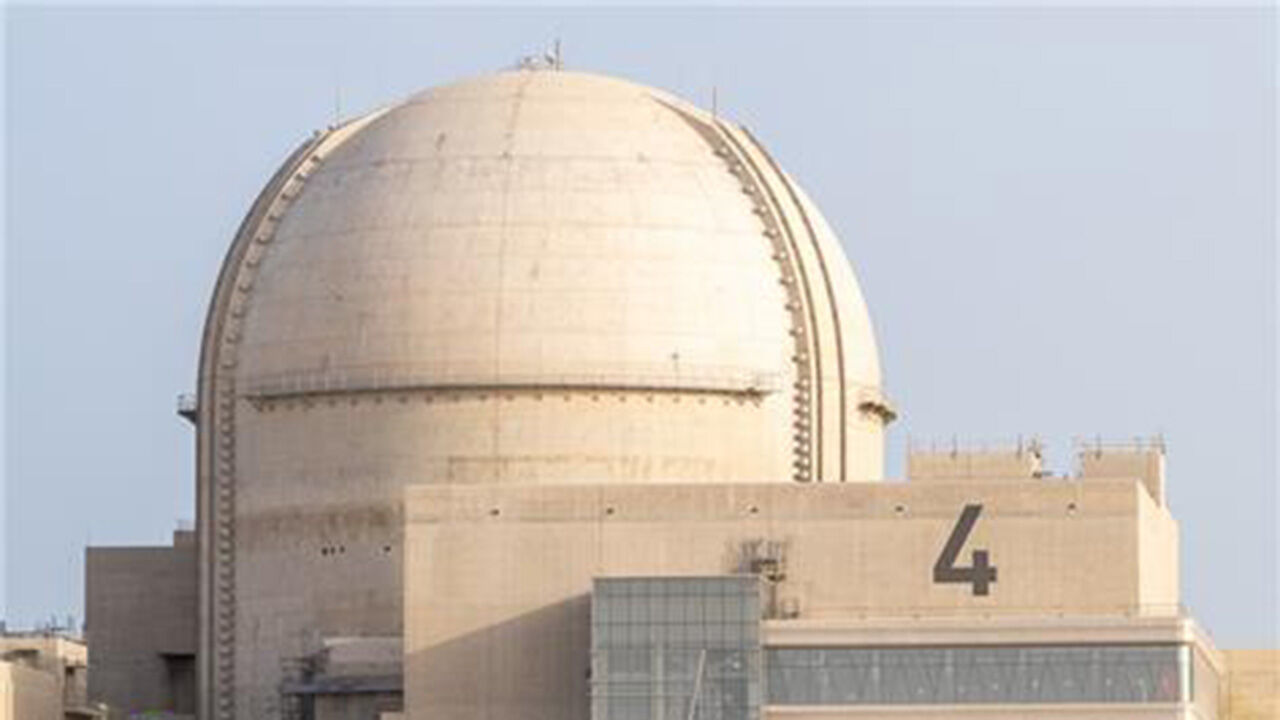
▲ A panoramic view of Unit 4 of the Barakah nuclear power plant in the UAE, which features the APR1400 reactor model
A massive USD 120 billion project between South Korea and the United States to build eight large-scale nuclear reactors in the U.S., agreed upon in broad terms, is expected to take shape around 2028.
The South Korean government aims to fully launch a new era of nuclear exports, building on the achievement of exporting two South Korean-designed nuclear reactors to the U.S. mainland, the birthplace of nuclear power.
The Ministry of Trade, Industry and Energy (MOTIE) held the First Nuclear Export Leaders Forum today at the Seoul Press Center, bringing together about 100 officials from industry, academia, research institutes, and government sectors to explain the key details of the ROK-US Nuclear Framework.
Lee Sang-eun, head of the Nuclear Energy Export Promotion Division at MOTIE, explained, "Around 2028, the project is likely to take concrete form somewhere in the U.S. In particular, since there is a U.S. presidential election in 2028, the U.S. government is expected to accelerate efforts to show progress before the election, and we plan to match that pace."
South Korea and the U.S. have agreed on the ROK-US Nuclear Framework for the construction of eight large-scale nuclear reactors in the United States.
Among them, two units will be built using South Korea's flagship APR1400 reactor model.
Funding will total USD 120 billion from the U.S. investment fund, comprising USD 100 billion for construction costs and USD 20 billion in contingency reserves.
The construction sequence involves building two AP1000 units first, followed by two APR1400 and two AP1000 units, and finally two additional AP1000 units.
The framework specifies that "reasonable efforts will be made to ensure that the time gap between the engineering, procurement, and construction (EPC) contracts for phases 1 and 2 is within six months," alleviating concerns over potential delays in introducing the APR1400.
The nuclear power plant site is planned to be on U.S. federal government land.
The plan is to maximize construction speed by prioritizing federal-owned land, which offers administrative and infrastructural advantages such as shortened licensing periods and existing power grid connectivity.
South Korea has also secured the right to request alternative sites if the locations proposed by the U.S. side do not meet operational conditions.
The nuclear project was initially proposed to the U.S. side by the South Korean government.
In exchange for receiving preferential, lower tax rates under differential tariffs applied by country, South Korea had pledged a total of USD 350 billion in investments in the U.S.
Out of this total, USD 200 billion—excluding USD 150 billion allocated to the shipbuilding sector—had to be executed as strategic investments.
"The idea was not just to do what the U.S. wanted, but to propose a project that we desired," Division Head Lee stated. "After pondering what kind of project would not simply end as an investment in the U.S., but allow South Korean companies to heavily participate and ensure the resulting profits flow back to South Korea, we proposed nuclear energy."
However, there was an obstacle.
It was the Settlement Agreement (SA) finalized last January between Korea Electric Power Corporation (KEPCO), Korea Hydro & Nuclear Power (KHNP), and the U.S. firm Westinghouse.
The SA signed at the time included conditions requiring South Korea to pay over KRW 1 trillion to Westinghouse in technology licensing fees for each nuclear reactor exported.
The contract term was set for 50 years with 5-year renewal options upon expiration, and it even stipulated that small modular reactor (SMR) models developed with domestic technology in the future must undergo prior verification by Westinghouse, drawing fierce criticism as a "slave contract."
Furthermore, entry into North America including the U.S., Canada, and Mexico, as well as Europe and the United Kingdom, was fundamentally blocked, restricting South Korea's nuclear exports to markets with challenging conditions such as parts of South America, Africa, and Asia.
To break through this barrier, the South Korean government launched all-out persuasion efforts, reaching out not only to the U.S. Department of Commerce but also to the Department of Energy, the Department of the Interior, the White House National Energy Council, state governments, the U.S. Congress, and local utility, IT, and financial firms.
In particular, Seoul intensively highlighted that amid power shortages in the artificial intelligence (AI) era and the AI hegemony race against China, cooperation with South Korea—the Western bloc's only solid nuclear supply chain and construction powerhouse—is essential.
"We even produced brochures and conducted outreach across various parts of the U.S.," Lee noted. "We appealed by stating, 'The seed of nuclear technology that the U.S. planted in South Korea 50 years ago has blossomed into an industry with the world's best competitiveness, and we now wish to prosper together with the United States once again.'"
Following this all-out campaign, the U.S. government first proposed the ROK-US Nuclear Framework, and agreement was reached with Westinghouse to amend the SA, exceptionally allowing South Korea to enter the U.S. market exclusively for the two APR1400 nuclear reactors.
"We established a cap to ensure that the technology royalties, services, and nuclear fuel costs payable to Westinghouse do not increase excessively," Lee explained, though specific figures were not disclosed.
Nevertheless, the government expects that a substantial portion of the U.S. investment funds will flow back into the domestic nuclear ecosystem, as local equipment manufacturers and construction firms are guaranteed priority participation in the construction process.
Additionally, South Korea will acquire a 5% to 10% stake in Westinghouse.
Particularly, aligned with the U.S. government's intent to dilute the ownership structure centered on Canadian firms such as Brookfield (51%) and Cameco (49%), the possibility has been raised that South Korea's stake could further increase following a future initial public offering (IPO).
"We are pursuing equity acquisition centered on construction and equipment companies so that our firms can share in the profits generated by Westinghouse," Lee said. "We are currently surveying companies' willingness to participate and plan to proceed with the acquisition in the form of a consortium."
Through this, a foundation is expected to be established allowing South Korean companies to share profits as equal partners when not only the APR1400 but also the AP1000 reactor models are exported to third-party markets in the future.
Kang Gam-chan, Deputy Minister for Trade and Investment at MOTIE, emphasized, "This ROK-US agreement achievement is thanks to the dedication of the South Korean nuclear community, which has built a solid nuclear ecosystem and successfully completed projects. As global demand for nuclear energy expands, the government will spare no support for the global advancement of K-nuclear power."
(Photo provided by KEPCO, Yonhap News)
※ Please note: This article was translated by AI and may contain errors.


 Video News
 Video News
 Video News
 Video News
 Video News