
 KOR
KOR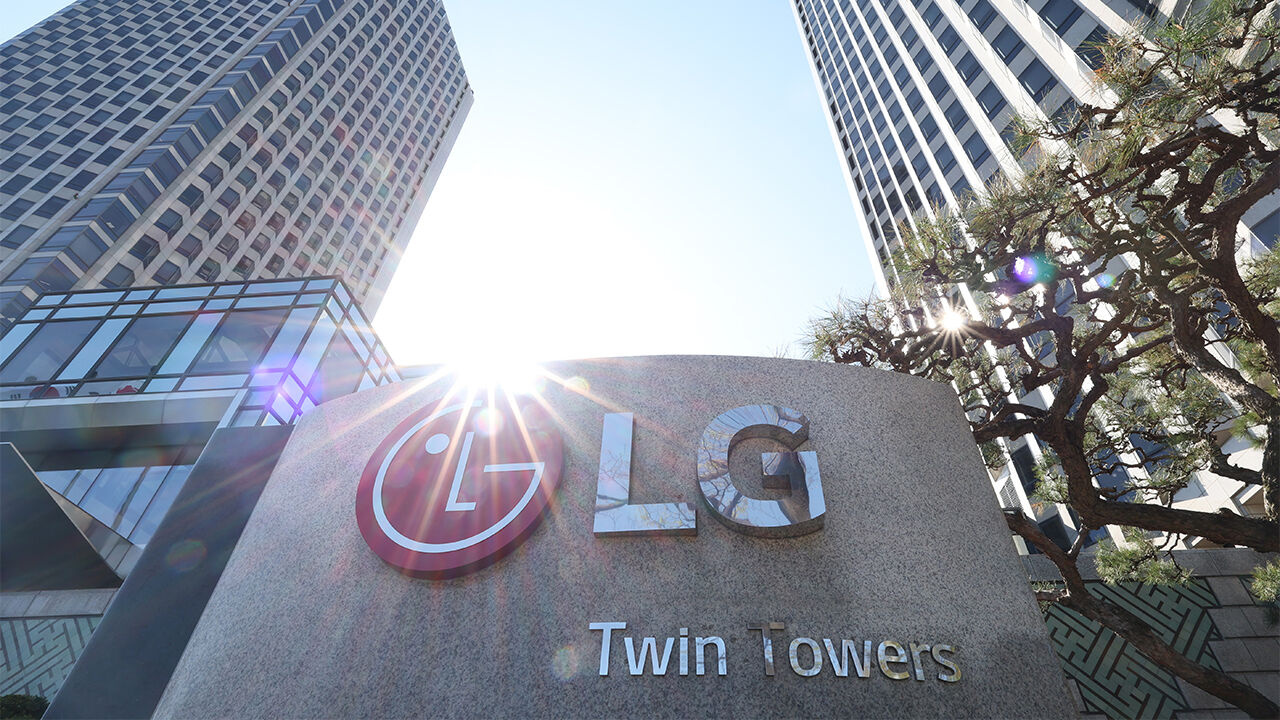
▲ LG Electronics Twin Towers in Yeouido
LG Electronics has posted an operating profit of 781.8 billion won for the third quarter of this year, surpassing 4 trillion won in cumulative operating profit for the first-to-third quarters for the first time.
Despite management uncertainties such as the war in the Middle East, its core businesses, including home appliances, firmly maintained their market positions, while growth continued in Global South regions and business-to-business (B2B) operations.
LG Electronics announced in a regulatory filing today (October 7) that its preliminary consolidated operating profit for the third quarter of this year reached 781.8 billion won, up 13.5% from the same period last year.
Revenue rose 8.9% year-on-year to 23.827 trillion won.
Cumulative revenue and operating profit for the first three quarters of this year stood at 71.3807 trillion won and 4.0346 trillion won, up 9.2% and 55.9%, respectively, compared to the same period last year.
This marks the first time that cumulative revenue and operating profit through the third quarter have exceeded 70 trillion won and 4 trillion won, respectively.
However, the third-quarter operating profit fell 17% short of the market consensus of 941.7 billion won compiled by Yonhap Infomax.
Securities analysts attributed the shortfall to sluggish profitability at its consolidated subsidiary, LG Innotek.
Kiwoom Securities projected that LG Innotek's third-quarter operating profit would drop to 91.7 billion won from 203.8 billion won in the same period last year, as products manufactured using raw materials purchased at high exchange rates in the second quarter were fully shipped.
Regarding its third-quarter performance, LG Electronics stated, "Despite unfavorable environments such as the Middle East war, our core businesses maintained solid market positions and continued revenue growth based on the inherent competitive edge of our products."
Growth also persisted in the Global South, a region with high growth potential, alongside continued expansion in the B2B sector.
Profitability also improved significantly by double digits compared to the same period last year.
While home appliances and vehicle component solutions served as cash cows based on solid profitability in business-to-consumer (B2C) and B2B sectors, respectively, the TV business also substantially improved its profitability year-on-year.
LG Electronics explained that company-wide efforts to improve the cost structure, combined with the effect of easing fixed cost burdens resulting from revenue expansion, offset upward cost factors such as rising logistics and material expenses, as well as fixed costs.
In the Home Appliance & Air Solution (HS) business, a two-track strategy encompassing premium and volume zones, along with the expansion of appliance subscription services, online channels, and B2B, contributed to revenue growth.
The business maintained a robust profitability structure through ongoing efforts to enhance operational efficiencies in manufacturing and logistics.
The Media Entertainment Solution (MS) business achieved year-on-year revenue growth, driven by increased sales of premium TVs such as OLEDs and expanded sales centered on emerging markets.
It maintained a black-ink trend through an increased proportion of premium sales and enhanced efficiency in competitive cost deployment.
The Vehicle Component Solutions (VS) business maintained stable growth based on the smooth conversion of order backlogs into revenue.
Driven by revenue growth and an increased proportion of premium sales in the vehicle infotainment sector, the business established itself as a stable B2B cash cow.
The Eco Solution (ES) business maintained a revenue scale comparable to the same period last year, led by increased sales primarily in overseas markets.
However, profitability declined slightly compared to the same period last year due to impacts such as future investments to secure new production capacities and the recruitment of personnel for new businesses.
LG Electronics plans to continue investing in future new businesses, backed by the solid profit-generating capacity of its core operations.
To address surging demand for AI data center cooling solutions, the company is upgrading domestic and overseas production bases and expanding manufacturing capacities.
In the robotics business, a representative field of physical AI, the company operates South Korea's largest data factory in Yangjae, Seoul, and is investing in mass-production infrastructure for actuators, core robot components, in Changwon, South Gyeongsang Province.
(Photo: Yonhap News)
※ Please note: This article was translated by AI and may contain errors.


 Video News

 Video News

