
 KOR
KOR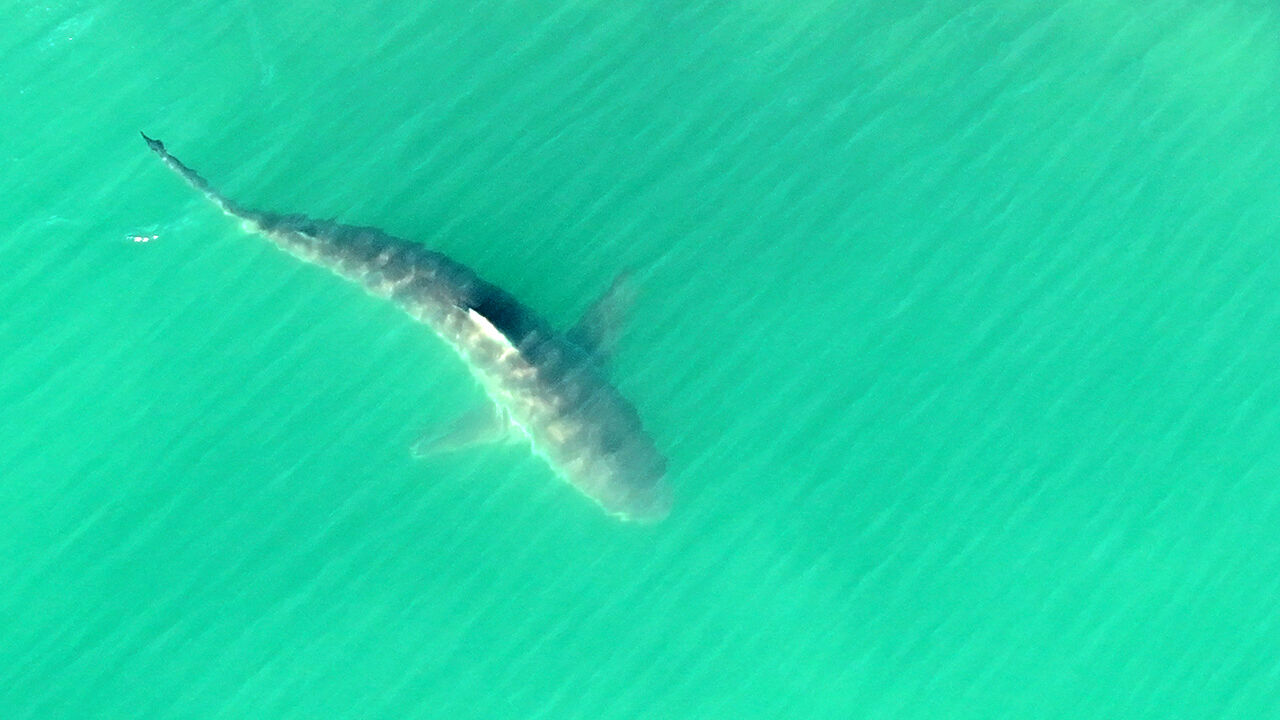
▲ The shark 'Bukangi' at the Bukhang Waterfront Park in Dong-gu, Busan, on the 2nd
The shark named 'Bukangi', which has been staying long-term for 19 days in the artificial waterway of the Bukhang Waterfront Park in Busan, has been finally identified as a blacktip shark.
The National Institute of Fisheries Science (NIFS) announced today (the 6th) that Bukangi was ultimately confirmed to be a blacktip shark.
When Bukangi first entered the artificial waterway, the NIFS had estimated that it could be either a graceful shark or a blacktip shark.
As a result of analyzing close-up footage to determine the exact species, the NIFS confirmed the external characteristics of a blacktip shark, notably a well-developed ridge between the first and second dorsal fins.
Graceful sharks and blacktip sharks are difficult to distinguish visually, but the presence of a ridge between the first and second dorsal fins distinguishes a blacktip shark, while its absence points to a graceful shark.
As a large shark species, the blacktip shark also features a broad and rounded snout, with triangular teeth on the upper jaw possessing developed serrations.
At birth, their body length is about 70 to 100 cm, and they grow up to a maximum of 4.2 meters.
They are widely distributed from coastal to open waters in tropical, subtropical, and temperate regions worldwide, including the adjacent seas of Korea. They generally prefer water temperatures ranging from 18 to 26 degrees Celsius and migrate long distances depending on water temperature changes.
Their diet consists of fish and squids. While there are no studies yet on the dietary sources of blacktip sharks inhabiting the North Pacific region, blacktip sharks off the coast of Australia are known to prey on mackerels, horse mackerels, and sardines.
On the International Union for Conservation of Nature (IUCN) Red List, they are classified as Endangered (EN) due to population declines.
In the case of Bukangi, its body length was confirmed to be about 3 meters, and it was verified to be a female based on the shape of the reproductive organs on its belly.
The NIFS plans to continuously monitor Bukangi's swimming behavior and health status, and to cooperate with related organizations such as the Busan metropolitan government if any abnormal signs occur.
Despite two attempts by rescue authorities to guide it out to the open sea, Bukangi continues to remain in the waterway.
Rescue authorities have decided to wait for Bukangi to leave the waterway on its own for the time being without conducting further rescue operations.
Meanwhile, the number of visitors who came to see Bukangi surpassed 1 million as of yesterday (the 5th).
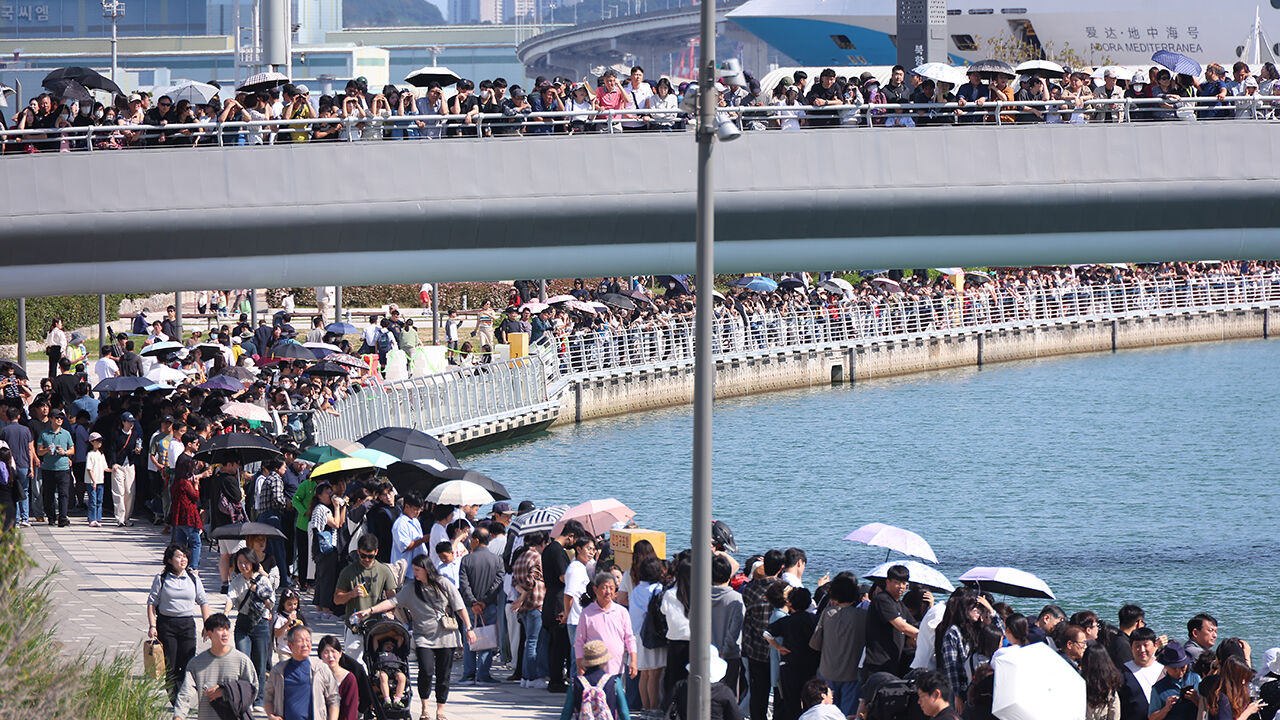
(Photo: Yonhap News)
※ Please note: This article was translated by AI and may contain errors.


 Video News
 Video News
 Video News
 Video News
 Video News