
 KOR
KOR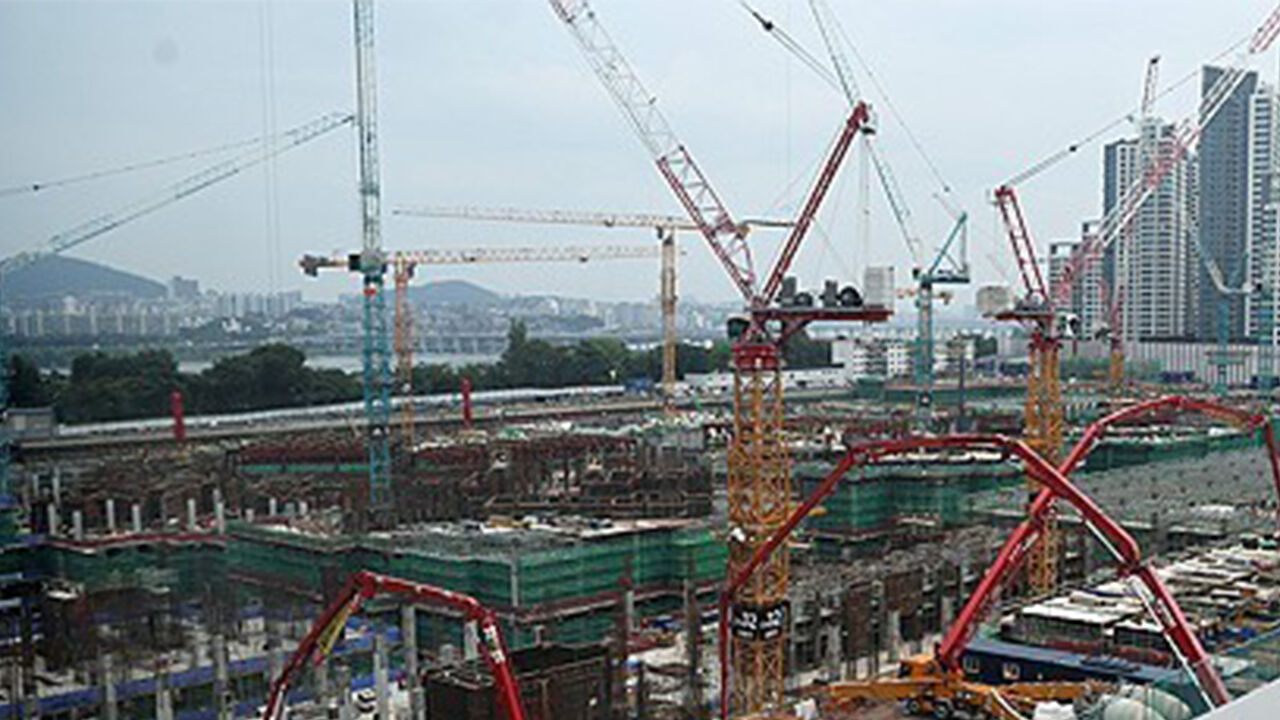
▲ An apartment construction site
While the government is putting all its efforts into expanding housing supply in the capital region, cases of public housing projects failing to break ground as initially planned due to a lack of demand are continuing to emerge in non-capital areas.
According to data submitted by the Korea Land and Housing Corporation (LH) to Representative Kang Dae-shik of the People Power Party, who sits on the National Assembly's Land, Infrastructure and Transport Committee, on October 6, there were 14 public housing projects that were included in LH's construction start plans last year but failed to break ground due to insufficient demand.
The 14 projects are located entirely in non-capital regions: Ulsan Daun 2 A-3 and B-7, Jeungpyeong Naeseong and Goesan Mini-Complex Town A3 in North Chungcheong Province, Seokmun National Industrial Complex B-3, Changhang National Ecological Industrial Complex B1, Hongseong Namjang, Gongju Wolseong A-1, and Asan Onyang in South Chungcheong Province, Gunsan Shinyongseok Station B-1 in North Jeolla Province, Gumi Innovation B-2 in North Gyeongsang Province, Seongdang A in Daegu, and Yangsan Sasong A-3 and Gimhae Jinrye B2 in South Gyeongsang Province.
The scale of these projects totals 7,346 households, including 1,689 public pre-sale housing units, as well as general-type and integrated public rental housing.
Among these projects delayed last year, only three were included in this year's construction start plans, and even among those, two (Ulsan Daun 2 B-7 and Goesan Mini-Complex Town A3) have had their actual construction start dates pushed to "next year or later."
LH explained that it determined the lack of demand by comprehensively reviewing housing market conditions, such as local housing demand and the current status of unsold homes and vacancies in the project districts and surrounding areas.
LH's public housing construction start plan for non-capital regions this year totals 5,477 households, with Daegu having the largest share at 1,394 households, followed by North Gyeongsang Province (1,025 households), South Chungcheong Province (860 households), and Ulsan (494 households). Busan and Daejeon have no planned volume for this year.
On the other hand, apartment construction starts in the capital region recorded 136,000 households in 2022, 108,000 households in 2023, 150,000 households in 2024, and 153,000 households in 2025, significantly falling below the 10-year average (185,000 households) and leading to recent shortages in moving-in volumes.
Representative Kang Dae-shik said, "While the capital region worries about supply shortages, the fact that regional areas cannot even break ground on pre-planned public housing due to a lack of demand demonstrates a regional mismatch in supply policy." He added, "We must closely reflect regional housing demand, unsold homes, vacancies, and population changes to adjust supply volumes and timing, and delicately design supply plans so that limited public housing financial resources can be timely injected into areas with actual demand."
(Photo: Yonhap News)
※ Please note: This article was translated by AI and may contain errors.


 Video News
 Video News
 Video News
 Video News
 Video News