
 KOR
KOR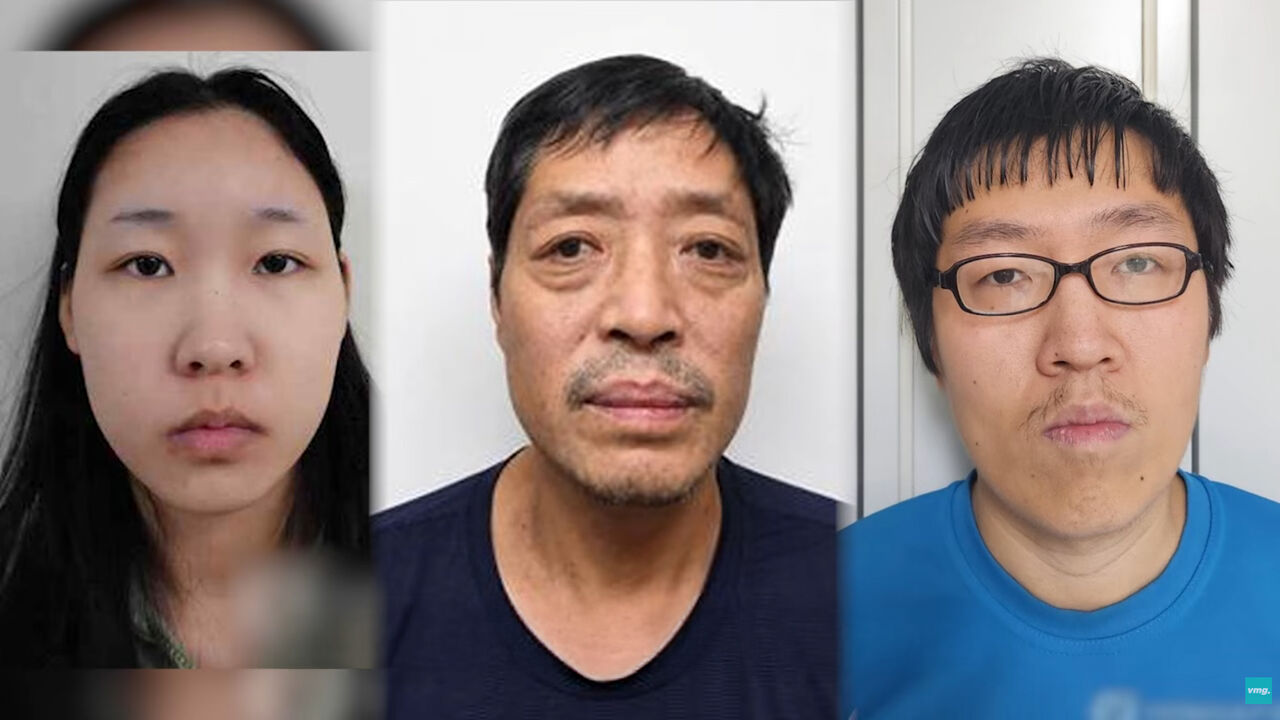
⚡ Spick Quick Summary
Mugshots distorted as if shot with a convex lens: Concerns continue to mount that the mugshots of serious felons, including Kim So-young, Kim Sang-soo, Choi Yoon-jong, and Lee Young-bok, are severely distorted, making it difficult to recognize their real faces.
Absence of manuals for camera equipment and shooting space: Non-standard shooting practices—such as using lenses other than standard 50mm lenses from a close distance in cramped rooms, or having suspects turn only their heads while keeping their bodies stationary—have been identified as the root causes.
Current lax system contrasts with strict overseas guidelines: Unlike the United States (which enforces strict, detailed FBI guidelines) and Japan (which has adopted 3D photographic capture), South Korea lacks clear shooting specifications and manuals, failing to serve the law's original intent of preventing recidivism and aiding identification.
01. What About the Mugshots of Serious Felons?
Kim So-young handed drug-laced beverages to six men, killing two of them. She was recently sentenced to life imprisonment in her first trial. Her face was publicly disclosed under the Act on the Disclosure of Identity Information of Suspects of Specific Violent Crimes. Kim Sang-soo, who committed a "retaliatory murder" after receiving a restraining order for stalking an ex-partner, also had his face forcibly disclosed under the same law. The face of Choi Yoon-jong, who brutally assaulted and sexually abused a woman on a hiking trail, leading to her death, was also released; however, because this occurred before the law took effect, taking his mugshot required his personal consent at the time. The very purpose of disclosing suspects' personal identities is to say: "This individual committed these heinous crimes, so take a look at their face and be on your guard."
02. But Is This a Mugshot or a 'Convex Lens Shot'?

Why were all these photos taken like this? They weren't taken with a fisheye or convex lens, so would anyone really be able to identify a criminal's face photographed this way?


Let's look at an example. Can you recognize who this person is? It is Choi Yoon-jong, the hiking trail sexual assault and murder perpetrator. If Choi Yoon-jong appeared right before your eyes, could you spot him based solely on this mugshot? At least Choi was captured on camera by the media when transferred to prosecutors, but Kim So-young and Kim Sang-soo both wore hats and masks, meaning the public can only remember them through their mugshots.


This is not all. The mugshot of Yang Jeong-ryeol, the perpetrator of a murder in a Gimcheon studio apartment, is distorted, and so is the mugshot of Lee Young-bok, who murdered two female coffee shop owners. It is hard to tell whether these are actual mugshots or distorted "convex shots."
Lee Jae-beom, Photographer | President of the Korea Photo Industry Cooperative Federation
"In photography, the baseline is what we call a standard lens, typically a 50mm lens. Only when shot with that lens can you capture subjects exactly as our eyes see them, without optical distortion. But in the case of these distorted mugshots, zoom lenses were used and shot from too close. When taking official portraits at police stations or community service centers, standard lenses should be the default rule. When that is ignored and photos are taken up close in cramped spaces, these results happen."
"In photography, the baseline is what we call a standard lens, typically a 50mm lens. Only when shot with that lens can you capture subjects exactly as our eyes see them, without optical distortion. But in the case of these distorted mugshots, zoom lenses were used and shot from too close. When taking official portraits at police stations or community service centers, standard lenses should be the default rule. When that is ignored and photos are taken up close in cramped spaces, these results happen."
03. There Is a Reason for the 'Careless' Mugshots
Yet not every mugshot turns out convex and distorted. Looking at mugshots released over the two and a half years since the identity disclosure law took effect, the quality is erratic: some look bulged and warped, while others are clearly recognizable. This inconsistency exists because neither the police nor the prosecution has a standardized mugshot photography manual. As a result, bizarre mugshots like this have also emerged.

This is Zheng Changcheng, a Chinese national accused of murdering a female Chinese student who attended his lectures, dismembering her body, and abandoning the remains across the country. However, his front and profile shots differ markedly from other mugshots.
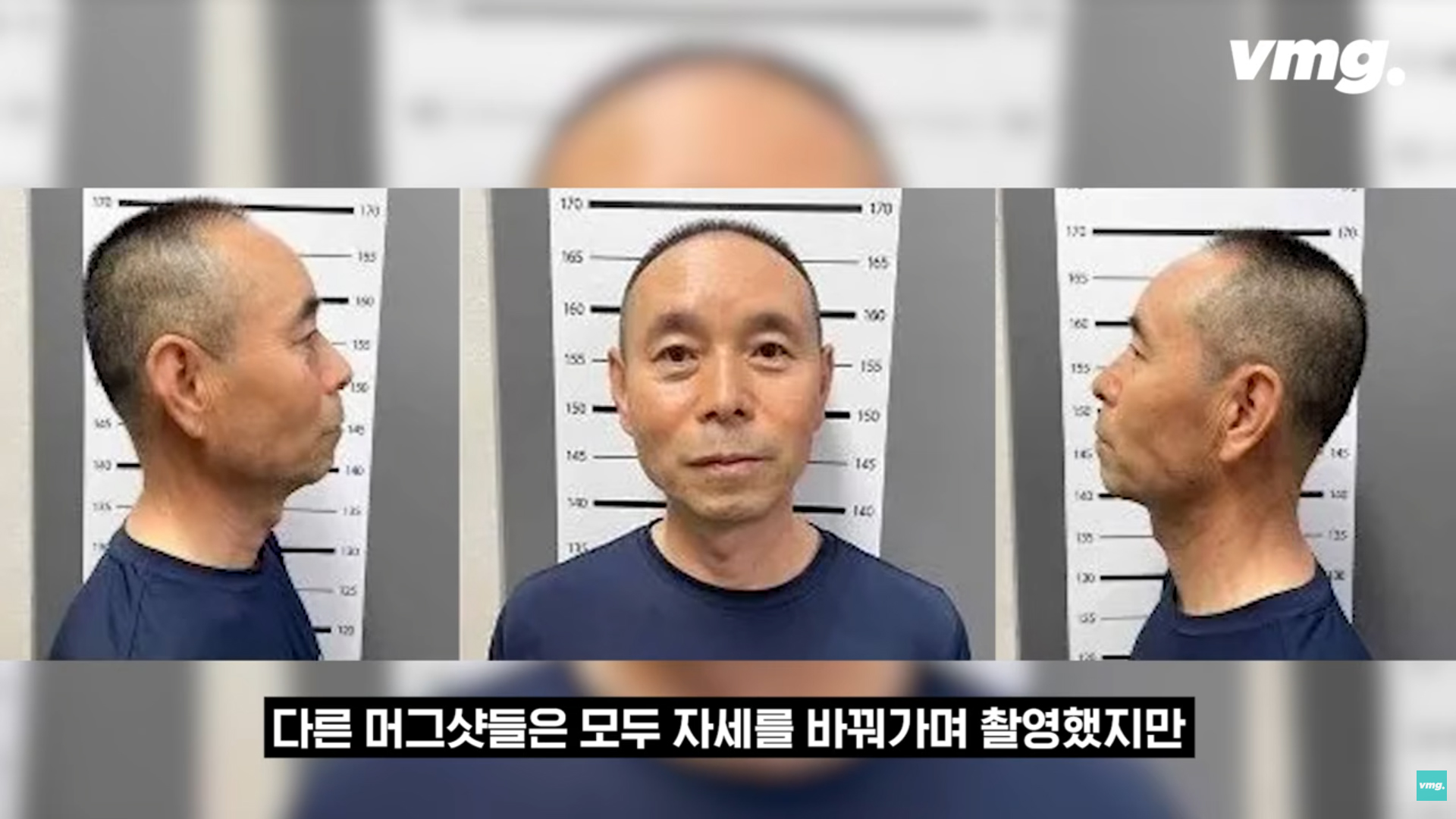
While other suspects adjust their entire posture for each angle, Zheng's mugshot was taken with his torso fixed straight ahead while turning only his head to the left and right. Article 2 of the Enforcement Decree of the Act on the Disclosure of Identity Information of Suspects of Specific Violent Crimes stipulates that color photographs of the front, left, and right sides of the face must be captured and electronically archived, and it appears the photo was taken to fulfill only the bare minimum of that letter of the law.
Active Police Officer with 30 Years of Experience
"When taking front, turned-profile, and 90-degree profile shots, turning only the head without pivoting the torso distorts the face's natural appearance. The subject needs to turn their entire body 90 degrees to the side so the face looks natural. If the torso faces forward and only the head is twisted, the facial profile itself becomes warped. Frankly speaking, mugshots should never be taken like this."
"When taking front, turned-profile, and 90-degree profile shots, turning only the head without pivoting the torso distorts the face's natural appearance. The subject needs to turn their entire body 90 degrees to the side so the face looks natural. If the torso faces forward and only the head is twisted, the facial profile itself becomes warped. Frankly speaking, mugshots should never be taken like this."
04. Standardizing Mugshots Is Essential
In the United States, where even a former president had a mugshot taken in connection with the Capitol attack, detailed and strict guidelines established by the National Institute of Standards and Technology (NIST) and adopted by agencies like the FBI minimize individual investigators' discretion. That is why mugshots of American suspects look largely uniform. Japan also stipulates in detailed regulations that suspect photographs must include front and profile angles. Since 2016, Japan has even introduced and operated 3D imaging on the ground beyond flat photographs. While the state demands strictly standardized photos for passports and national resident registration cards, why do the mugshots it provides to the public remain inconsistent and haphazard?
Deep Dive Q&A
Q1. What are the primary causes and technical background behind suspects' mugshots looking significantly different from their actual appearances?
A1. In principle, a standard 50mm lens should be used to capture a face without distortion, matching the perspective of the human eye. However, when investigative agencies use zoom lenses instead of standard lenses inside cramped shooting spaces, or photograph suspects from an excessively close distance, optical distortions resembling a convex lens effect occur. Furthermore, non-standard posing—such as having suspects turn only their heads rather than rotating their torsos for profile shots—distorts facial features and facial contours.
Q2. What standards and technologies do other countries, such as the United States and Japan, employ to enhance the accuracy of mugshots?
A2. The United States follows strict, detailed guidelines established by the National Institute of Standards and Technology (NIST) and adhered to by agencies such as the FBI, minimizing the discretion of individual investigators and ensuring consistent mugshots nationwide. Japan not only regulates suspect photography to include front and both profile angles through detailed administrative rules, but has also actively deployed 3D scanning techniques in the field since 2016 to improve the accuracy of three-dimensional suspect identification.
※ Please note: This article was translated by AI and may contain errors.



 Video News
 Video News
 Video News
