
 KOR
KOR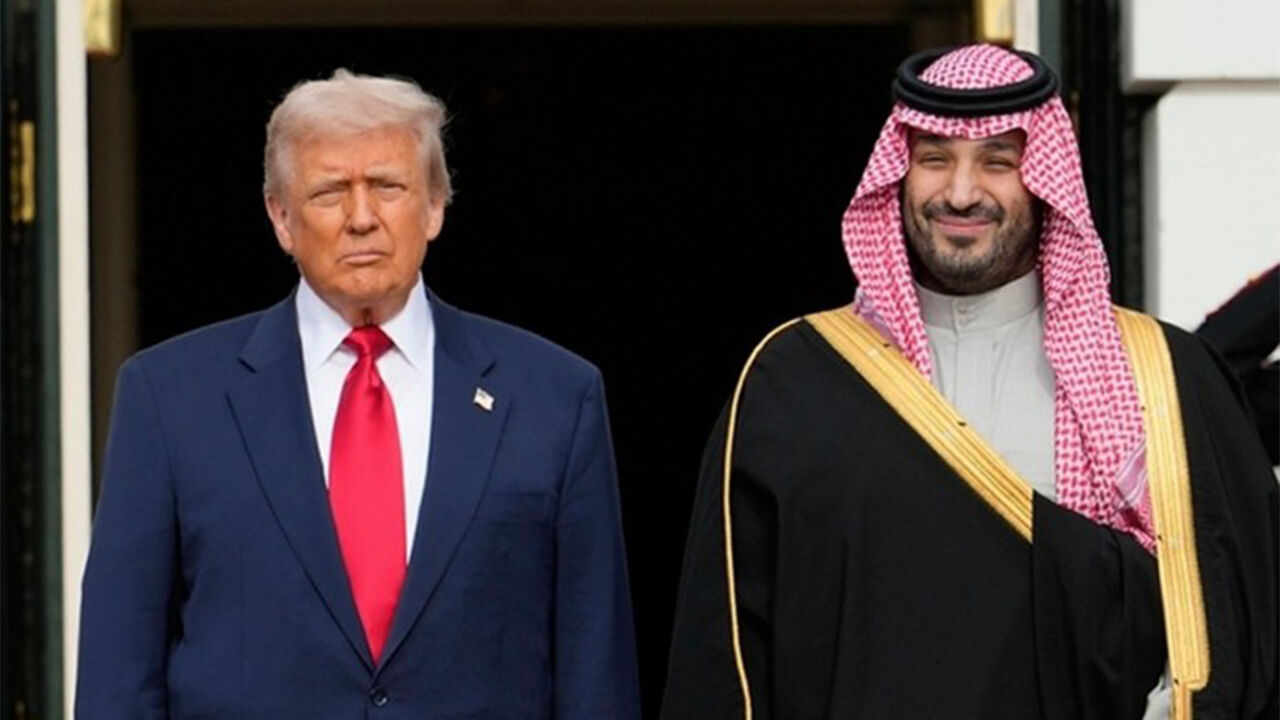
▲ US President Donald Trump and Saudi Crown Prince Mohammed bin Salman
The Yemeni government forces have launched a territory-retaking operation targeting the Iran-backed Houthi rebels in Yemen, with backing from the United States and Saudi Arabia.
Rashad al-Alimi, chairman of the Presidential Leadership Council of Yemen, announced in a televised speech on October 4 local time, "Today, we declare the start of a military operation to retake remaining territories and extend the authority of the state and its institutions across the entire nation."
This declaration to initiate military operations comes as the Houthis have advanced toward the outskirts of Taiz, Yemen's third-largest city in the southwest.
Having seized Yemen's Red Sea coast and the Bab el-Mandeb Strait region last month, the Houthis have recently cut off key roads connecting Taiz and Aden—the Yemeni government's temporary capital—and mounted a large-scale offensive against government forces and allied factions on the outskirts of Taiz.
Previously, Reuters reported on October 2 that Yemeni government forces, alongside Saudi Arabia, were preparing for ground and air offensives against the Houthis.
However, reports indicate that the United States will not participate in direct military strikes, limiting its role to providing intelligence support for the operations.
According to The New York Times (NYT), more than 200 U.S. intelligence and military analysts have been deployed to Saudi Arabia to assist the Saudi government and help analyze and select targets for the Yemeni government.
Experts view the Saudi government's intervention as the core of the Yemeni government's military operation.
This is because a significant portion of the Yemeni government's functions operates from Riyadh, the Saudi capital, to escape the Houthis, and Saudi authorities exert considerable influence over various internal affairs in Yemen.
While the ongoing combat is superficially a conflict between the Yemeni government and the Houthis, the Yemeni government is backed by the U.S. and Saudi Arabia, whereas the Houthis are backed by Iran.
Consequently, observations have emerged that the armed conflict between the U.S. and Iran over control of the Strait of Hormuz and the nuclear issue has escalated into a proxy war in Yemen.
The NYT projected that the Yemeni government's current operation could further complicate the nature of the war being waged by the U.S. and Israel against Iran.
This is because regional conflict could escalate further as the Houthis step up retaliatory measures, such as attacking Saudi oil facilities, in response to the Yemeni government's launch of large-scale operations.
While the Houthis are a key proxy force for Iran, and Houthi threats against Saudi Arabia effectively aid Iran in controlling the Strait of Hormuz and strengthening its negotiating leverage against the U.S., it is true that Iran maintains an official stance that the Houthis are attacking Saudi Arabia and expanding their influence within Yemen independently without directives from Tehran.
The Houthis claimed on the same day that they attacked oil facilities in the Saudi capital of Riyadh and Khurais, located 150 kilometers southeast of Riyadh.
Brigadier General Yahya Saree, a Houthi military spokesman, stated in a statement that ballistic missiles and drones were fired toward facilities of the Saudi state-owned oil company Aramco located in Riyadh and Khurais.
He, however, did not specify exactly when the attacks took place.
Saree said the strikes were carried out in response to airstrikes on Sanaa, the Houthi-controlled Yemeni capital, and Saada.
Yemeni government forces claimed responsibility for the airstrikes on Sanaa, which continued until early that morning.
Yemen previously suffered a decade-long civil war between the Iran-backed Houthis in the north and the southern government forces supported by Saudi Arabia.
The Houthis seized the Yemeni capital of Sanaa in 2014, and Saudi Arabia launched a military intervention in 2015 under the pretext of supporting the internationally recognized Yemeni government.
Although a truce was brokered by the United Nations in 2022, the Houthis declared the end of the truce in July of this year and expanded their strongholds up to the Bab el-Mandeb Strait region.
By seizing the Bab el-Mandeb Strait in the Red Sea—which has drawn attention as a crude oil transportation route to replace the Strait of Hormuz effectively blockaded due to the Iran conflict—the Houthis have also directly contributed to rising international oil prices.
The recent resumption of fighting has also severely worsened Yemen's humanitarian crisis.
According to the World Health Organization (WHO), more than 800 people have died in Yemen since early August, and the World Food Programme (WFP) reports that more than 150,000 people have been displaced.
(Photo: AP, Yonhap News)
※ Please note: This article was translated by AI and may contain errors.





 Video News
 Video News