
 KOR
KOR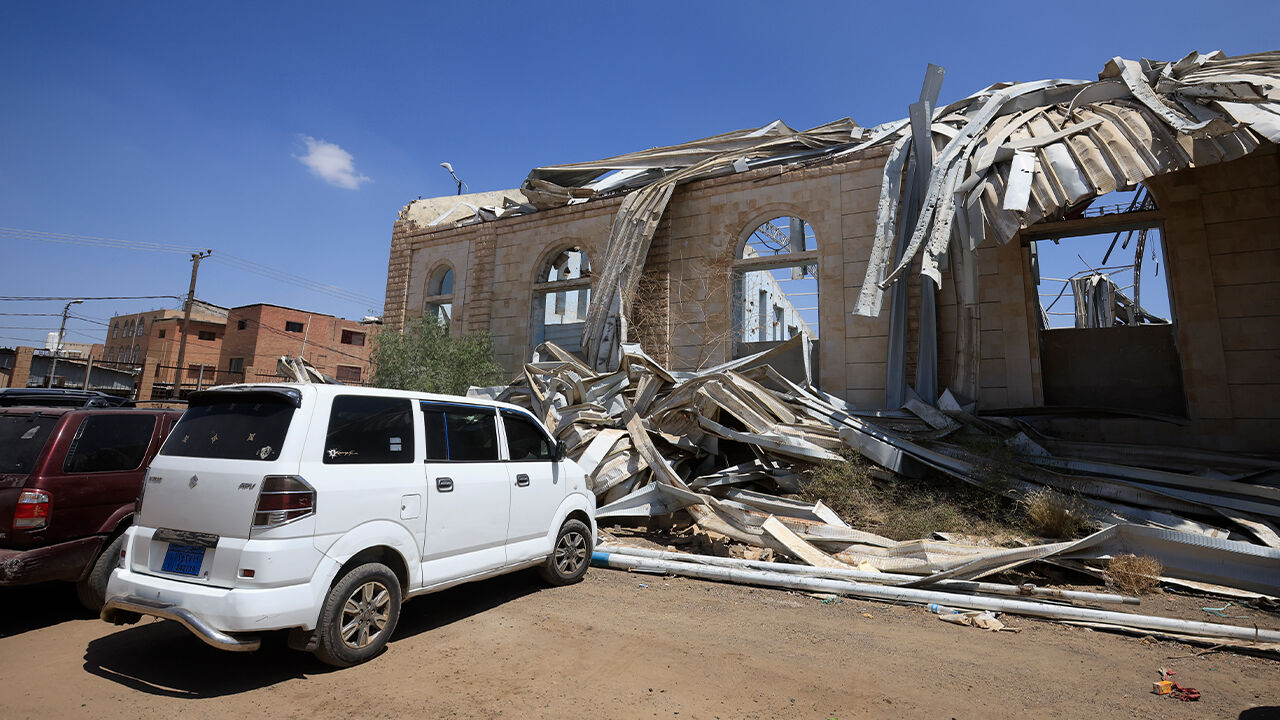
▲ A building in Sana'a, Yemen, damaged by an airstrike
The Yemeni government military announced on October 4 (local time) that it is carrying out airstrikes targeting the Houthi rebels in areas such as the Houthi-controlled capital of Sana'a, Reuters reported on the same day.
According to the report, a Yemeni government military spokesperson stated that airstrikes are being conducted targeting key objectives in the capital of Sana'a and Sa'dah, one of the Houthi strongholds.
However, specific targets of the airstrikes were not disclosed.
The official confirmation by the Yemeni government military comes amid reports of loud explosions, presumed to be from airstrikes, being heard in Sana'a.
On October 3, the previous day, at least five explosions were heard across various parts of Yemen, including Sana'a, and two fighter jets were witnessed firing missiles toward the city.
Al Masirah TV, a media outlet affiliated with the Houthis, reported that Saudi Arabia attacked Sana'a 26 times, causing damage to hospital facilities such as obstetrics and gynecology and pediatric departments, and injuring visitors.
Saudi Arabia has not issued an official stance regarding the attacks against the Houthis for the second consecutive day.
This latest move also comes a day after flames and smoke billowed from a facility belonging to Saudi state-owned oil giant Aramco, located south of the Saudi capital Riyadh, on the previous afternoon.
At the time, Al Masirah TV claimed that the Houthis "responded to Saudi provocations" by bombing "sensitive targets," including oil facilities in various parts of Saudi Arabia such as Riyadh, Najran, Jizan, and Asir, as well as military bases in Khamis Mushait and Taif.
Yemen has suffered a devastating civil war over the past decade, split between the pro-Iran Houthis governing the north and the Saudi-backed southern government forces.
The Houthis seized control of the Yemeni capital Sana'a in 2014, and Saudi Arabia began military intervention in 2015 under the pretext of supporting Yemen's internationally recognized government.
Although a truce was brokered by the United Nations in 2022, clashes between the two sides have intensified recently, coinciding with the war between the United States and Iran, as the Houthis—a member of the "Axis of Resistance"—have also seized strongholds at the Bab el-Mandeb Strait, the entrance to the Red Sea.
The Houthis have declared a blockade on Saudi vessels navigating the strait, tightening the squeeze on Saudi crude oil exports while increasing the frequency of attacks on Saudi Arabia's core energy facilities.
The previous day, foreign media outlets including Reuters reported that Saudi Arabia and the Yemeni government military are preparing for a massive ground and air offensive against the Houthi rebels and are likely to execute it within days.
(Photo: Yonhap News)
※ Please note: This article was translated by AI and may contain errors.




 Video News
