
 KOR
KOR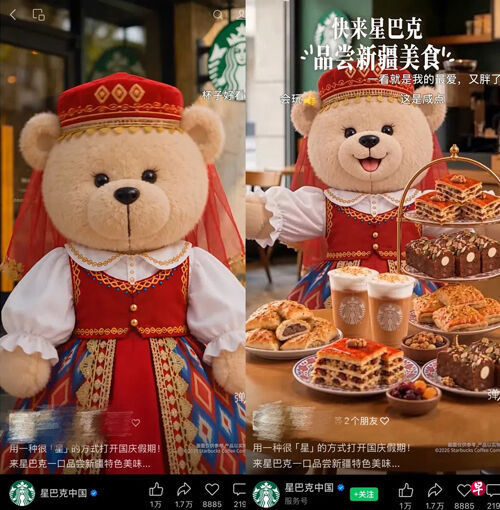
▲ Starbucks opens its first store in China's Xinjiang Uyghur Autonomous Region
Starbucks is facing controversy after expanding into China's Xinjiang Uyghur Autonomous Region, an area where allegations of human rights abuses have consistently been raised.
According to reports by Reuters and other outlets today (October 3), Starbucks recently opened two new stores in Urumqi, the capital of the Xinjiang Uyghur Autonomous Region.
One store opened as a flagship store at the Grand Bazaar in the city center, while the other opened inside the Urumqi International Airport.
Videos and photos posted on social media show that the stores feature Starbucks logos in English and Chinese, with no signage visible in the Uyghur language.
Uyghur is written in the Arabic alphabet and is an official language used alongside Standard Chinese in the Xinjiang region.
News of Starbucks' entry into the Xinjiang region has sparked backlash in the U.S. Congress.
Representative John Moolenaar (R-MI), Chairman of the House Select Committee on the Chinese Communist Party, urged Starbucks to "close the stores immediately."
In a statement released on October 2, he criticized the decision, saying, "It is deeply shocking that a company that proudly touts its social responsibility made this decision," calling it a "morally bankrupt decision."
He added, "There is no justification for an American company to continue doing business in a region where the Chinese Communist Party has detained over one million Uyghurs and stripped them of their faith, language, and culture."
In response to requests for comment on these criticisms, the Chinese Ministry of Foreign Affairs dismissed them as "blatant lies," stating that the Xinjiang region enjoys social stability, economic growth, ethnic unity, and religious harmony.
Starbucks did not respond to Reuters' requests for comment regarding the opening in the Xinjiang region.
China is currently observing the National Day holiday period from October 1 through October 7.
Starbucks opened its first store in China in 1999 and enjoyed immense popularity amid China's rapid economic growth, but in recent years it has been evaluated as losing ground to domestic Chinese coffee and tea brands.
In April of this year, the establishment of a joint venture was finalized, with Chinese investment firm Boyu Capital holding a 60% stake and Starbucks holding a 40% stake in Starbucks' retail business joint venture within China.
This joint venture currently operates approximately 8,000 stores in China.
(Photo: Captured from Chinese social media Weibo, Yonhap News)
※ Please note: This article was translated by AI and may contain errors.


 Video News
 Video News
 Video News
 Video News
 Video News