KOR
KOR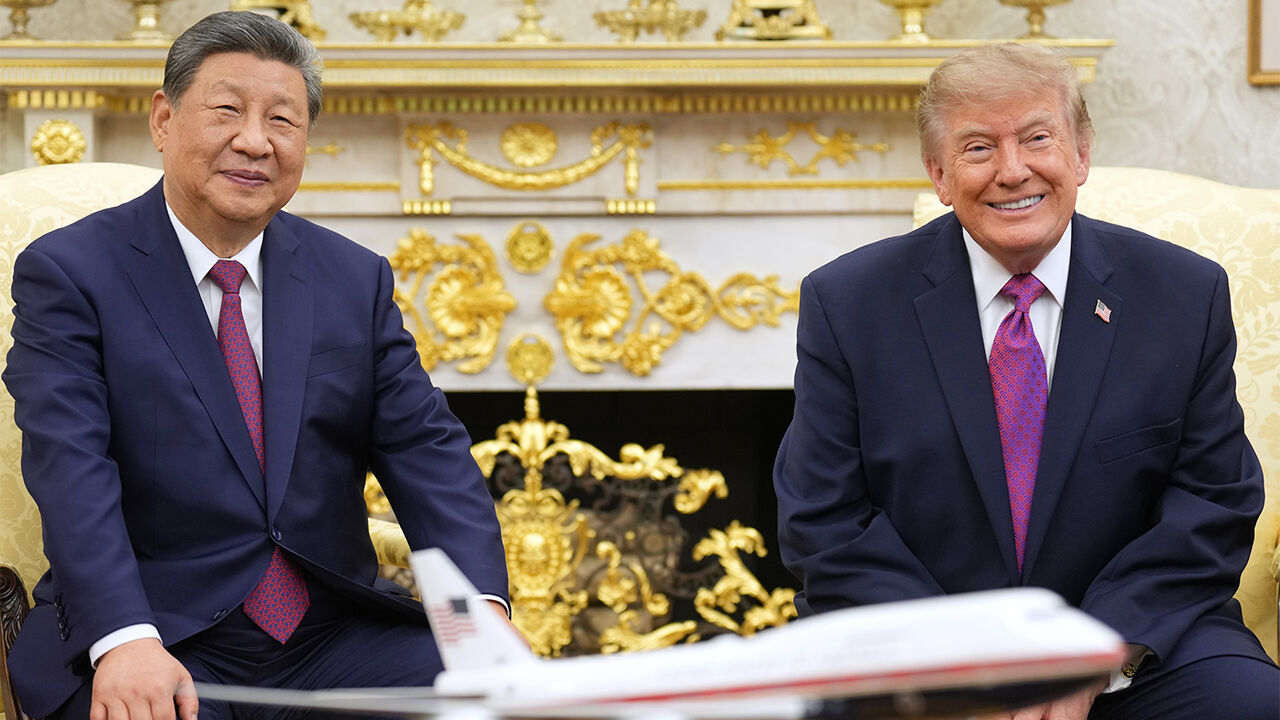
▲ U.S. President Donald Trump and Chinese President Xi Jinping hold a meeting in the Oval Office of the White House in Washington, D.C., on Thursday, September 24, 2026.
Chinese President Xi Jinping requested unusual resting accommodations during his summit with U.S. President Donald Trump last month, raising questions about whether his health is declining, the Wall Street Journal (WSJ) reported on the 2nd, local time.
According to the report, China asked the United States to set up a private resting room exclusively for President Xi inside the White House West Wing.
Only President Xi's wife, Peng Liyuan, was permitted to accompany him in this space.
While President Xi was staying there, no White House personnel nor any members of the Chinese delegation, including President Xi's chief of staff, were allowed to enter.
About a month before President Xi's visit to the U.S., the Chinese advance team also asked the White House to cancel a working lunch with President Trump that had been scheduled for September 24.
Previously, when President Trump visited Beijing last May, the two leaders shared a working lunch at Zhongnanhai, known as the heart of Chinese power.
The Chinese side conveyed to the U.S. side that it wanted to secure as much resting time as possible for President Xi, resulting in a roughly five-hour gap in the short visit schedule, the WSJ reported.
The Chinese side also reportedly scheduled no events for the evening of President Xi's arrival, and during his visit to the U.S. National Archives on September 25, the final day of his trip, President Xi stayed inside for only about 10 minutes, much shorter than initially planned by the U.S. side.
The outlet pointed out that President Xi's cautious movements were also noticeable in released footage.
When stepping off his dedicated aircraft, he held Peng Liyuan's hand with one hand while steadying himself on the handrail with the other, and two days later, while climbing the stairs of the National Archives, he reportedly kept holding Peng Liyuan's hand throughout, appearing to rely on his wife.
Chinese state media reportedly omitted these scenes from their prime-time broadcasts.
Speculation regarding President Xi's health had arisen even before this summit.
The WSJ reported that during the BRICS summit in India last month, President Xi was feeling unwell and did not attend a dinner attended by world leaders, including Russian President Vladimir Putin.
Dennis Wilder, a former senior director for Asian affairs at the National Security Council (NSC) who oversaw state visits during the George W. Bush administration, stated that a foreign leader requesting a private resting room is unprecedented.
"When I managed visits for former Japanese Prime Minister Junichiro Koizumi, former Australian Prime Minister John Howard, and President Xi's predecessor, Hu Jintao, nothing like this ever happened," he said, calling it "very unusual."
Wilder also noted that the bilateral talks between the two leaders began around noon on September 24 and concluded in the early afternoon.
He remarked that "the duration was far too short for a meeting between the leaders of the world's two largest economies."
President Xi's health issues could raise serious concerns when intertwined with the question of political succession in China.
Experts point out that while President Xi is not showing signs of cognitive decline such as impaired brain function, power is excessively concentrated in him with no successor designated, meaning health variables regarding him could create ripples in future political landscapes.
(Photo: AP, Yonhap News)
※ Please note: This article was translated by AI and may contain errors.




 Video News