
 KOR
KOR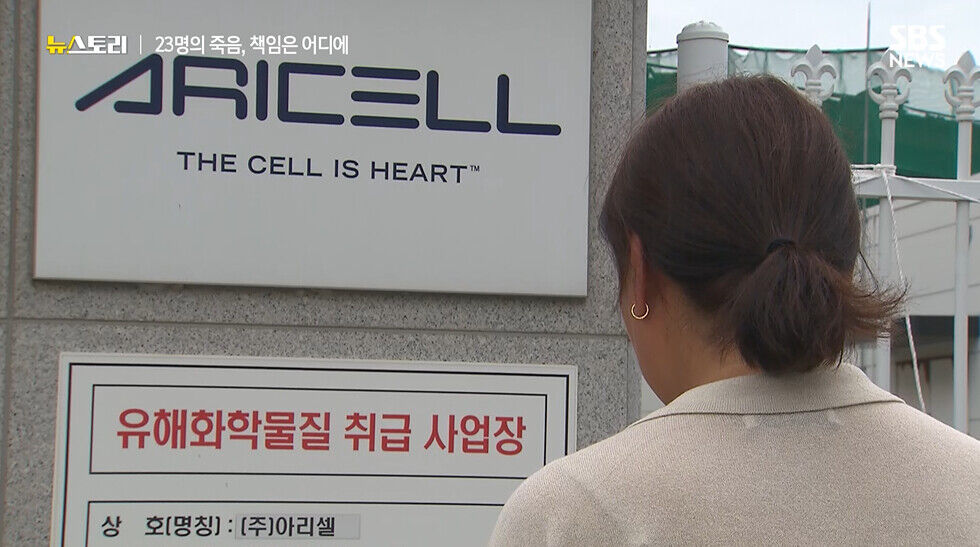
☞ [Reporter's Notebook ①] Search, Identification, and Prevention: The Duty of the State Shifted to Bereaved Families
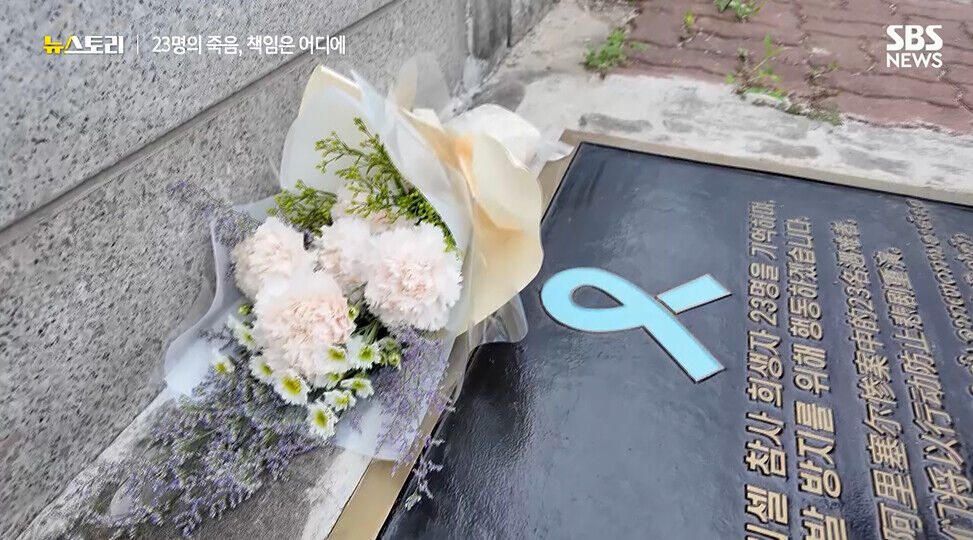
Lee Soon-hee visited the Aricell plant in Hwaseong, Gyeonggi Province, once again holding flowers. In front of the factory where the accident occurred, a memorial stone honors the 23 victims. Lee took out a wet wipe, cleaned the stone, and placed flowers on top of it. It had been about a month since she last visited the site. She said she chooses different flowers each time she visits. Thinking of the colors her daughter liked, she brings pink flowers on some days and white ones on others. Engraved on the memorial stone is a message promising to remember the victims and take action to prevent recurrence. On a blue ribbon sculpture a short distance away, a more direct statement was written: " Finding the truth is true remembrance. We will be with you until the end."
More than two years have passed since the accident, but legal proceedings surrounding the responsibility for the Aricell disaster are not yet over. Following the first trial and an appellate ruling, the case is currently pending before the Supreme Court. On September 2, the Aricell Disaster Response Committee and the Aricell Industrial Disaster Victims' Families Association visited the Supreme Court to submit a petition signed by 1,981 citizens. The petition called on the court to examine whether the appellate ruling contained any misinterpretation of legal principles contrary to the intent of the Serious Accidents Punishment Act and related occupational safety and health regulations, and to deliver a judgment holding CEO Park Soon-kwan accountable commensurate with the deaths of the 23 victims.
Throughout the investigation and trials, authorities scrutinized not only the moment the fire broke out, but also how the Aricell plant had been operated. The prosecution's investigation revealed that 20 of the 23 workers who died in the fire were dispatched workers. Many of the deceased met with the accident shortly after joining the company. In August 2024, investigative authorities brought charges against those involved, including violations of management obligations to ensure safety and health, failure to implement evacuation-related safety measures, and illegalities in the dispatch process.
Employment relationships, safety training, and the company's overall safety management system all became facts that needed verification to explain a single person's death. The prosecution determined that Aricell officials, including General Manager Park Joong-eon, altered the internal layout of the factory during production and took actions that could negatively affect the evacuation environment. Investigators also concluded that the circumstances surrounding the installation and operation of locks on doors behind temporary partition walls compromised the evacuation conditions. During the investigation, questions were also raised about whether dispatched workers had received adequate safety and health training, and whether they were aware of the evacuation routes and emergency exit locations to use in an emergency. These issues of safety training and evacuation became central points of contention during the subsequent trials. The investigation and trials also addressed changes made to the production process after Aricell failed quality inspections for military-supplied batteries for April 2024. Investigative authorities determined that additional personnel were brought in to ramp up production, a process they deemed linked to the accident risk.
Not all facts uncovered during the investigation directly led to criminal liability. The court's judgment varied depending on what legal obligations the defendants had and to what extent a causal link between the violation of those duties and the accident was recognized. CEO Park Soon-kwan's defense also contested the charges in the appellate court, claiming factual errors, misapplication of legal principles, and unfair sentencing. In this case, determining the cause of the accident did not stop at identifying a single cause. It required examining, step by step, what decisions the company had made prior to the accident, what duties it was under, and whether it had actually complied with those duties.
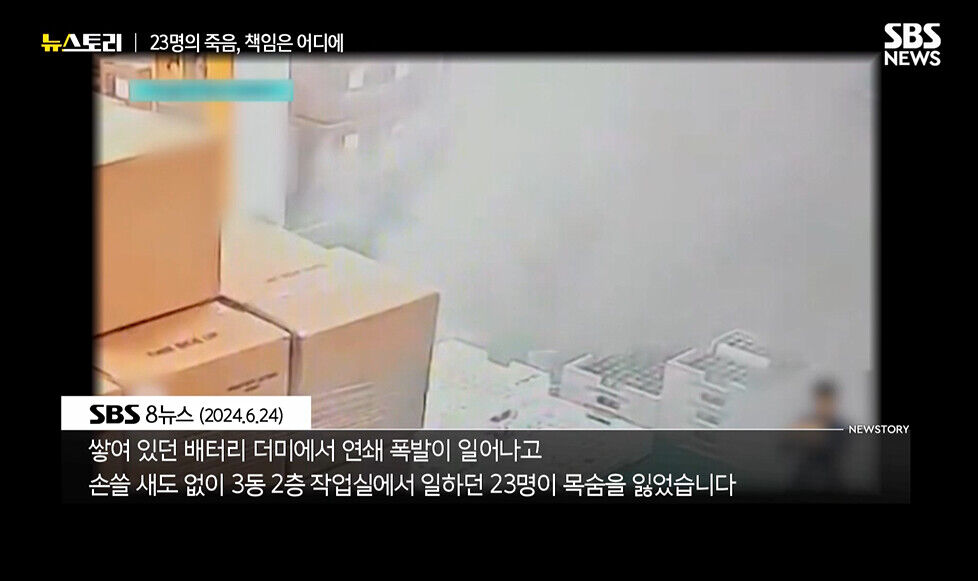
However, the court's judgment diverged on several issues. In April, the appellate court sentenced Park to 4 years in prison. The appellate court also recognized that Park was a managing executive under the Serious Accidents Punishment Act and found him guilty of violating certain obligations to ensure safety and health. However, on certain duties to establish and implement a safety and health management system and duties to implement safety measures, its judgment differed from that of the first instance, which also led to a disparity in sentencing. A prime example is the emergency exit issue. The first-instance court found a violation of the obligation to install and maintain an emergency exit on the second floor of Building 3, where the accident occurred. In contrast, the appellate court ruled that while the current Rules on Occupational Safety and Health Standards mandate the installation of emergency exits in workplaces and buildings handling hazardous materials, they do not stipulate that a separate emergency exit must be installed on every floor. Consequently, it judged that there was no legal obligation to install a separate emergency exit on the second floor of Building 3. The prosecution appealed to the Supreme Court, arguing that there was a misapplication of legal principles in these partial acquittals.
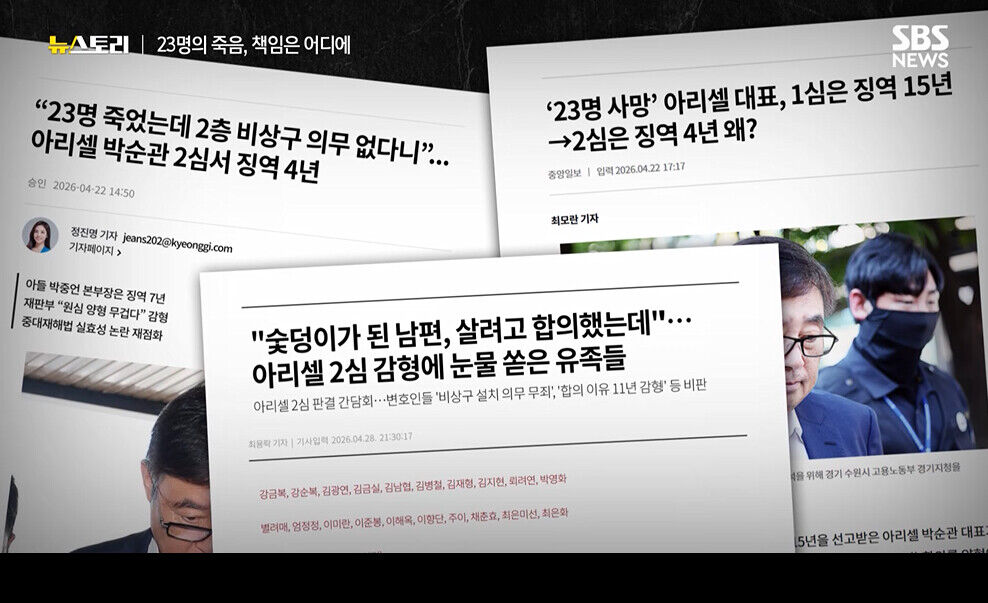
The issue is whether a settlement equates to full recovery of damages. Financial compensation for losses is undoubtedly one aspect of recovery. However, reaching a settlement with the company does not mean that the determination of the cause of the accident or the stance on punishing those responsible has been resolved. In fact, some bereaved families continued to demand punishment even after settling with the company, and the appellate court noted in its ruling that some families expressed a desire for punishment even post-settlement. The liability demanded by the Serious Accidents Punishment Act extends beyond individual compensation to victims. It encompasses the responsibility of employers to fulfill safety and health duties to prevent serious industrial disasters. In the end, the Aricell trial leaves behind the critical question of to what extent settlements with bereaved families should weigh in judging the gravity of such responsibility.
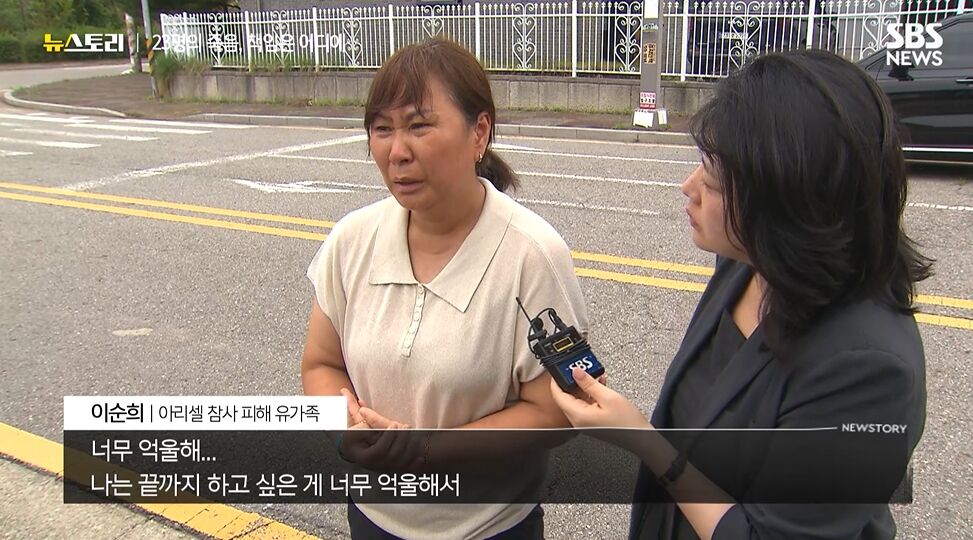
The reason Soon-hee cannot let go of the trial results is not just because of the prison sentences. The judicial process is also a procedure that defines how her daughter's death is explained as an incident. The court determines, based on evidence and the law, whether the fire was an unavoidable accident, whether it could have been prevented had the company upheld its duties, and who bears responsibility and to what extent. Because the first-instance and appellate courts reached differing conclusions on several issues and the case is now before the Supreme Court, the legal verdict is not yet finalized. For Soon-hee, mourning is not merely remembering her daughter; it is also seeing through to the very end how her death is accounted for. This is why uncovering the truth and remembering the victims cannot be separated in a disaster. (To be continued in Part 3)
Replay Broadcast (Aired on TV Sept. 26, 2026)
☞ [News Story Episode 580] Those for Whom Holidays Hurt More – Disasters and Tragedies, the Aftermath (Video Reporting and Editing: Kim Tae-hoon)
※ Please note: This article was translated by AI and may contain errors.


 Video News
 Video News
