
 KOR
KOR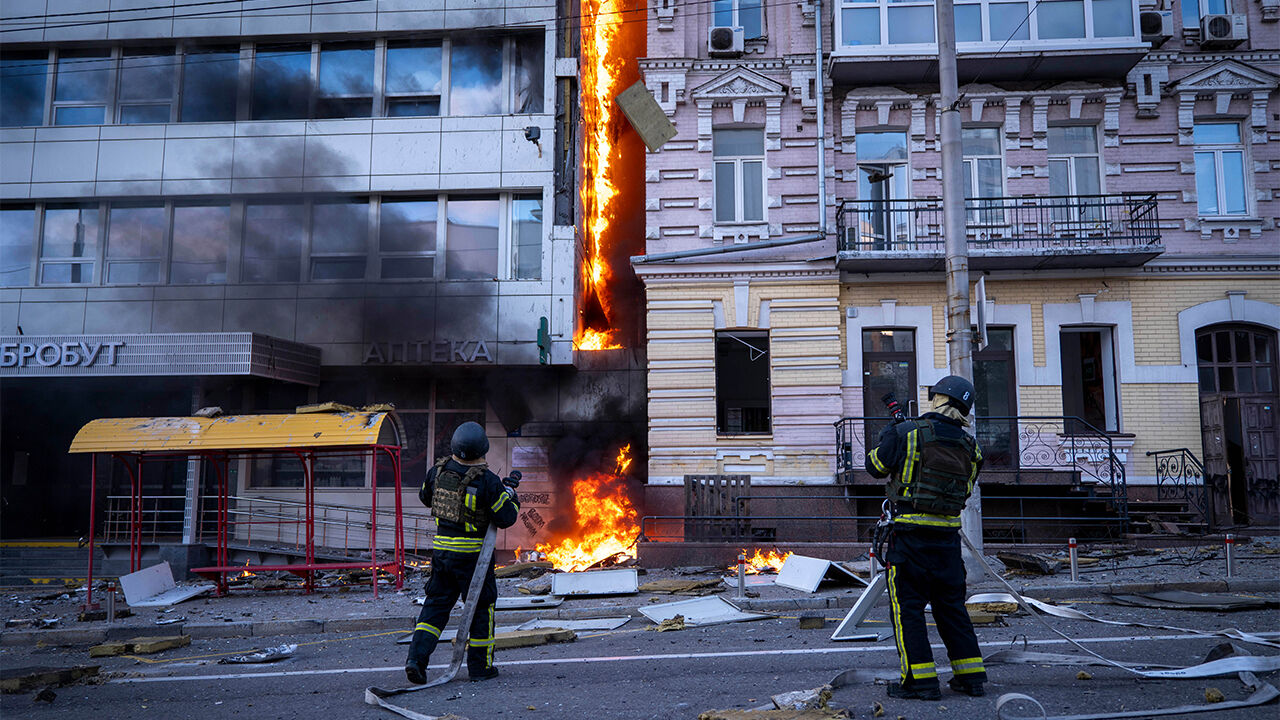
▲ The central area of Kyiv, Ukraine, damaged by a Russian drone attack
Anxiety is growing among citizens as government and diplomatic buildings in downtown Kyiv, the capital of Ukraine, which were previously considered safe zones, have been successively struck by Russian drones.
According to foreign media outlets including Reuters and local media on the 29th (local time), two major government agencies in downtown Kyiv have been targeted by Russian drone attacks this month.
On the 5th, the headquarters of the Security Service of Ukraine (SBU), the country's intelligence agency, was attacked by a Russian jet-propelled drone.
This marks the first time the SBU building has been hit since the war broke out following Russia's invasion of Ukraine in February 2022.
The day before, the National Academy of Sciences, Ukraine's top comprehensive academic and research institution, was attacked, leaving one person dead.
Both the National Academy of Sciences and the SBU are located on Volodymyrska Street in central Kyiv.
This area is the heart of Kyiv, densely packed with major government and diplomatic facilities including embassies, and has historically experienced relatively few Russian attacks.
On the 27th, a building used as the official residence of the Saudi Arabian Ambassador to Kyiv was damaged in a Russian drone attack.
While Kyiv has been a frequent target of Russia since the outbreak of the war, the central district housing government agencies and diplomatic facilities was considered relatively safe.
However, with recent Russian attacks successively damaging government and diplomatic facilities, a sense of crisis that no safe haven remains is intensifying.
Illia Kotov, head of the Center for National Strategies and Public Policy Development in Ukraine, told Ukrainian media outlet Novyny.LIVE, "There must have been an implicit agreement not to attack state institutions to avoid escalation, but now there is not a single safe building left in Kyiv."

Following a surge in the launch of Russian jet-propelled drones, the frequency of attacks targeting Kyiv has also become more frequent.
Ukrainian investigative media outlet Texty reported that an analysis of recent air raid siren patterns in Kyiv shows that following Russian jet-propelled drone strikes, daytime air raids have increased, effectively eliminating the previously sporadic alarm patterns.
The number of jet-propelled drones launched by Russia surged from 350 in June of this year to 2,800 in August.
Until now, Kyiv residents thought it was safe between the end of an air raid siren and the next, but officials explain that they can no longer let their guard down.
The approaching bitter winter is compounding this anxiety.
Last winter, Russia concentrated attacks on Kyiv's energy facilities, cutting off electricity and heating and causing severe suffering for citizens.
Ukrainian Prime Minister Denys Shmyhal advised that vulnerable groups with limited mobility should consider leaving Kyiv in preparation for Russian attacks during the freezing winter season.
Russian attacks targeting Kyiv continued today as well.
Overnight, a Kyiv data center, a business center, and residential buildings suffered damage.
In the Black Sea port city of Odesa, two foreign vessels were also hit by Russian attacks, while airstrikes continued in Dnipro, Kharkiv, Sumy, and Zaporizhzhia.
(Photo: AP, Yonhap News)
※ Please note: This article was translated by AI and may contain errors.


 Video News
 Video News
 Video News
 Video News
 Video News