
 KOR
KOR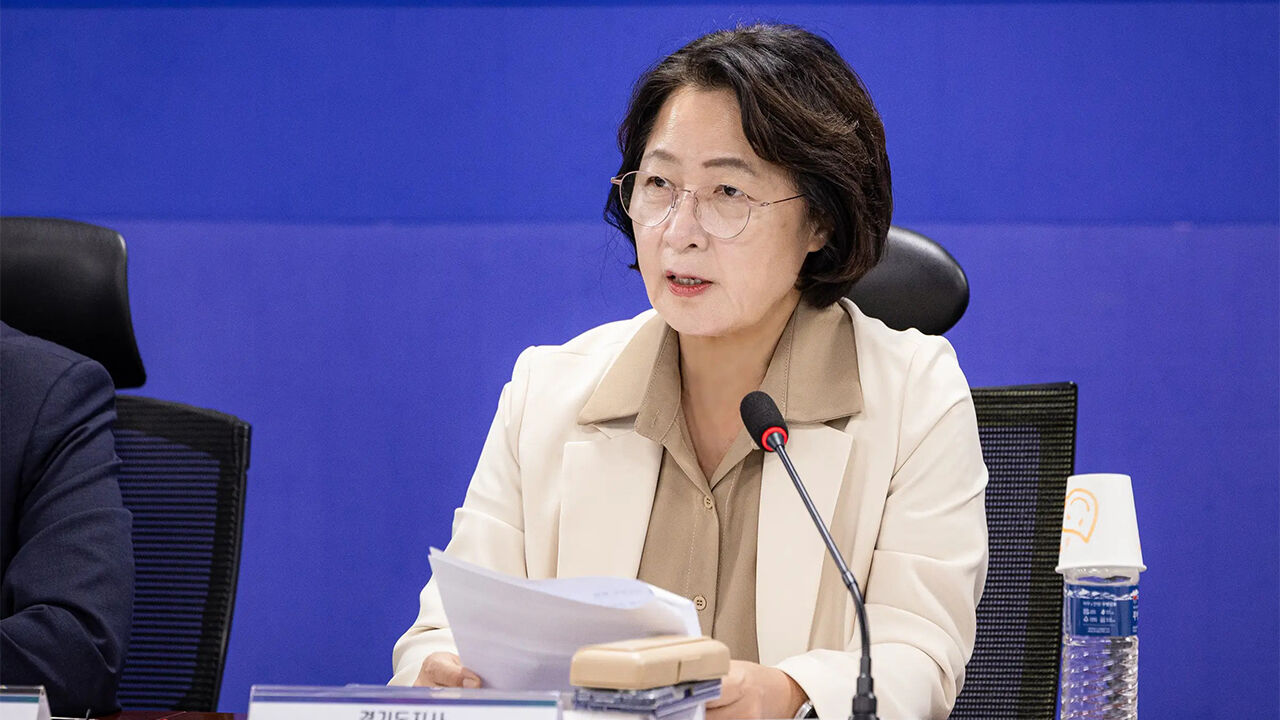
▲ Gyeonggi Province Governor Choo Mi-ae attending the party-government consultative meeting
Gyeonggi Province Governor Choo Mi-ae strongly urged the government and the ruling party to make full-scale reinvestments into Gyeonggi Province, which has made significant contributions to tax revenue generation, regarding the 162 trillion won "Future Response Fund" being created amid the semiconductor boom.
Governor Choo attended the "Party-Government Consultative Meeting on the Creation of the Future Response Fund and the Reform of Local Allocated Tax" held at the National Assembly on the 29th, hosted by the Democratic Party and the government, and delivered proposals containing these points.
The Future Response Fund is a national fund promoted by the government to accumulate taxes collected more than expected due to the semiconductor boom into a separate fund, which will then be invested in four major sectors: youth, growth engines, local regions, and education and talent.
Based on next year's government proposal, the estimated size of the fund reaches 162.3 trillion won.
Governor Choo stated, "The source of the Future Response Fund is the potential and dedication of Gyeonggi Province's industrial sites, such as Yongin, Pyeongtaek, and Icheon, which built the semiconductor boom day and night, yet there is no consideration at all for these regions," adding, "Gyeonggi Province faces inevitable massive financial investments to secure electricity, water supplies, transportation networks, and residential conditions for the creation of a large-scale semiconductor cluster."
She emphasized, "It is the common sense and principle of state administration to allocate financial resources where burdens exist and to provide a solid ladder for the protagonists of the future," and urged, "We call for a responsible decision from the government and the party so that Gyeonggi Province, which has the largest population, jobs, and businesses in South Korea and carries out national policies on the largest scale, can fully play its role."
She then proposed several operational plans for the Future Response Fund: ▲ reinvestment reflecting the contribution to additional tax revenue generation, ▲ conversion of the Basic Youth Income into a national pilot project, and ▲ establishment of rational criteria for the allocation of local future growth support funds.
Regarding the Basic Youth Income, which Gyeonggi Province pioneered, Governor Choo explained, "Current youth policies target only youth who meet specific purposes and requirements, such as jobs, housing, and asset formation, meaning they cannot fully support the diverse career paths and lives of young people," and added, "A conversion to a national pilot project is necessary."
In addition, she called for a rational adjustment of the allocation criteria for the local future growth support funds so that a certain financial resource is distributed to all local governments, including Gyeonggi Province.
Attendees at the meeting included Democratic Party Representative Kim Min-seok, Floor Leader Han Byeong-do, Policy Committee Chair Kwon Chil-seung, National Assembly Special Committee on Budget and Accounts Chairman Lee Kwang-jae, Public Administration and Security Committee Chairman Kim Young-jin, Minister of the Interior and Safety Yoon Ho-jung, Minister of Budget and Planning Park Hong-geun, and 12 mayors and provincial governors affiliated with the Democratic Party, including Governor Choo.
Previously, Governor Choo raised the necessity of Gyeonggi Province's support from the Future Response Fund to overcome the province's fiscal crisis during the Central-Local Cooperation Meeting held last month and officially proposed it to the government.
(Photo provided by Gyeonggi Province, Yonhap News)
※ Please note: This article was translated by AI and may contain errors.


 Video News
 Video News
 Video News
 Video News
 Video News