
 KOR
KOR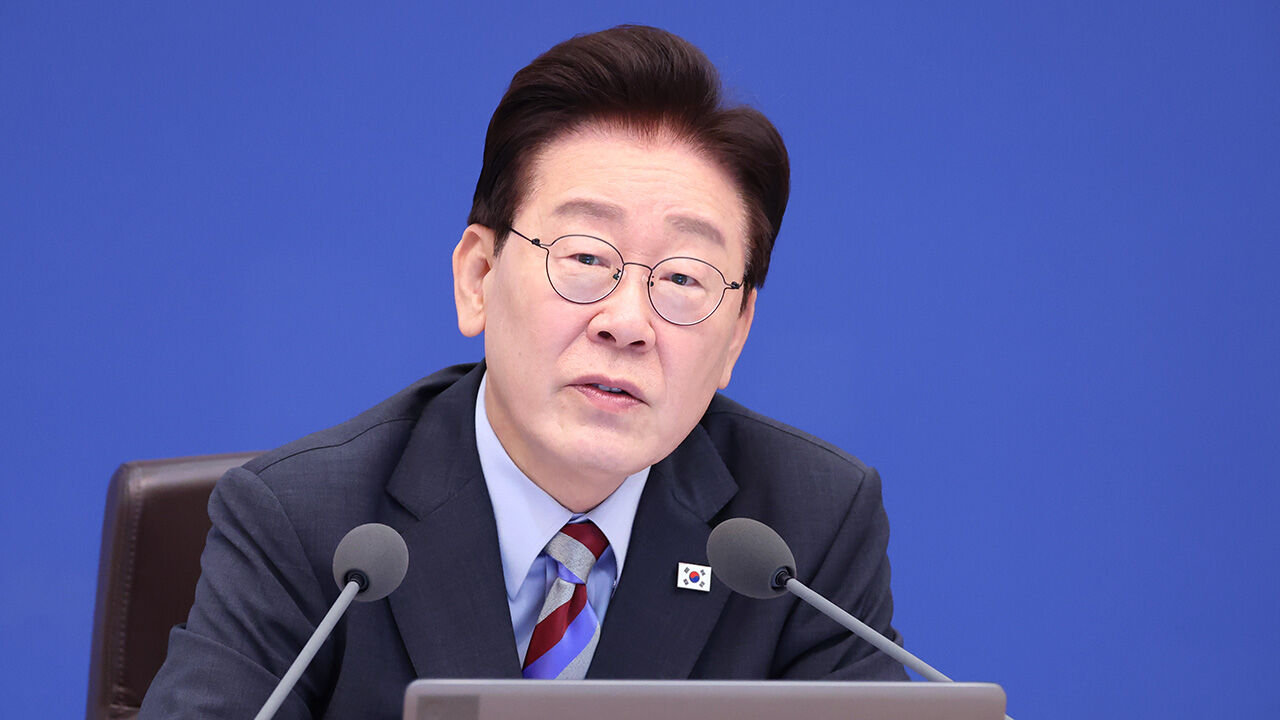
▲ President Lee Jae-myung speaks during a Cabinet meeting held at Cheong Wa Dae on September 29.
President Lee Jae-myung noted the relatively expanded authority of the police resulting from prosecution reform, stating that it is inappropriate to maintain past levels of disciplinary action and accountability for misconduct such as fabricating or covering up cases, and called for strengthening internal inspection functions.
Presiding over the 42nd Cabinet meeting at Cheong Wa Dae on Tuesday (September 29), President Lee pointed out, "Through prosecution reform, all investigative authority has been removed from the prosecution, leaving investigations to the Serious Crime Investigation Agency, the Corruption Investigation Office for High-ranking Officials, and the police," adding, "From the public's viewpoint, there is significant concern that the police might fail to handle cases properly or that problems may arise in providing relief to victims."
He went on to emphasize, "Issues such as 'a police family member destroyed evidence,' 'they covered up a case,' or 'they handled it unfairly' are becoming matters of public concern."
He continued, "Recently, I saw a media report that an officer fabricated a case, yet the disciplinary measure was merely a light penalty," adding as his personal opinion, "If disciplinary action is taken, it should go as far as barring them from police work altogether or dismissing them—a light penalty makes no sense."
President Lee's remarks are seen as referring to recent media reports showing that while the number of police officers subject to inspection and disciplinary action for improper case handling has increased each year, only a small minority received severe disciplinary measures such as removal from office, dismissal, demotion, or suspension.
In response to the remarks, Kim Jong-cheol, acting commissioner general of the Korean National Police Agency, answered, "The police leadership is fully aware of the public's concerns regarding the fabrication and concealment of cases," adding, "For serious misconduct that can affect the core of a case, such as accepting bribes or leaking investigation and crackdown information, our principle is to conduct investigations under arrest."
Upon hearing the response, President Lee said, "Strengthening inspection functions and the independence (of the inspection departments) appears to be important."
He emphasized, "(The police) will effectively take exclusive charge of investigations and close them," adding, "We must thoroughly establish internal systems to ensure investigations are fair and objective, as well as systems to correct errors when something goes wrong."
(Photo: Cheong Wa Dae Press Corps, Yonhap News)
※ Please note: This article was translated by AI and may contain errors.


 Video News
 Video News
 Video News
 Video News
 Video News