
 KOR
KOR⚡ Key Highlights
Sexual Violence Case at Facility for the Severely Disabled and First-Trial Sentence: The director of "Saekdongwon" on Ganghwa Island, Incheon, was sentenced to 15 years in prison for sexually assaulting and physically abusing disabled residents by exploiting their isolated environment and power dynamics. However, the director's side appealed, questioning the credibility of the victims' statements (claiming conditions such as schizophrenia).
Recognition of the Credibility of Disabled Victims' Statements and Significance of the Ruling: The court recognized the facial expressions, gestures, and specific circumstantial details provided by severely intellectually disabled victims as truth grounded in firsthand experience. It marked meaningful progress by convicting the defendant in consideration of the unique nature of sex crimes against persons with disabilities, even when specific dates could not be pinpointed.
Judicial Limitations and Unresolved Tasks: Limitations remain, as the court acquitted the defendant of rape for sexual assault during sleep due to a narrow interpretation of violence and intimidation (finding him guilty only of violating the Disabilities Welfare Act). Moreover, circumstantial evidence of additional abuse involving 19 residents who face communication barriers was excluded from the investigation and trial, underscoring the urgent need to expand the truth-finding investigation.

Saekdongwon is a residential facility for individuals with severe disabilities located on Ganghwa Island, Incheon. The director of this facility was recently sentenced to 15 years in prison after a court in the first trial found him guilty of sexually assaulting three disabled residents living there.
Ko Eun-young | Attorney for Victim A
"I was deeply shocked to see this recurring again. While physical violence was used to suppress victims' resistance in the past 'Silenced' ( Dogani) incident, today psychiatric drugs are administered or used to attack the credibility of the victims' statements..."
"I was deeply shocked to see this recurring again. While physical violence was used to suppress victims' resistance in the past 'Silenced' ( Dogani) incident, today psychiatric drugs are administered or used to attack the credibility of the victims' statements..."
What exactly happened at that facility? We examined the first-instance verdict in detail.
1. What Happened Inside the Facility
Let us first look at the crimes recognized by the court. Victim A was sexually assaulted by the director in her room in February 2025. A few days later, she was assaulted again in a hallway at night while on her way to the restroom. When A resisted, the director threw a glass cup from the cafeteria, leaving her head bleeding. Another victim, B, was sexually assaulted while sitting on a toilet in the restroom. B was someone who could barely move with the help of a walker. Victim C was struck on the palms 34 times with drumsticks in the office.
2. Speaking Out After Eight Years
What brought this incident to light was the glass cup that the director threw at Victim A. The facility notified her guardian only after taking A to a hospital and having her head stitched. When A's mother asked to see CCTV footage to check the circumstances of the incident, the facility refused, claiming it had no authority to show it. In the end, the mother took A out of the facility. It was only after being told that she would never have to return there that A opened up. This came eight years after she first entered the facility.
Ko Eun-young | Attorney for Victim A
"Saekdongwon was not an institution used temporarily, but an entire living space where they ate, slept, lived, and received care. And Defendant was the head of that facility; the relationship between the victim and Defendant was grounded in a far stronger dynamic of power and dependence than that of ordinary perpetrators and victims..."
"Saekdongwon was not an institution used temporarily, but an entire living space where they ate, slept, lived, and received care. And Defendant was the head of that facility; the relationship between the victim and Defendant was grounded in a far stronger dynamic of power and dependence than that of ordinary perpetrators and victims..."
3. They Called Him "Dad"
Residents living there called the director "Dad." Prosecutors pointed out that this title illustrates the imbalanced relationship between the facility's residents and the director. Every aspect of their lives—when they ate and slept, going out, and medical treatment—depended on a single word from the director.
During the investigation of the facility, one resident stated, "I have no parents, and I have nowhere else to go but here." According to statements from the victims mentioned earlier, the director appears to have further exploited the residents' complete isolation from the outside world. The victims' testimonies recorded in the verdict included statements such as "He said he would kill me if I told my mother," and "He said my mother wouldn't come get me."
4. Throughout the Trial: "It Is All a Lie"
The director, however, flatly denied all charges. He cited two reasons: ① Victim A's statements were delusions caused by schizophrenia. ② His right to defense was infringed because the timing of the crimes was not specifically identified.
His claims regarding schizophrenia were particularly persistent. Using the fact that A had taken psychiatric medication at the facility as a pretext, he attacked her by alleging she suffered from mental illness, and even claimed that the cup A was struck with did not exist in the facility.
Ko Eun-young | Attorney for Victim A
"They pointed out that the victim could not accurately remember peripheral details, such as the date and time of the crime or the exact shape of the glass cup that injured her, or that her statements differed slightly from the facts, persistently arguing that her entire testimony could not be trusted. While she was at the facility, they prescribed and administered schizophrenia medication to her, and the entity that prescribed and administered that medication was the Saekdongwon facility itself."
"They pointed out that the victim could not accurately remember peripheral details, such as the date and time of the crime or the exact shape of the glass cup that injured her, or that her statements differed slightly from the facts, persistently arguing that her entire testimony could not be trusted. While she was at the facility, they prescribed and administered schizophrenia medication to her, and the entity that prescribed and administered that medication was the Saekdongwon facility itself."
The Attorney submitted medical opinions to the court from two university hospitals that had examined her at different times. Both hospitals expressed the view that no symptoms of schizophrenia were observed in Victim A and that it was difficult to diagnose her with schizophrenia.
5. The Court Dismantles the Claims
The court's judgment was unequivocal. Regarding Victim A, it determined that her statements were not caused by auditory or visual hallucinations resulting from schizophrenia. Furthermore, the court placed greater weight on the credibility of the victims' statements by citing the director's own remark during police questioning: "I do not believe they are capable of colluding and coordinating their stories."
This is the most meaningful part of the ruling. The court directly addressed how statements from individuals with severe intellectual disabilities should be evaluated. According to records compiled by investigative agencies, the victims explained their experiences in their own words and expressions, supplementing moments when words failed them with gestures and facial expressions. There were also indelible details: "I knew he came in because I heard the sound of slippers dragging." "He was tall, with his head one head higher than mine." "Inside the living quarters was dark, but an emergency light above the door was on, so I could tell it was the director." The court judged that these statements appeared to be based on firsthand experience. Three statement analysis experts also unanimously agreed that there was no possibility of false testimony.
Regarding the director's second argument that the timing of the crimes was not specific—indeed, the indictment for one victim merely stated "the summer between 2012 and 2023"—the court held that given the victim's degree of disability, ability to make statements, and the nature of sex crimes where objective evidence is difficult to obtain, specifying exact dates was inevitably challenging. The court then firmly stated:
"If charges were rejected simply because they are not specified in greater detail than this, securing convictions for similar sex crimes against persons with severe disabilities would effectively become impossible."
— From the First-Trial Verdict
— From the First-Trial Verdict
The outcome was a 15-year prison sentence, with the court also ordering a 10-year employment restriction and 3 years of probation.
6. However, One Count Was Excluded
Up to this point, he was found guilty. However, exactly one charge among the indictment resulted in an acquittal for rape. This involved the sexual assault of a victim who was asleep in the living quarters.
Article 6 of the Act on Special Cases Concerning the Punishment, etc. of Sexual Crimes contains two provisions: raping a disabled person through violence or intimidation, and engaging in intercourse by taking advantage of a state of inability to resist. Prosecutors indicted this charge under Paragraph 1. The court ruled that punishment under Paragraph 1 requires proof of violence or intimidation for the purpose of sexual intercourse, and that pulling down the clothes of a sleeping person and penetrating them cannot in itself be viewed as violence.
Park Yoon-hee | Attorney (Former Chief Prosecutor, Women and Children Crime Investigation Division)
"It does not deviate from the 'narrowest definition' standard for the degree of violence and intimidation required by the Supreme Court. However, looking at recent lower court rulings, there is a trend toward broadly recognizing violence and intimidation even under the same standard in cases involving persons with severe disabilities, by comprehensively considering factors such as the victim's degree of disability, their power dynamic with the facility head, and their isolated environment. In light of recent judicial trends, there is certainly ample room to see this as a somewhat narrow interpretation."
"It does not deviate from the 'narrowest definition' standard for the degree of violence and intimidation required by the Supreme Court. However, looking at recent lower court rulings, there is a trend toward broadly recognizing violence and intimidation even under the same standard in cases involving persons with severe disabilities, by comprehensively considering factors such as the victim's degree of disability, their power dynamic with the facility head, and their isolated environment. In light of recent judicial trends, there is certainly ample room to see this as a somewhat narrow interpretation."
However, the same act was found guilty as a violation of the Disabilities Welfare Act.
7. And Those Who Remained Unnamed
A total of four victims had their harm recognized through this ruling. In reality, however, there appear to be far more victims. Prior to the court's verdict, at the request of Ganghwa County, the WOOSEOK University Institute of Cognitive Science conducted in-depth investigations of residents living at Saekdongwon twice, in December 2025 and February 2026. A team of 15 researchers was deployed, first identifying each individual's communication method through play and dialogue in consideration of their severe disabilities before conducting in-depth surveys. As a result, circumstances pointing to suspected abuse were identified among 19 individuals who had stayed at the facility.
However, the only cases that proceeded through police investigation to trial were the sexual violence cases of three victims and the physical assault case of one victim. This was because investigative authorities recognized the victimization only of those who could articulate their experiences in complete sentences. Those unable to explain in words still remain unacknowledged as victims.
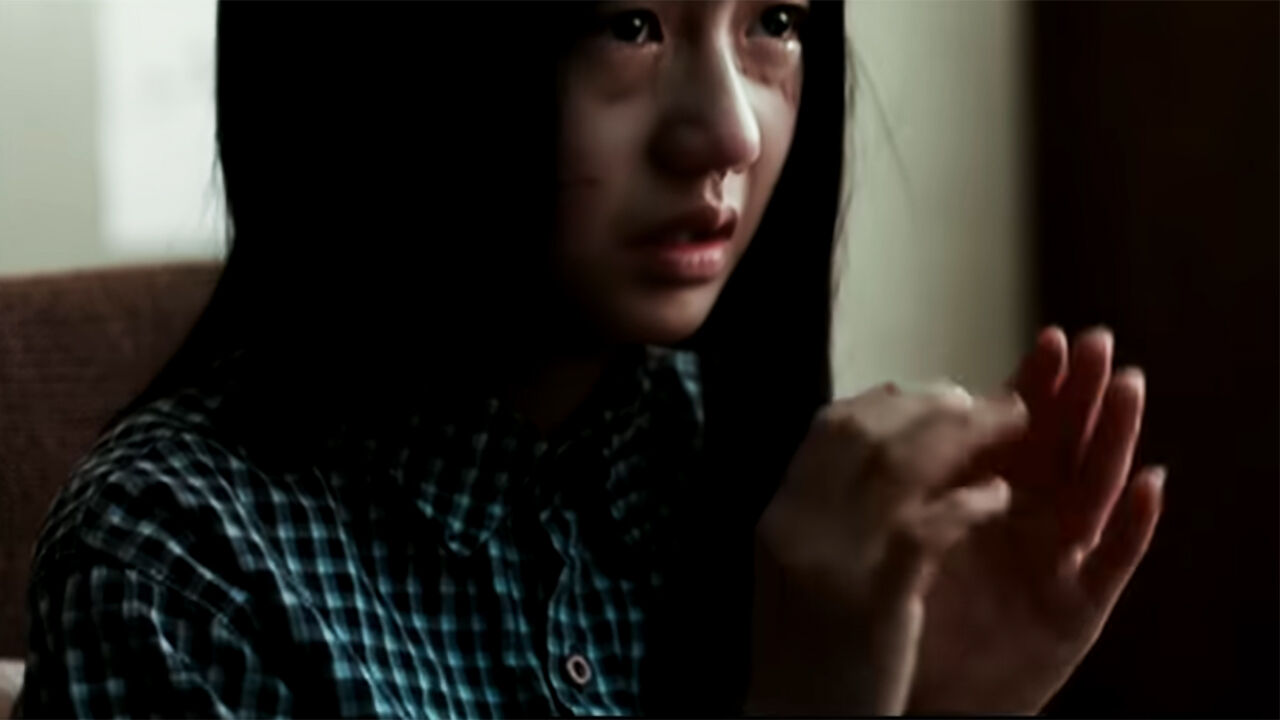
Laws were strengthened following the 2011 film 'Silenced' ( Dogani), which dealt with the Gwangju Inhwa School incident. Sex crimes against people with disabilities were categorized in greater detail, and aggravated punishments for facility heads and staff were established. The requirement for a victim's complaint to prosecute was abolished, and a communication assistant system was introduced for victims who have difficulty communicating. Yet, 15 years later, the same tragedy has repeated itself.
As the incident came to light, another nationwide inspection was carried out. In April 2026, authorities inspected 1,507 residential facilities for the disabled across the country, identifying 33 suspected cases of abuse, with investigations launched into eight of them. Ganghwa County decided to shut down Saekdongwon, and Incheon City revoked the facility's corporate establishment permit. However, Saekdongwon filed an administrative lawsuit challenging these decisions. The director appealed on September 4, claiming that a 15-year sentence was absurd and that the court had unilaterally accepted only the victims' statements.
This first-instance ruling clearly marked progress. The court opened its ears and listened to voices that had long been doubted simply because speech was difficult for them. But we cannot stop here. The suspected abuse of 19 other individuals at Saekdongwon and suspected cases uncovered at disabled care facilities nationwide leave us with the ongoing duty to uncover the truth through thorough investigations.
Deep Dive Q&A
Q1. The director of Saekdongwon claimed that the victim's statements were 'delusions caused by schizophrenia' and that his right to defense was infringed because the dates of the crimes were not specified. Why did the court reject these arguments?
A1. The court found that no schizophrenia symptoms were observed in the victim, based on medical opinions from two university hospitals, and judged the statements to be highly credible in light of the director's own admission that the victims could not have coordinated their stories. In addition, the victim consistently described detailed circumstances—such as words, gestures, the light of an emergency lamp, and the sound of dragging slippers—and three experts also concluded there was no likelihood of false statements. Regarding the issue of specifying crime dates, the court dismissed the director's claim by explicitly noting that strictly demanding exact dates given the severely disabled victims' ability to communicate and the nature of sex crimes would make it virtually impossible to prove sex crimes against individuals with severe disabilities.
Q2. Even though circumstances pointing to suspected abuse were identified among 19 facility residents during the in-depth investigation, why did only four victim cases actually make it to trial?
A2. This was because investigative authorities officially recognized and investigated only the statements and victim cases of individuals capable of directly explaining their victimization in complete sentences or expressions. Although suspected abuse was identified among 19 severely disabled residents through the in-depth investigation conducted by the WOOSEOK University Institute of Cognitive Science, residents who could not clearly describe their victimization in words were excluded from being officially named as victims in the investigation and trial process.
※ Please note: This article was translated by AI and may contain errors.



 Video News

 Video News
 Video News