
 KOR
KOR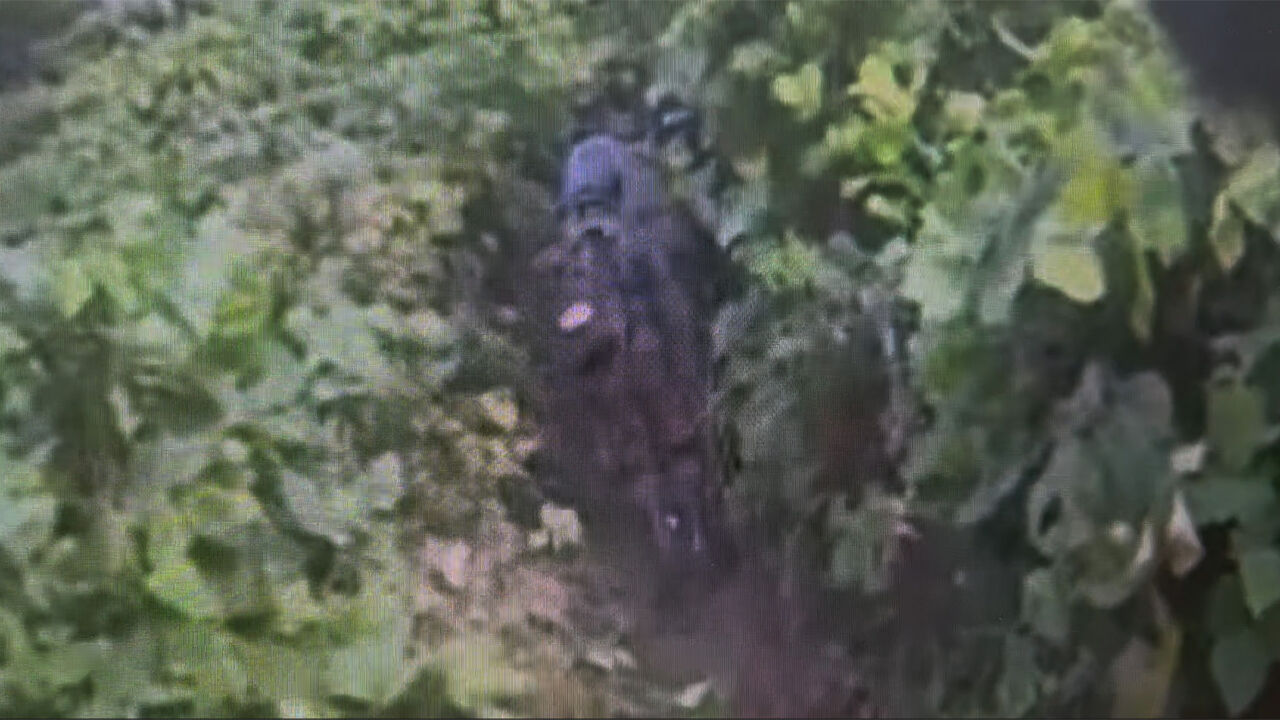
▲ South Korean military personnel and the United Nations Command conduct operations to secure a mobility corridor and survey operational conditions inside the Demilitarized Zone (DMZ) on September 26 to investigate the scene of a suspected landmine explosion on the western front.
Witnesses have reportedly stated that they saw an object resembling a wooden box landmine used by North Korea near the site of a suspected landmine explosion that occurred inside the Demilitarized Zone (DMZ) on the western front on September 21.
However, multiple varying accounts exist, making it difficult at present to definitively determine the specific type of landmine spotted.
Hwang Joo-bong, head of the First Operations Directorate at the Joint Chiefs of Staff (JCS), explained during a regular briefing today (September 28), "There were statements to the effect that the object resembled a wooden box landmine in shape and appeared to be made of plastic, while another individual gave a statement suggesting a different type."
Director Hwang emphasized, "There are several landmines whose shapes resemble wooden box mines," adding, "As such, [we cannot specify the type right now], and we will provide an explanation after clearly confirming it at the scene."
He also maintained a cautious stance, saying, "Regarding whether [the spotted mine] was one or two, we cannot determine whether what Person A saw and what Person B saw are the same."
Minister of National Defense Kang Shin-chul also responded to related questions at the National Assembly, saying, "There are several testimonies making it difficult to pinpoint a specific mine," and added, "We will explain to the public after confirming that accurately through an on-site investigation."
The South Korean military and the United Nations Command launched an on-site investigation yesterday (September 27), six days after the incident, but they only approached the vicinity of the suspected explosion site and failed to reach the actual site of the accident, as securing a cleared path took time.
The military concluded operations at sunset yesterday (September 27) and decided to resume later, with additional on-site investigations expected to follow.
Once they reach the suspected explosion site, the military is expected to attempt to recover debris from the detonated landmine, among other evidence.
While some raised concerns that evidence at the scene might have been lost due to rain over the holiday, the military assessed that any loss was minimal, as precipitation was only around 4 to 5 millimeters.
In addition, the military has requested the National Forensic Service to conduct a component analysis on the gear worn by the injured at the time of the incident, gauze used to collect gunpowder residue, and fragments removed during surgery, with initial appraisal results expected soon.
Director Hwang noted that they have not yet received any formal notification of results from the National Forensic Service.
In and around the military, there is also a palpable sense that, under various circumstances, the explosive that caused the accident is more likely to be a North Korean mine than a South Korean one.
Considering comprehensively that the incident area is not a zone where South Korean M14 and M16 antipersonnel mines are planted, along with the severity of the casualties' injuries and the explosive yields of South and North Korean landmines, the likelihood of a North Korean mine is seen as relatively higher.
Inside and outside the military, observers believe that in order to definitively determine whether the landmine belonged to friendly or enemy forces, "physical evidence" such as any unexploded mines remaining at the scene or analysis results of fragments extracted from the injured must ultimately be secured.
If it is a North Korean mine, key issues that must be clarified include whether it was washed away along nearby streams or if the North Korean military intentionally crossed the Military Demarcation Line (MDL) to plant it—the latter of which would constitute a clear violation of the Armistice Agreement.
The military recently identified topographical changes near the MDL on the western front and had been consulting with the United Nations Command regarding the possibility that North Korea might have planted landmines south of the MDL, though some blind spots difficult to observe are reportedly present.
(Photo: Captured from video provided by the Joint Chiefs of Staff, Yonhap News)
※ Please note: This article was translated by AI and may contain errors.


 Video News
 Video News
 Video News
 Video News
 Video News