
 KOR
KOR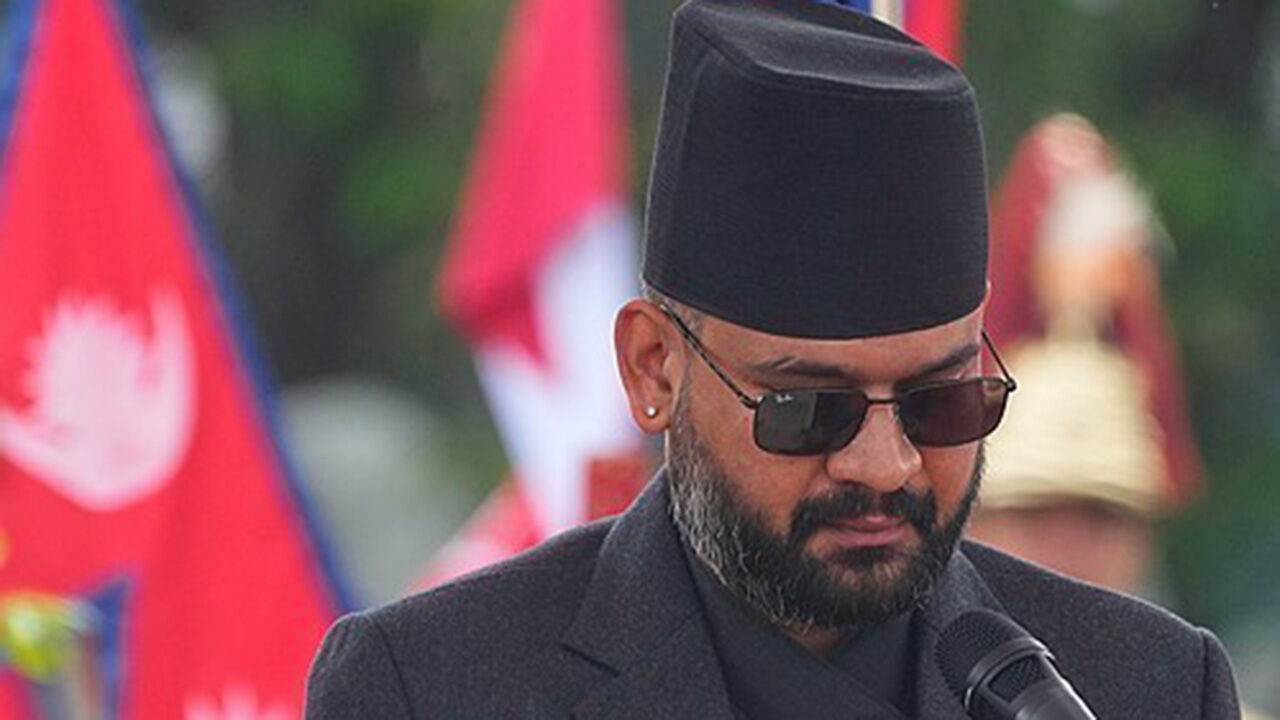
▲ Nepalese Prime Minister Balendra Shah
Nepalese Prime Minister Balendra Shah emphasized at the UN General Assembly that the massive floods that struck the Himalayas last month served as a warning to the world, while appealing to the international community for support.
During his address at the general debate of the high-level session of the UN General Assembly, Prime Minister Shah stated that (global warming) is destabilizing the fragile Himalayan ecosystem, melting permafrost and glaciers, and accelerating the occurrence of disasters.
He went on to emphasize that Nepal's massive floods were a "warning to the world," signaling the growing risks of climate change.
Shah delivered his speech wearing his signature black traditional Nepali cap and sunglasses.
He also pointed out that "Nepal accounts for less than 0.1 percent of global greenhouse gas emissions," adding, "We did not cause this crisis, but we are paying the price."
In fact, according to the international organization Global Carbon Project (GCP), Nepal's annual carbon dioxide emissions in 2024 accounted for a mere 0.05 percent of the global total.
On the other hand, China accounted for over 30 percent of global emissions, and the United States accounted for more than 10 percent.
Shah also argued that the costs required for flood recovery and reconstruction are estimated at 10 percent of Nepal's gross domestic product (GDP), asserting that climate-vulnerable nations should not be forced to take on additional debt to recover from disasters.
He emphasized, "When climate-induced disasters destroy the infrastructure of impoverished nations, the solution must not be a stopgap measure like another massive loan or a small grant," adding, "We need adequate, unrequited support from the world."
He further urged the international community to share the costs of supporting Nepal's climate adaptation, stating, "In this crisis situation worsened by the failure of global governance, Nepal cannot build resilience on its own."
The Nepalese government estimated the total damage and losses from the massive floods at 408.29 billion Nepalese rupees (approximately 3.6 trillion won), and projected that reconstruction costs will reach 723.31 billion Nepalese rupees (approximately 6.3 trillion won).
Prime Minister Shah also proposed the creation of a body tentatively called the "Himalayan Climate Resilience Framework."
He emphasized that not only Nepal but also neighboring India and China should share satellite data and expertise, monitor unpredictable glacial lakes, and jointly strengthen early warning systems.
A former rapper, Prime Minister Shah led his party to victory in the general election following large-scale anti-government protests last year, and became the youngest prime minister in history at the age of 36 in March of this year.
However, the massive floods that occurred just five months after taking office have put his political leadership and response capabilities to the test.
Triggered by the massive floods that occurred in the upper reaches of the Himalayan mountainous region on August 26, more than 1,400 people have died and about 6,600 people remain missing so far across neighboring Nepal and China's Tibet Autonomous Region.
As the possibility has been raised that the massive floods were caused by the collapse of massive glaciers and rocks due to climate change in the Himalayas driven by global warming, issues of climate inequality and the responsibility of major powers have also been raised.
(Photo: AP, Yonhap News)
※ Please note: This article was translated by AI and may contain errors.




 Video News

 Video News