
 KOR
KOR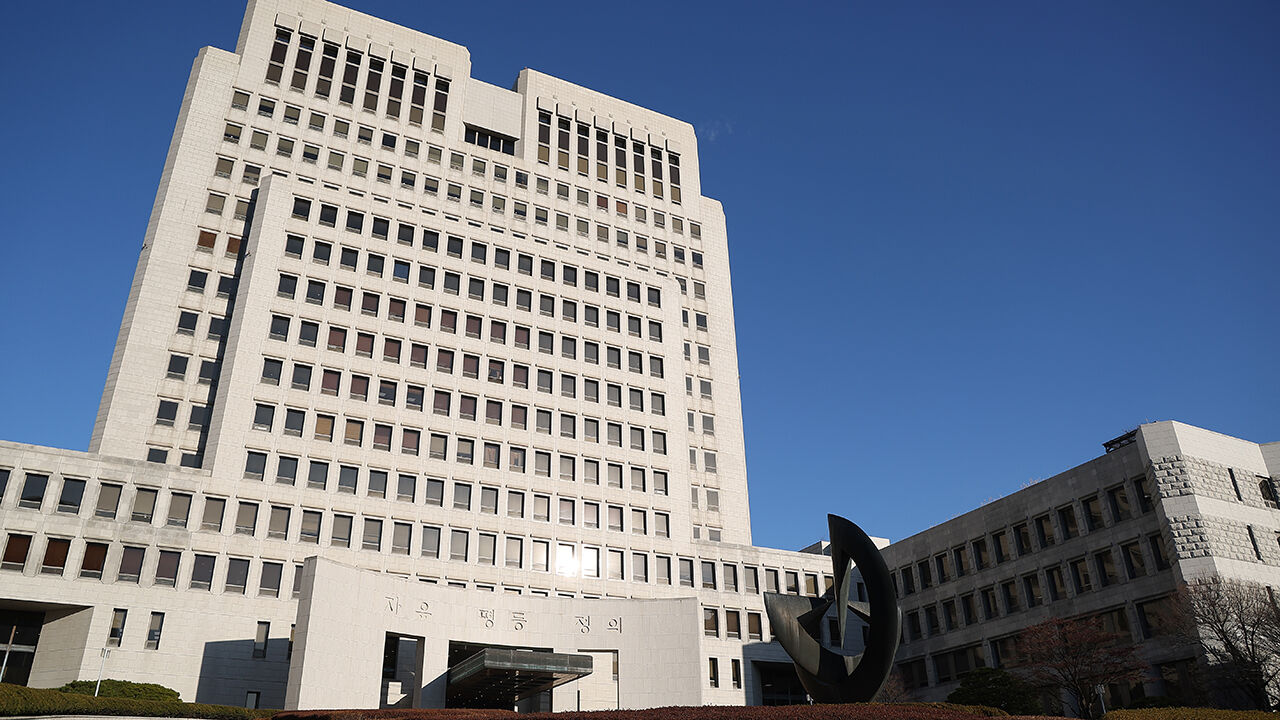
▲ Supreme Court
A fine has been finalized for a netizen who posted threatening comments reading "you will be assassinated" on a news article concerning Lee Jae-myung during his run as a preliminary presidential candidate last year.
The Supreme Court's Second Division (Presiding Justice Oh Kyung-mi) recently finalized the lower court's ruling sentencing a defendant, referred to as A, to a fine of 2.5 million won on charges of violating the Public Official Election Act and making threats.
Ahead of the 21st presidential election last year, A left three threatening comments, including "you will be assassinated before the presidential election," on a media article regarding Lee Jae-myung, who was a preliminary candidate at the time.
The prosecution indicted A on joint charges of intimidation and violation of the Public Official Election Act, stating that A interfered with electoral freedom by threatening a preliminary candidate.
The first and second instance courts found the charges guilty and sentenced A to a fine of 2.5 million won.
The appellate court explained the sentencing reasoning by stating, "The negative impact on the freedom and fairness of the election is not minor and the social harm is significant, necessitating strict punishment," while adding, "As a first-time offender, the defendant is promising not to repeat the same wrongdoing, having sought ways to write and deliver a letter of sincere apology to the victim."
While dismissing the prosecution's appeal to finalize the 2.5-million-won fine, the Supreme Court pointed out that there were flaws in the lower court's legal judgment.
The appellate court had viewed that the charge of intimidation was absorbed into the Public Official Election Act violation, which holds the status of a special law, and therefore did not constitute a separate offense, a point which the Supreme Court noted.
The Supreme Court held that Article 237 of the Public Official Election Act (crime of interfering with electoral freedom), applied to A, aims to achieve the legislative purpose of the Act to protect the roles and functions performed by individuals involved in the election process, and thus has a different legislative purpose and protected legal interest from the crime of intimidation under the Criminal Act, thereby constituting separate offenses.
This means the crime of intimidation is established separately from the violation of the Public Official Election Act.
However, the Supreme Court dismissed the prosecution's appeal on the grounds that even if the two crimes are established separately, there would likely be no substantial difference in sentencing conditions or the sentenced penalty.
(Photo: Yonhap News)
※ Please note: This article was translated by AI and may contain errors.



 Video News
 Video News
 Video News
 Video News