
 KOR
KOR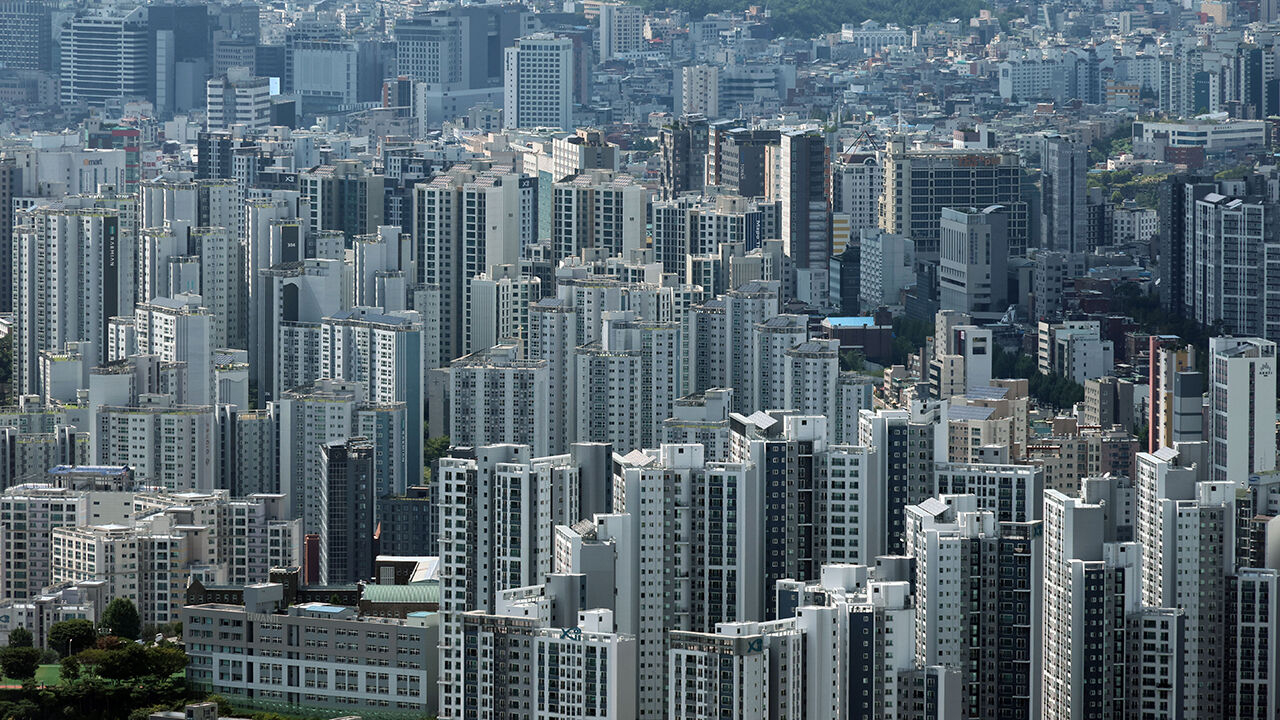
▲ Seoul apartments
Experts have suggested that amid a rising interest rate cycle, the downward impact of rate hikes on home prices may appear with a time lag, calling for a review of their effects on housing prices and financial soundness.
In a report titled "Analysis of Housing Market Volatility and Implications During Periods of Rising Interest Rates" released today (the 23rd), the Korea Research Institute for Human Settlements analyzed the impact of interest rate changes on the housing market from May 1999 to August of this year.
The analysis utilized variables including the growth rate of the coincident composite economic index, the consumer price inflation rate, the 91-day Certificate of Deposit (CD) rate, the M2 growth rate, and the fluctuation rate of the KB apartment sales price index.
The institute categorized periods from a base rate hike to the next rate change as rising interest rate phases, and periods from a base rate cut to the next change as falling interest rate phases, applying shocks of a 0.25 percentage point hike and cut, respectively.
During the analyzed period, there were 7 rising rate phases (totaling 144 months) and 7 falling rate phases (totaling 184 months).
The reaction to a 0.25 percentage point rate hike shock during a rising interest rate phase showed a 1.2% drop in nationwide apartment sales prices after 6 months, with declines estimated at 1.1% after 12 months and 0.9% after 24 months.
When targeting the entire period, the results showed declines of 0.5% after 6 months, 0.9% after 12 months, and 1.2% after 24 months.
"As the impact of interest rate hikes on housing prices appears with a certain time lag, it is necessary to continuously monitor how changes in market interest rates and mortgage rates—as well as the base rate—affect housing prices and transactions," the institute stated.
Additionally, the institute advised that if rising interest rates lead to falling home prices and an increased burden of principal and interest repayments for households, borrowers' debt-servicing capacity could weaken, increasing the likelihood of delinquencies. Since the repayment burden can appear relatively heavier especially for vulnerable borrowers, risks regarding financial soundness such as household debt and delinquency trends must be examined.
According to the institute's analysis of the composition of funding for Seoul housing purchases, the proportion of jeonse deposits (lease deposits) dropped from 27.1% in 2021–2022 to 16.1% in 2023–2025, and further down to 6.6% between January and April of this year. Meanwhile, the proportion of loans from financial institutions increased over the same periods from 15.7% to 22.6% and 23.6%.
"It is necessary to monitor the inflow of funds into the housing market through various channels—not only loans from financial institutions, but also policy financing, corporate and individual business loans, jeonse deposits, donations, and family borrowings—and manage them so that excessive capital inflows through specific channels do not amplify market volatility," the institute added.
(Photo: Yonhap News)
※ Please note: This article was translated by AI and may contain errors.


 Video News
 Video News
 Video News
 Video News
 Video News