
 KOR
KOR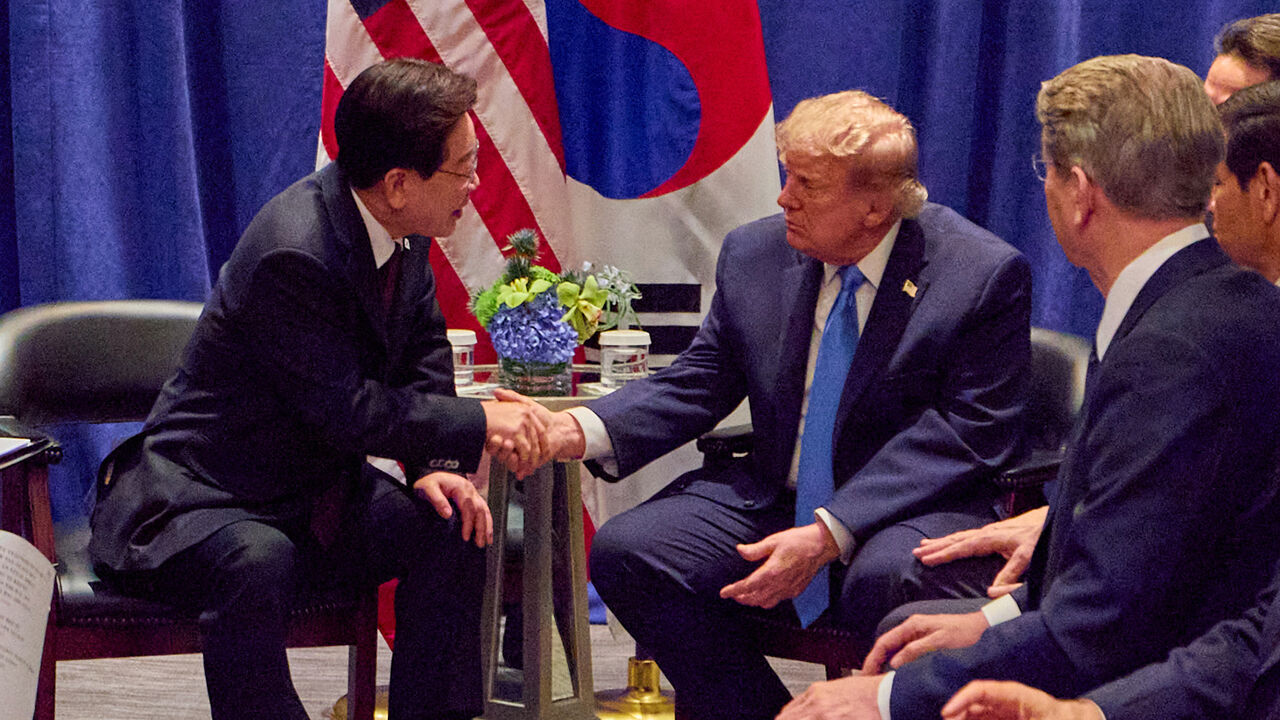
▲ President Lee Jae-myung, who is visiting the United States to attend the United Nations General Assembly, holds a summit with U.S. President Donald Trump at a hotel in New York on the 22nd, local time.
At a summit held between President Lee Jae-myung and President Donald Trump on the sidelines of the United Nations General Assembly in New York, a broad range of security negotiation issues, including the transfer of wartime operational control (OPCON), were brought to the table.
This marks the first time that the transfer of wartime OPCON has been discussed at the summit level between South Korea and the United States.
Meeting with President Trump on the evening of September 22, local time, President Lee confirmed a shared commitment to further deepen bilateral cooperation based on the joint fact sheet from the South Korea-U.S. summit announced in November of last year in areas including nuclear submarine fuel, uranium enrichment and spent fuel reprocessing, shipbuilding cooperation, and the wartime OPCON transfer, agreeing to pursue follow-up consultations.
President Lee is reported to have actively expressed the South Korean government's position that it seeks a prompt completion of the wartime OPCON transfer.
With direct communication between the two leaders on key security issues—such as the OPCON transfer, nuclear-powered submarines, and nuclear fuel enrichment and reprocessing—attention is focused on whether this will break the deadlock in stalled security negotiations between South Korea and the United States.
Analysts suggest that progress made in South Korea's investment negotiations with the United States, which had faced difficulties until the final hour, played an influential role.
The summit itself was made possible as both countries recently coordinated to pursue the construction of a combined-cycle gas turbine power plant in Encinal, Texas, as the first project under strategic investments in the United States, which in turn allowed pending security issues to be placed on the summit table.
As security consultations were addressed again at the summit level, attention is now turning to whether accelerated working-level discussions can yield tangible results.
At the same time, ensuring that issues not brought to the table at this summit—such as the potential troop deployment to the Strait of Hormuz and the "Coupang situation"—do not act as disruptive variables remains a key challenge to be resolved going forward.
(Photo: Yonhap News)
※ Please note: This article was translated by AI and may contain errors.


 Video News
 Video News
 Video News
 Video News
