
 KOR
KOR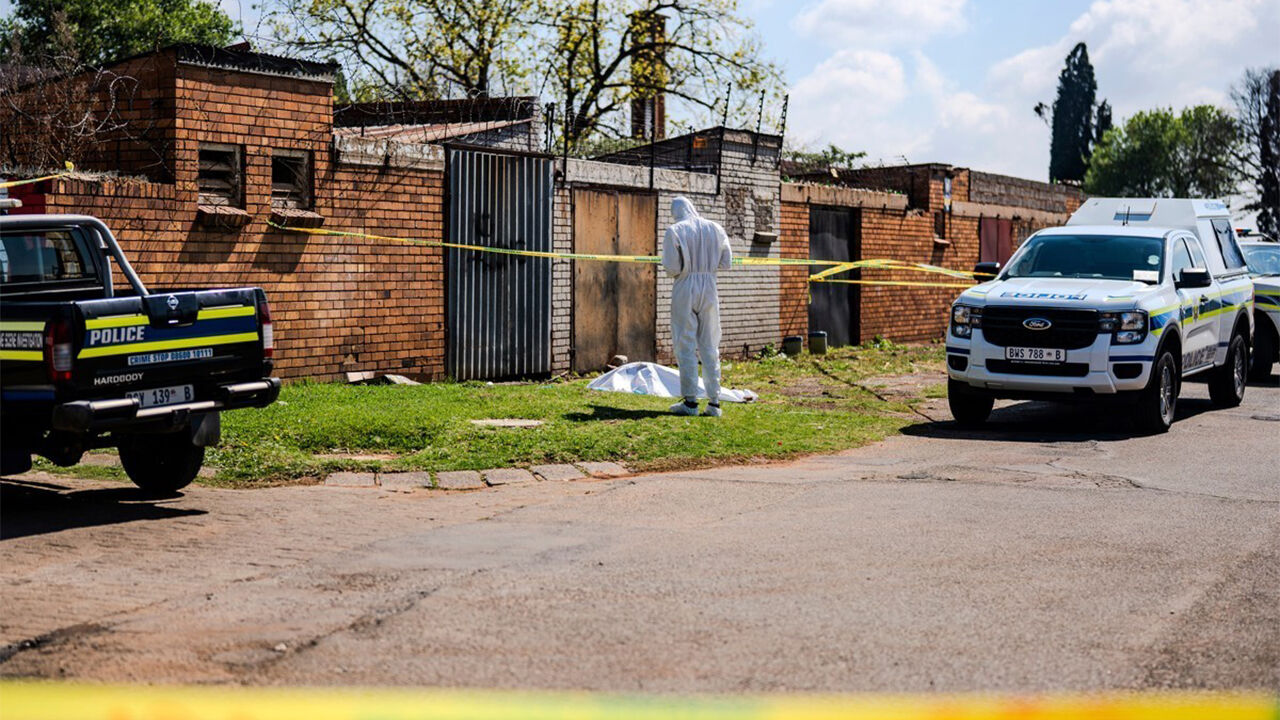
▲ An investigation is underway after the bodies of women were discovered in the Ekurhuleni region of South Africa. (Photo: AP, Yonhap News)
Ahead of the local elections scheduled for November 4, South Africa is seeing public safety emerge as a major electoral issue as a series of female murder cases have recently occurred.
While President Cyril Ramaphosa has ordered all available resources to be mobilized for the investigation into these incidents, political parties are taking issue with the government's security management, calling for women's safety and stronger security.
According to local media including The Citizen on September 22 (local time), the bodies of women have been found consecutively in areas such as roads around Kempton Park in Ekurhuleni, adjacent to South Africa's largest city Johannesburg, over a period of about two months since July 15.
Ekurhuleni is one of South Africa's eight metropolitan municipalities and is home to O.R. Tambo International Airport, a gateway leading to Johannesburg and Pretoria.
The cases began to draw widespread attention after it was revealed that Elizabeth Moselakgomo, 38, who had an 8-year-old daughter, was found dead after going out for a jog following work. The number of victims identified stood at seven as of September 15, but has since risen to nine after two more bodies were confirmed.
Reports have also emerged that the bodies of women were discovered in Johannesburg, which neighbors Ekurhuleni.
While some of the victims were found with signs of sexual assault or stripped of their clothing, police have yet to confirm whether all nine cases are connected or if they are the work of a serial killer.
Police arrested two women and one man in connection with one of the victims found last week, but only the two women were charged the previous day, while the man was not charged due to insufficient evidence to prove his culpability.
While police plan to continue investigating potential links between this case and the others, they stated that the specific case stemmed from a so-called "love triangle," raising the possibility that it is an isolated incident unrelated to the other killings.
Citizens and the political circle are raising serious questions about South Africa's chronic security and women's safety issues in the wake of these incidents.
On September 19, hundreds of running club members and citizens gathered to run a 13-kilometer course, including the route where Moselakgomo used to run, urging that women be allowed to walk the streets with peace of mind.
Religious leaders in Ekurhuleni urged voters to "vote wisely" at a memorial march held in Kempton Park a day prior, stating that they must choose leaders who will take women's safety issues seriously.
The Democratic Alliance (DA), which forms a coalition with President Ramaphosa's African National Congress (ANC) at the central government level, announced that it would offer an additional 500,000 rand to informants providing information necessary to solve the cases, on top of a 400,000 rand (approximately 30 million won) reward offered by the police.
Because South Africa determines coalition arrangements separately at the provincial and local government levels even when forming a coalition at the national level, the DA is in competition with the ANC in these local elections.
DA leader John Steenhuisen made strengthening security a central agenda in this local election campaign.
In response, the Gauteng provincial government, led by the ANC, criticized the DA for political exploitation of the tragedy.
Julius Malema, leader of the left-wing populist Economic Freedom Fighters (EFF), also denounced the cases during a manifesto launch in Western Cape Province on September 20, pledging that if his party takes charge of metropolitan administration, it would wage a war against crime, femicide, and drugs.
Songezo Zibi, leader of the minor opposition party Rise Mzansi, argued that flexible working hours should be considered so women can travel during daylight hours.
The upcoming local elections will elect local council members for eight metropolitan cities nationwide, including Johannesburg and Ekurhuleni, as well as 44 district municipalities and 205 local municipalities.
According to the Electoral Commission of South Africa (IEC), 136,790 candidates are running in this election, with a total of 10,526 local councilors to be elected.
In South Africa, local executive heads such as mayors are elected by each local council after it is formed.
※ Please note: This article was translated by AI and may contain errors.


 Video News
 Video News
 Video News
 Video News
