
 KOR
KOR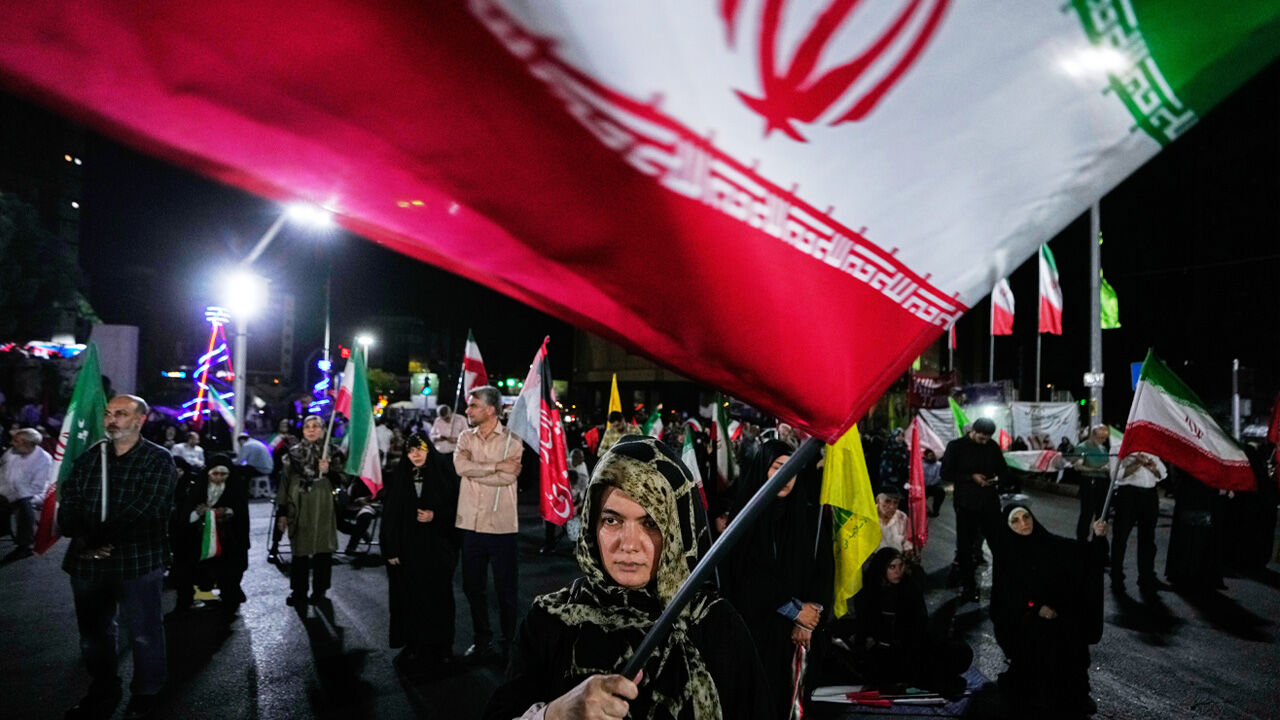
▲ A government-supported rally held in Tehran
Gulf nations, which proved highly vulnerable to Iranian attacks, are exploring a new security order involving Iran as trust in U.S. security guarantees wavers, the British daily Financial Times (FT) reported on the 21st local time.
Major regional countries such as the United Arab Emirates (UAE), Qatar, and Saudi Arabia are showing moves to draw Iran into a new regional security framework based on dialogue and mutual non-aggression, rather than excluding Tehran in the post-war period.
According to the FT, Qatari Prime Minister Sheikh Mohammed bin Abdulrahman Al Thani said at an event held on the sidelines of the UN General Assembly in New York that day that the war against Iran initiated by the U.S. and Israel last February served as a "wake-up call" prompting the search for a new regional order.
He added that Gulf states "must act responsibly together at the regional level and maintain good relations with Iran," noting, "We are moving in that direction, and regional partners agree."
In particular, he emphasized the need for a new security initiative, stating, "Without a security architecture that binds Gulf states and Iran together and ensures neither poses a threat to the other, the region cannot continue as it did in the past."
At another event, Anwar Gargash, diplomatic adviser to the UAE president, also spoke along the lines that Arab countries must engage in dialogue with Iran.
He remarked that negotiations between Iran and the U.S. "are not really making progress," adding, "A new mindset is needed in these discussions over what kind of region we all want."
Gargash had previously emphasized at another public appearance earlier this month that "Iran remains our neighbor, and we must find a way to restore what can be restored someday," stressing that "geographical reality leaves us no alternative other than engagement with Iran."
According to Middle Eastern diplomatic circles, Saudi Arabia has also been discussing the concept of a mutual non-aggression pact between Middle Eastern nations and Iran since the outbreak of the war.
Regarding these statements and moves by Arab countries, the FT evaluated that regional nations, which initially tried to dissuade the U.S. from launching the war, are now accepting the reality that they must manage post-war relations with Iran on their own while the U.S. is bogged down in the quagmire of the war.
Sanam Vakil, a research director at the British think tank Chatham House, said, "Gulf leaders recognize that their relationship with Iran is volatile and that they must manage their own security in the absence of a reliable U.S. anchor," adding that with Iran weakened compared to before the war, it is also "an opportunity" for Middle Eastern countries to determine their own security architecture.
(Photo: AP, Yonhap News)
※ Please note: This article was translated by AI and may contain errors.



 Video News


!["Thought It Was a Bronze"… Dramatic Comeback Driven by a 10.9-Point Bullseye [AG Video]](http://img.sbs.co.kr/newimg/news/20260922/202224917_300.jpg) Video News
Video News